Identities / Corporate
Corporate Uniform Manufacturer in Gujarat
One glance says who works here
Corporate uniforms cut, stitched, embroidered and printed under one roof, built for Indian offices and the people who wear them.
- Minimum order
- 50 pieces per style
- Guarantee
- One year on stitching, woven garments* terms
- Made
- One building, measured across Gujarat, delivered anywhere in India
- Fabric
- Branded mills, approved on swatch before it is bought
Understanding the industry
Understanding the corporate uniform
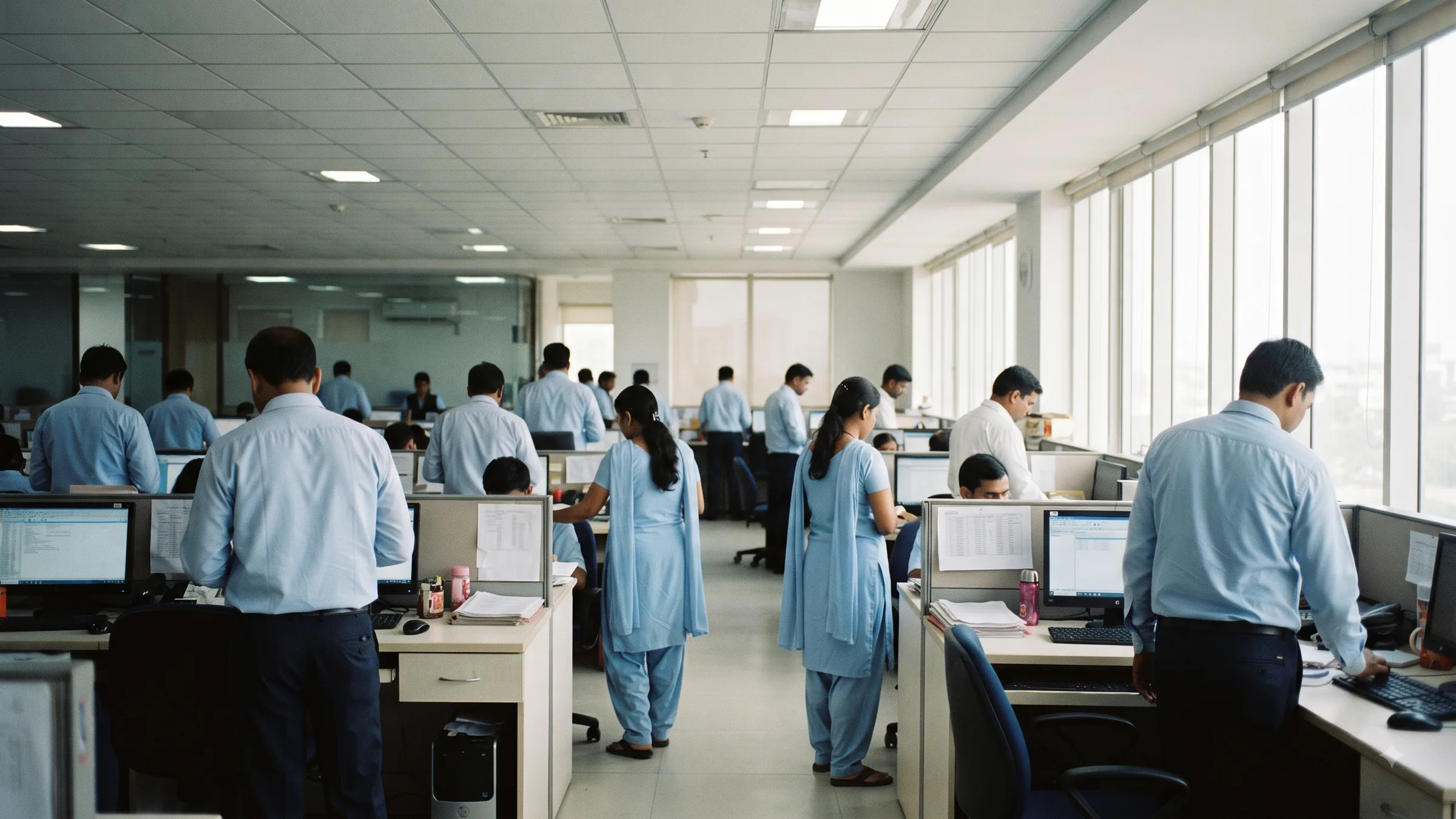
In an Indian office the uniform is read before anyone speaks. Bank counter staff, front desk teams, showroom floors, IT and BPO desks, PSU offices, and the drivers and pantry staff who work alongside them all wear it for the same reason: a customer should know within a second who works here. The brief is appearance led, not protective. The garment has to read as formalwear. And the person choosing it is almost never the person wearing it. The decision sits with HR, an admin head or a purchase manager, buying for one branch or a whole network.
The hard part of a corporate programme is rarely the first order. It is the second one, a year or more later, when the new navy has to match the trousers already on the floor and the new joiners have to look like the original cohort. Between those orders the garment lives a hard life: worn through a forty degree commute, washed at home after every wear of a six day week, scrubbed at the collar with bar soap, and dried on a line in direct sun. Sun, not soap, is what shifts the shade. A corporate uniform is specified for that year, not for the photograph.
The workforce is mixed, and a good programme respects that. Women in the same office may want a shirt and trouser, a kurti with cigarette pants, a salwar kameez with dupatta, or a uniform saree, and all of these can sit in the same shade so the floor still reads as one team. Support staff are usually issued a visibly different set, and that is a normal, expected part of the order rather than an afterthought. A programme that ignores these realities gets quietly altered or abandoned, one garment at a time.
Why uniforms matter
Why corporate uniforms matter
In corporate settings the uniform does recognition work, not protection work. Nothing about it needs to stop a spark or a splash. It needs to hold a shade, hold a press, and hold its shape through more than a hundred home washes a year, so that the person behind the counter is instantly legible as the person to ask. That is a quieter job than protective workwear, and in some ways a harder one.
- 01Recognition in a secondA customer walking into a branch or a showroom should know at a glance who works there. That is the entire functional argument, and it is why shade consistency and logo placement matter more here than tensile strength ever will.
- 02A benefit, not a burdenTwo or three good sets a year means front line staff do not fund a formal wardrobe from a modest salary, and visible income differences leave the floor. HR teams raise this themselves.
- 03A brand asset with a long tailA logo stitched in the wrong thread shade, or a navy that drifts between order and reorder, stays in front of every customer for two years. Getting the specification right once costs far less than a mid cycle replacement.
- 04Fit is complianceA blazer that binds at the shoulder or a waistband tight after lunch gets quietly abandoned or altered by a local tailor, and the programme’s consistency collapses garment by garment. Comfort is the mechanism by which a uniform policy actually holds.
- 05Paperwork is part of the productTendered and audited buyers purchase documentation along with the goods: a written fabric specification, GST compliant invoicing, a guarantee in writing. A supplier who cannot put terms on paper will not clear the file, however good the stitching.
Our approach
How we work
Uniform Corner grew out of Asopalav, a generational cloth shop in Satlasana that still trades, and the habit of judging fabric first has never left. Since 2001 the retail counter and the manufacturing unit have shared one building, so a corporate order travels from measurement to finished garment on the premises.
- 01Cloth judged before it is cutFabric comes from branded mills, and a client with a group standard may nominate the mill and article. Every order starts at the counter, in the hand, against a swatch, before a single garment is cut.
- 02Cut for Indian wear, not the catalogueHalf sleeve shirts are a default here, not a downgrade. Weight goes down, not up: warmth comes from a removable layer, a waistcoat or blazer, rather than a heavier base fabric that punishes the commute.
- 03A separate women’s blockLadies’ garments are cut on a women’s pattern, never scaled down from a men’s one. Scaled down men’s blocks fail at the bust, hip and armhole, and they are the commonest cause of rejected corporate uniforms.
- 04Room for the local tailorTrouser hems and side seams carry generous allowances, because Indian staff take garments to a local tailor, and a trouser that cannot be altered gets replaced instead. Alteration room is cheaper than a new garment.
- 05One logo, mastered onceThe embroidery is digitised once and the thread shades locked in writing, and the DTF artwork is colour-matched and held on the same file. Placement then adapts to the garment: above the shirt pocket, on the blazer breast, on the saree pallu. Knits get a backing so the stitch does not pucker, or a DTF print instead where the logo is full colour.
- 06Built for the reorderThe graded pattern, the embroidery and DTF artwork files and the approved shade record stay on file, so an order for new joiners starts where the first order ended instead of starting again.
Uniform collection
What a corporate order includes
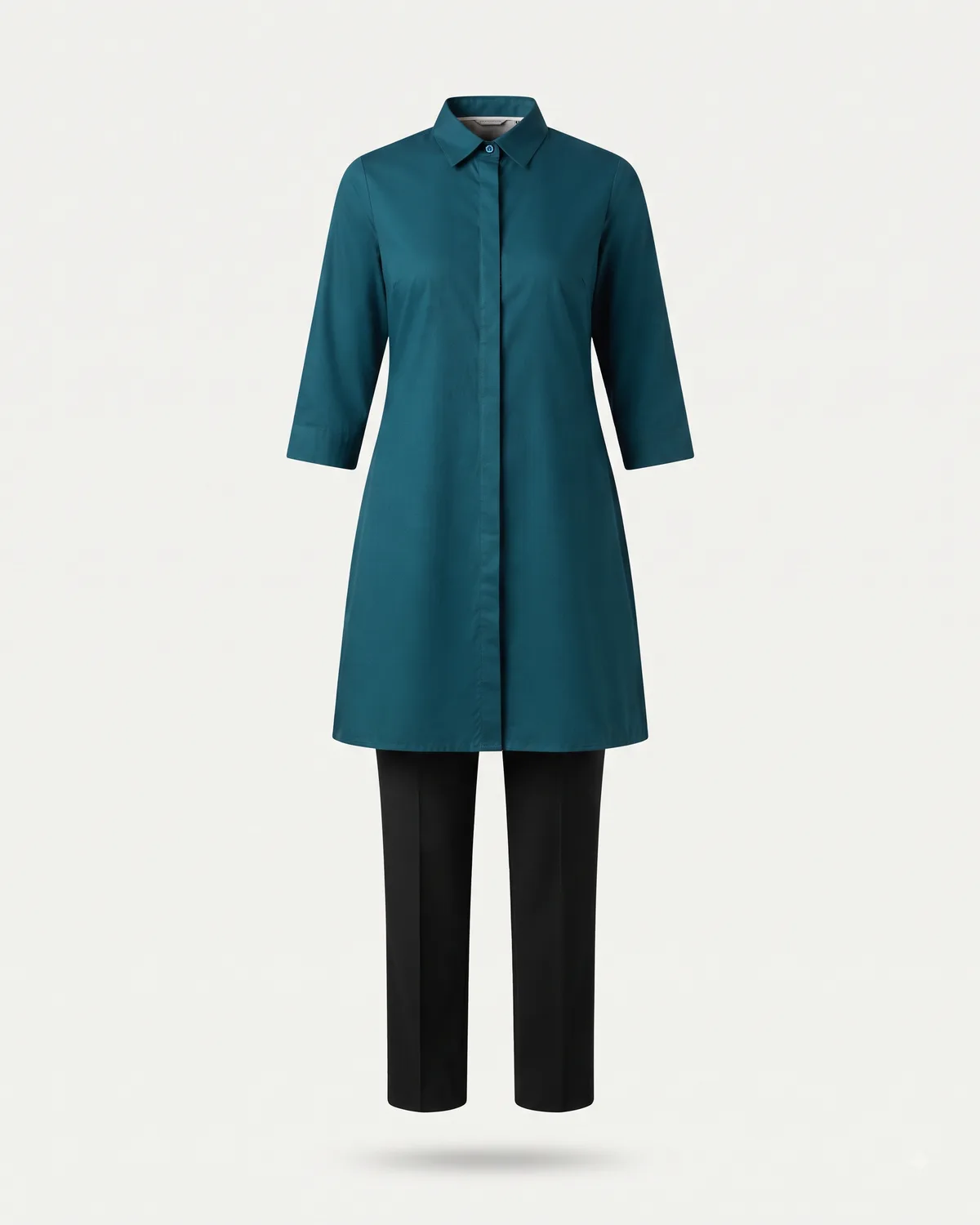
- Kurti-pant set
- Straight or A-line kurti with formal trouser; the dominant women’s corporate uniform in India.
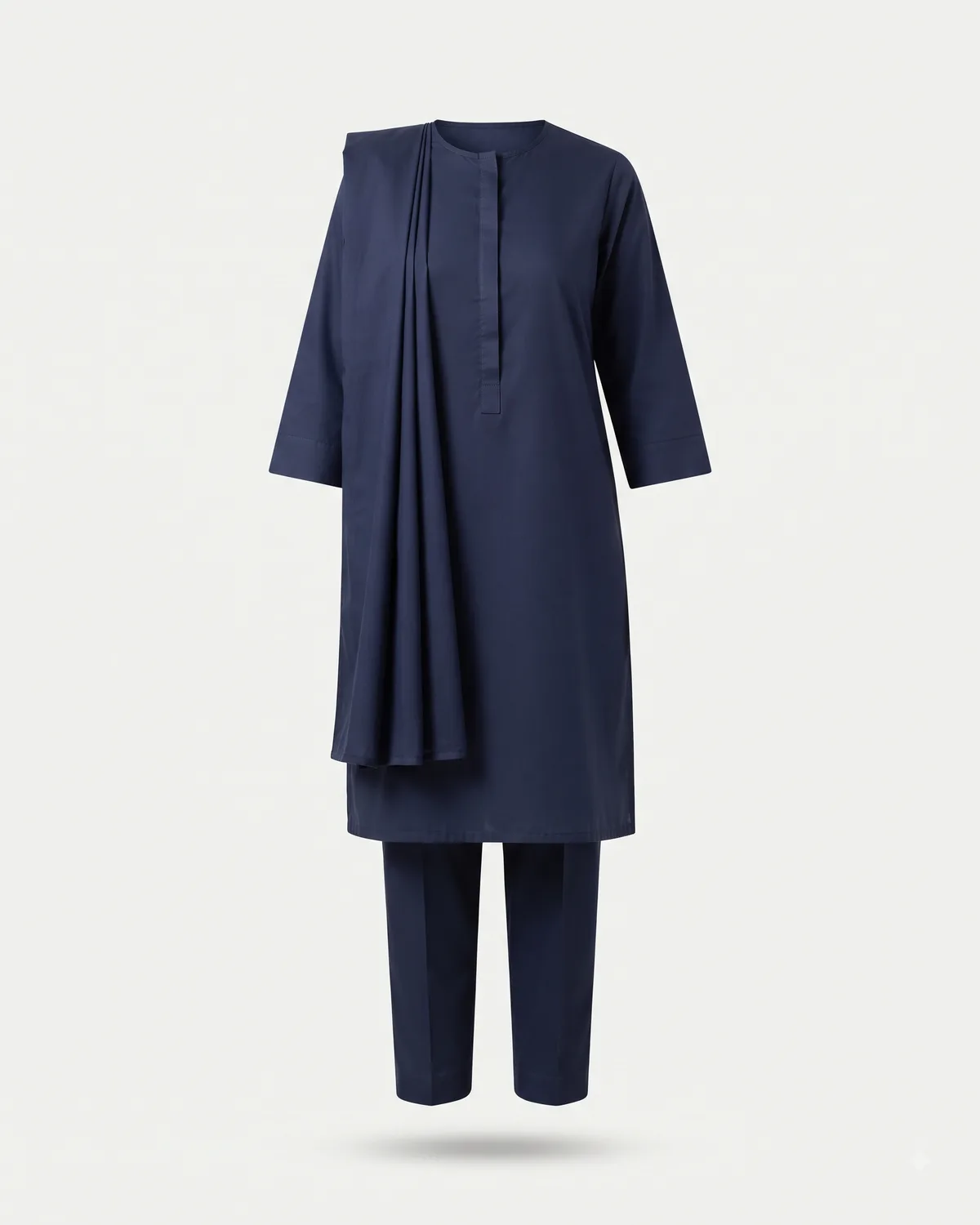
- Salwar kameez with dupatta
- Standard in PSU and government offices; two dupattas per set, since the dupatta soils first.
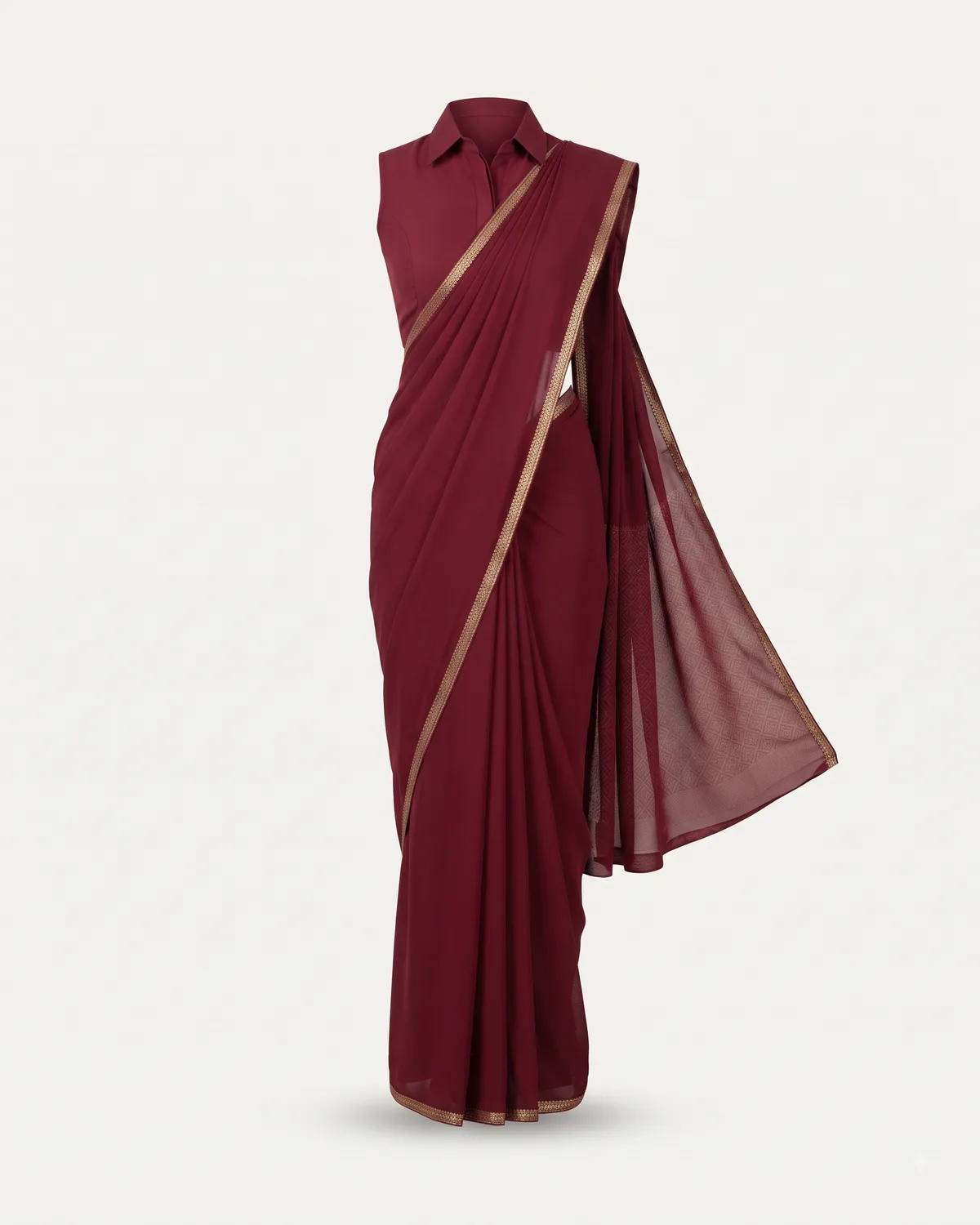
- Uniform saree with stitched blouse
- Front desk and senior staff; georgette drapes through a full shift and washes at home.
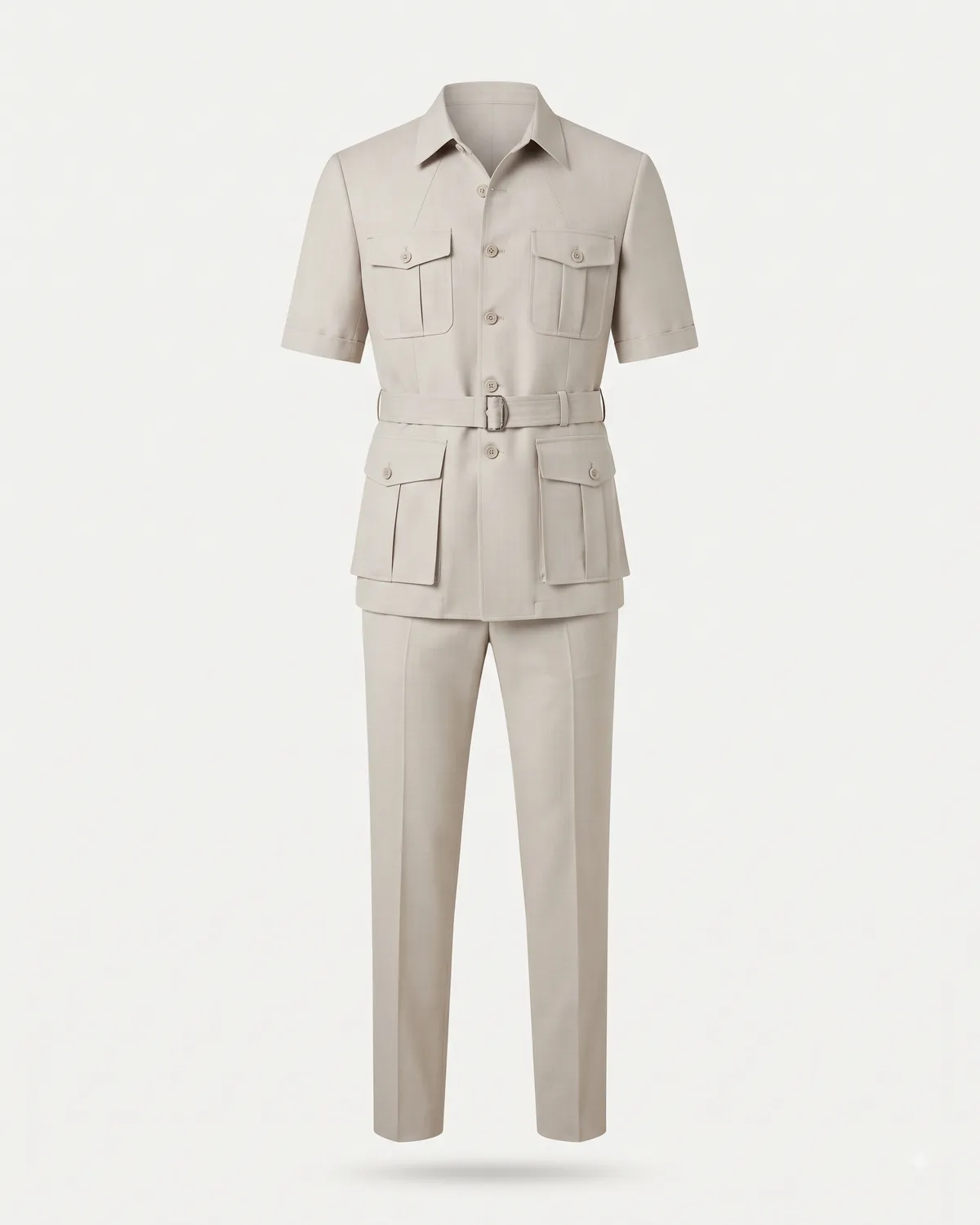
- Safari suit
- Still ordered in volume for drivers, attendants and institutional accounts; buyers who ask mean it exactly.
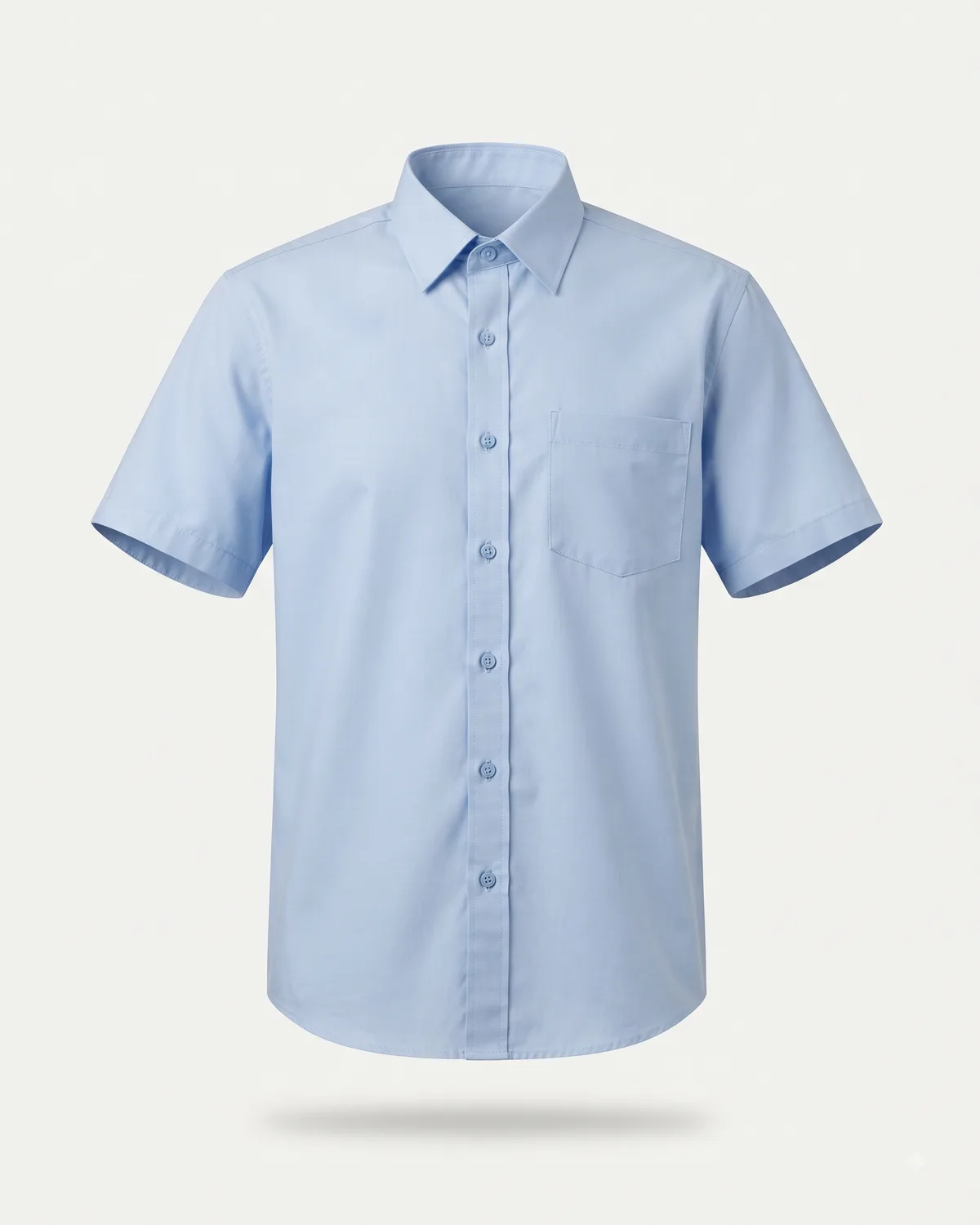
- Formal shirt
- Full or half sleeve, fused collar, logo above the left pocket; half sleeve is the Indian default.
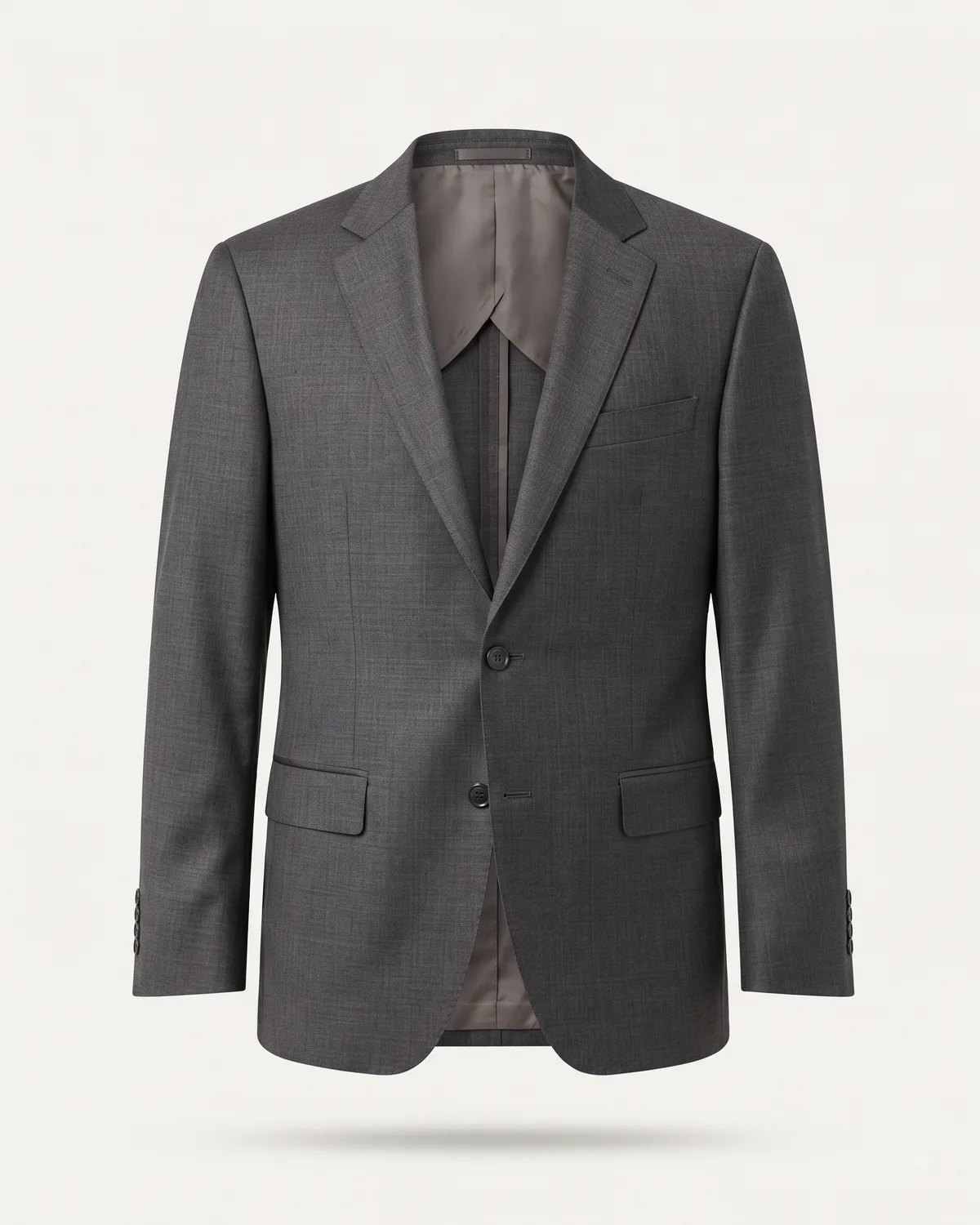
- Blazer (in trade, the coat)
- Two button, notch lapel, issued every second or third year; half lining suits the climate.
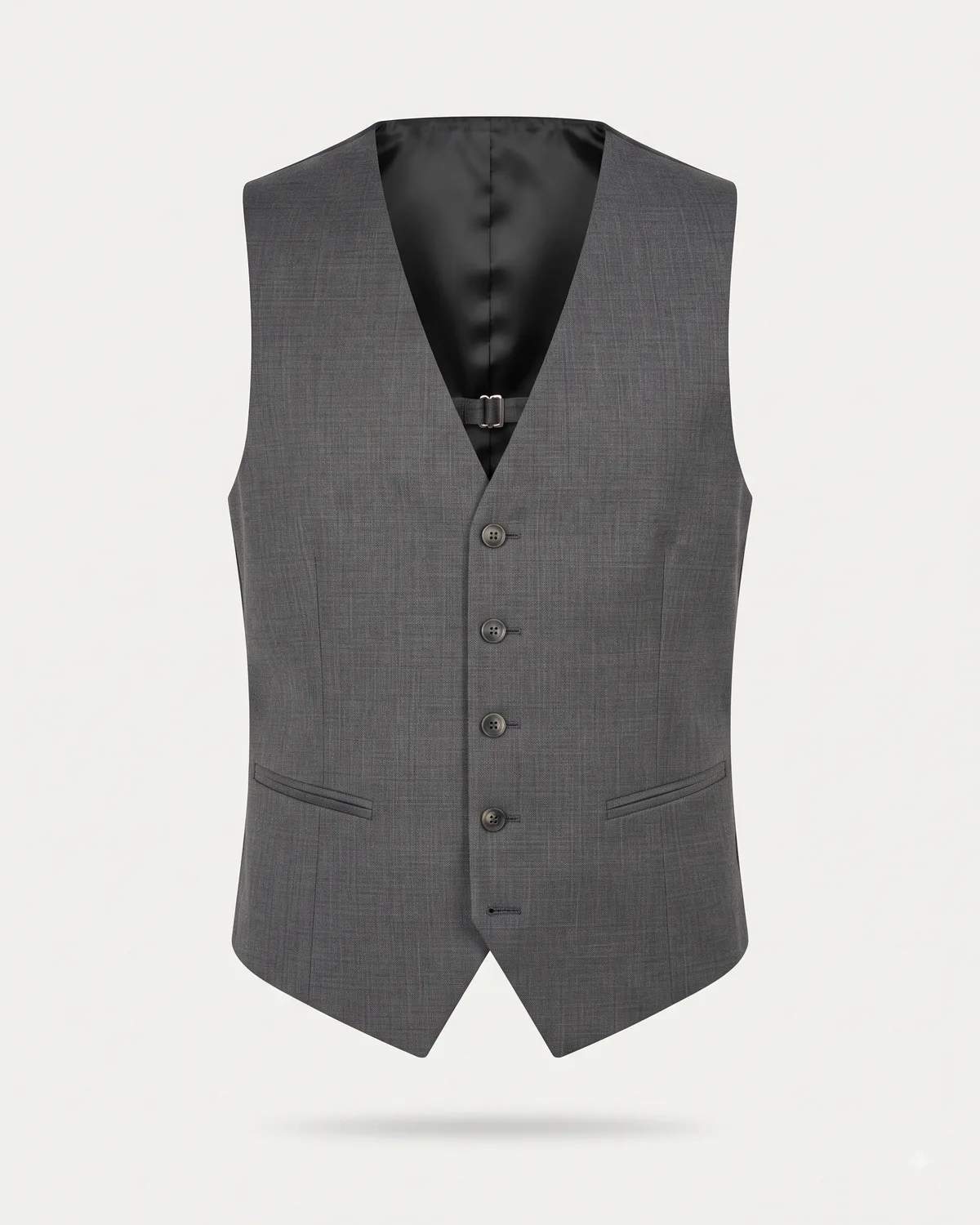
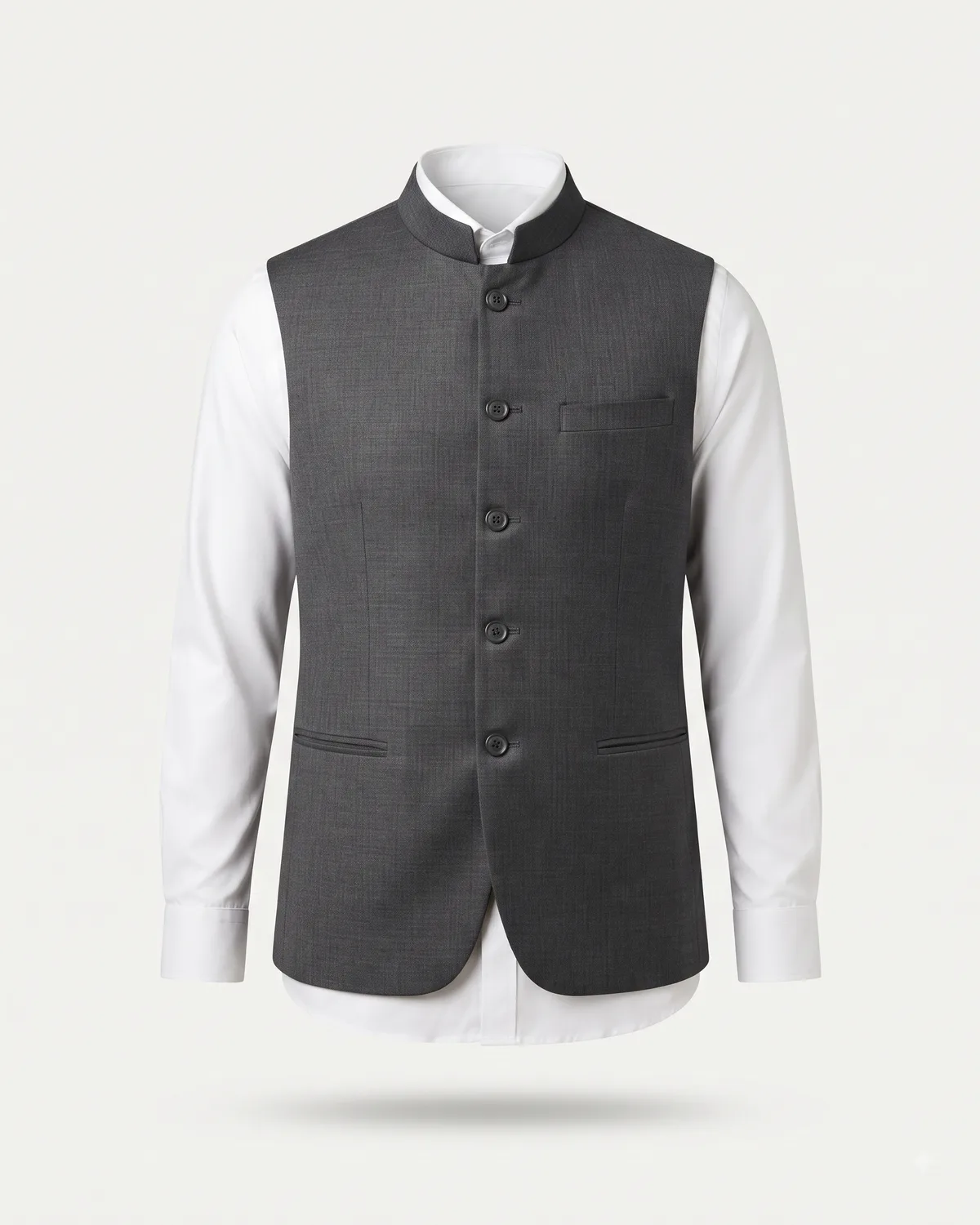
- Waistcoat
- A cooler, cheaper layer than the blazer that still reads instantly as staff.
- Nehru jacket (Modi jacket)
- Sleeveless band collar jacket over a shirt or kurta; formal without being Western.
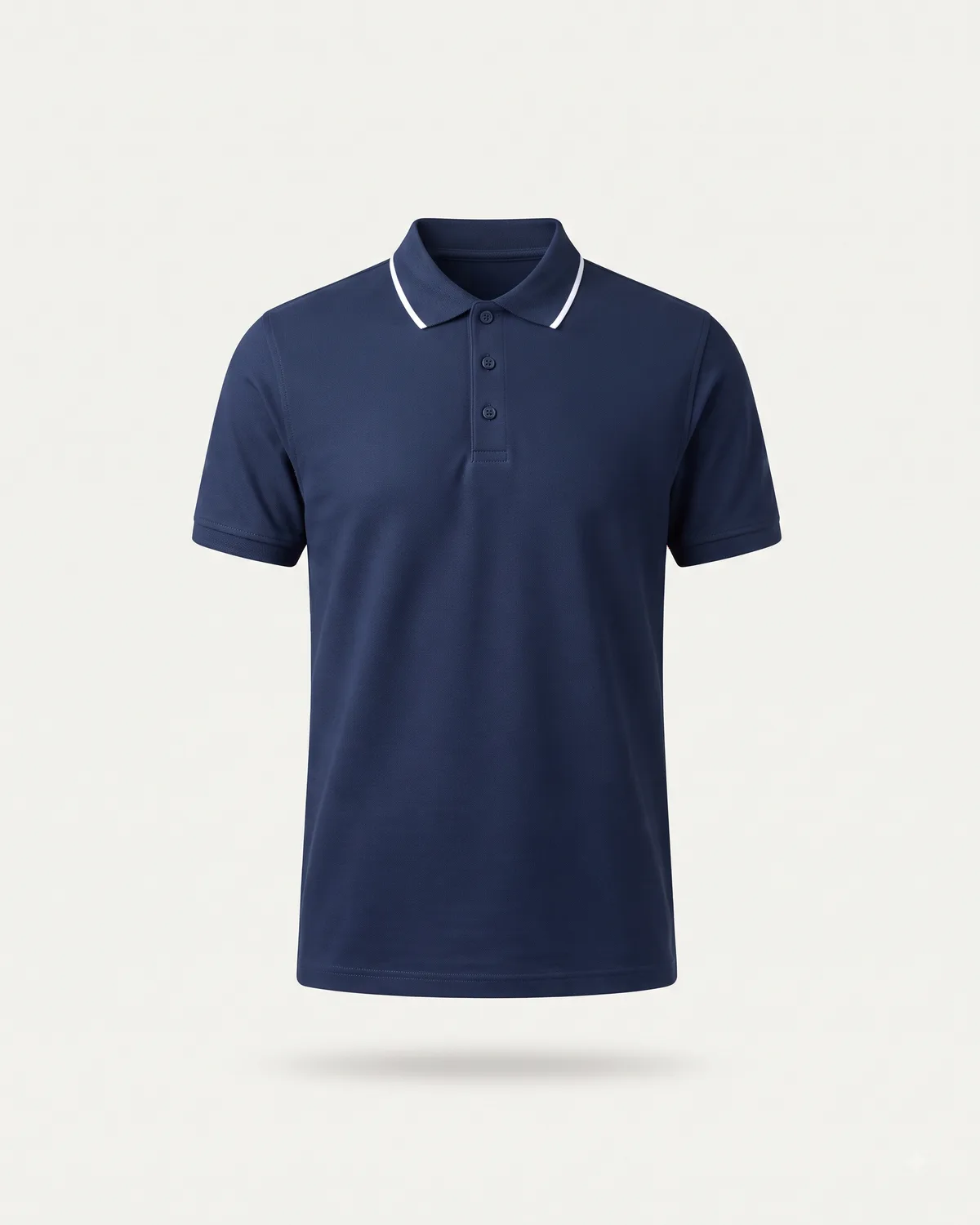
- Corporate polo t-shirt
- Pique, honeycomb or matty knit for field teams and event days; embroidered with backing, or DTF printed where the logo is full colour.
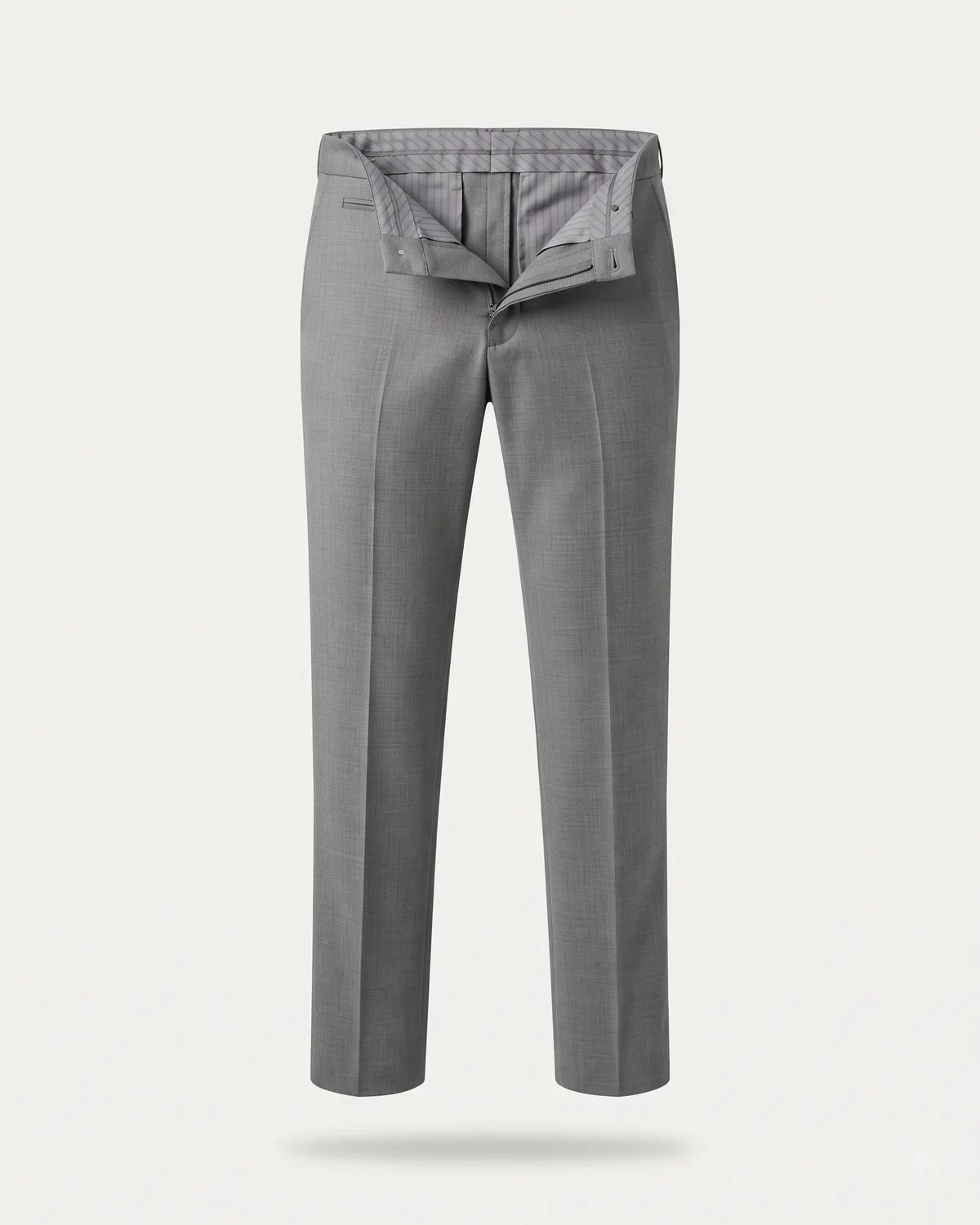
- Formal trouser (formal pant)
- Flat front or single pleat, curtain waistband, cut with room in the waist for later alteration.
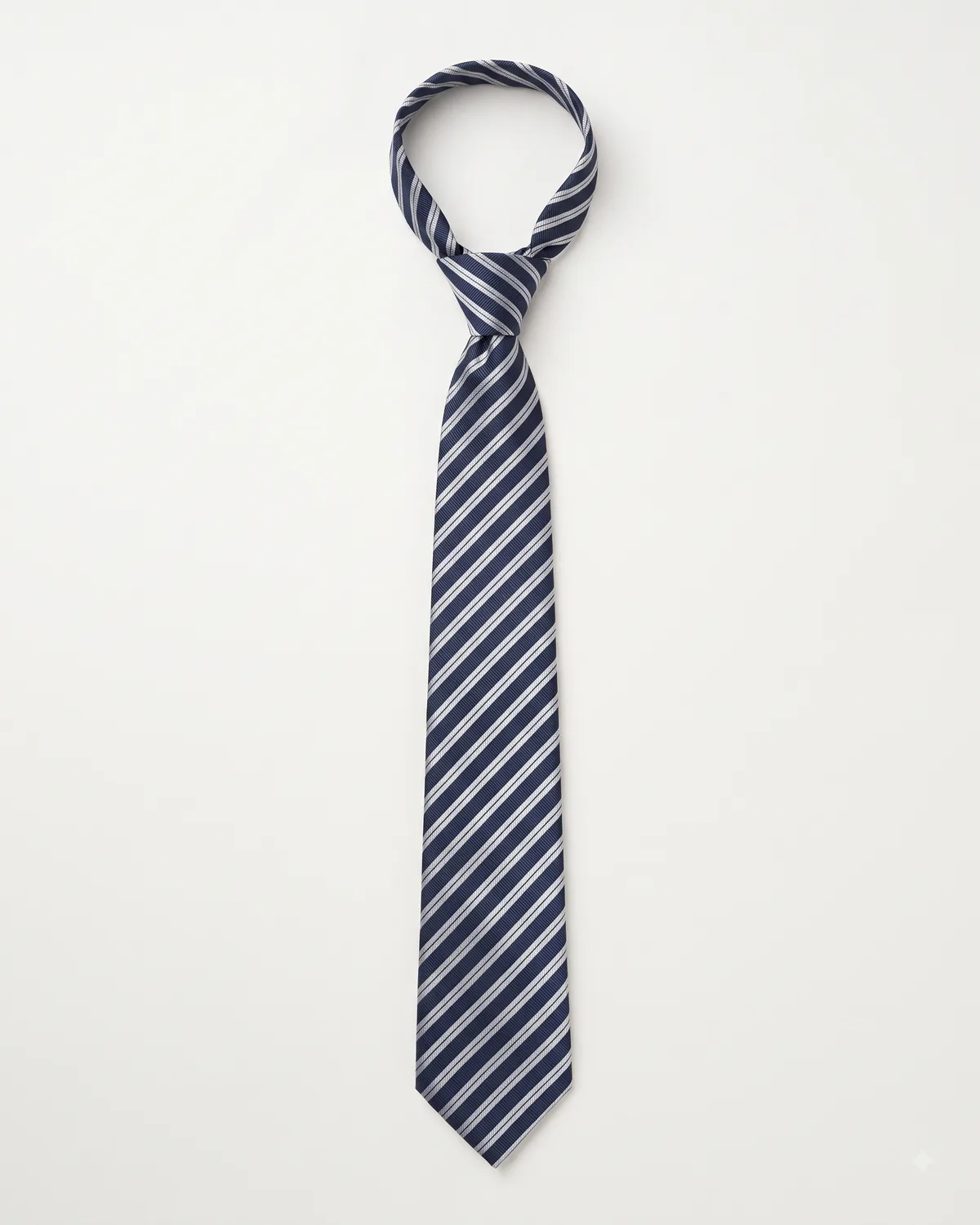
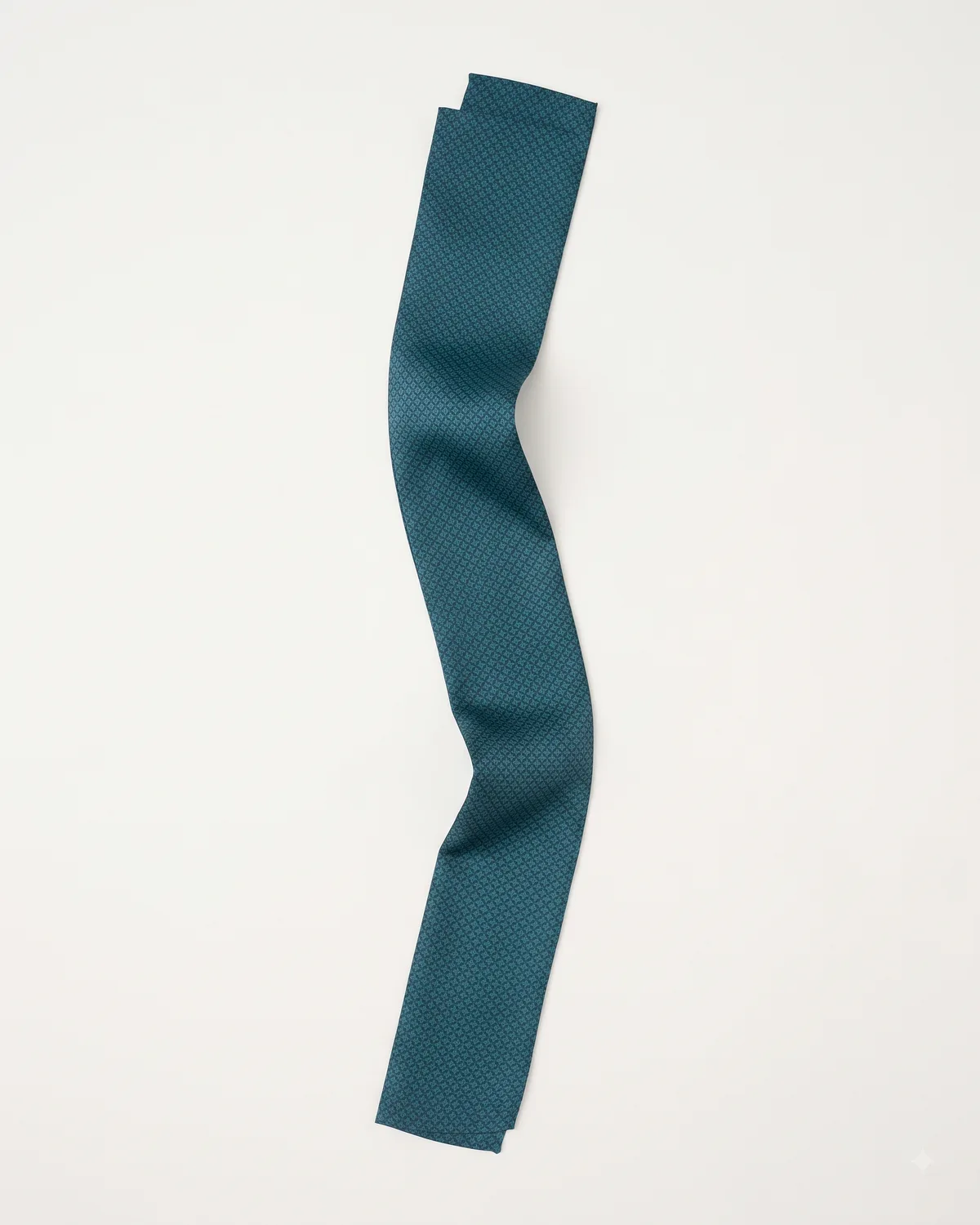
- Neck Tie
- Corporate stripe or solid tie in the company's chosen palette, the one accessory that turns a plain shirt into a uniform.
- Corporate Scarf
- A square or long scarf for the women's uniform, printed or plain to match the kurti or saree order.
Materials & craftsmanship
The fabrics
Fabric is the family trade, and it shows in the buying. Shirting and suiting come from branded mills including Raymond, Siyaram’s, Santosh and Qmax, and a client with a house standard may nominate the mill instead. Knits, the polo among them, are quoted on their own terms: knit relaxes and pills as a property of the fabric, not as a defect.
| Fabric | Working spec | Why it suits |
|---|---|---|
| Poly-viscose suiting (PV, also sold as TR) | 65/35 or 70/30 polyester viscose, 200 to 260 GSM | The workhorse: holds a crease, recovers from sitting, dries fast in monsoon, keeps colour on a sunlit line. |
| Poly-cotton shirting, poplin or twill | 65/35 polyester cotton, 110 to 140 GSM | Polyester holds the press between washes; cotton keeps it wearable through a forty degree summer. |
| 100 percent cotton shirting | 40s to 60s count, 115 to 140 GSM | For management programmes that accept daily pressing in exchange for breathability and a better hand. |
| Stretch suiting (trade says lycra suiting) | Poly-viscose with 2 to 3 percent elastane, 230 to 270 GSM | For women’s trousers and desk bound staff; resists the knee and seat bagging that arrives by month six. |
| Polo knits: pique, honeycomb and matty | Cotton or 65/35 poly-cotton, 180 to 220 GSM | Three distinct constructions; matty carries the volume orders, and 200 GSM up reads visibly more premium. |
| Uniform saree fabric: polyester georgette and poly-crepe | Specified by length, typically 5.5 metres plus a blouse piece, rather than by GSM | Drapes without crushing through an eight hour shift and dries overnight in monsoon. |
Questions buyers ask
Asked before ordering
Will the colour match when we reorder for new joiners?
Yes, if it is planned from the first order. Fabric is bought ready from the mill, and piece dyed goods vary measurably from one mill lot to the next, so the reliable route is to book the year’s fabric in one lot, or choose a yarn dyed or standing mill shade that varies less. Keep a swatch sealed and signed by both sides, record the mill article and shade number, and agree in writing what variation is acceptable.
Does a 45-person office qualify against the 50-piece minimum?
Usually, yes. The minimum is fifty pieces per style, and a style counts everything cut to the same design: all sizes, all colours, and the men’s and women’s cuts of the same garment together. A 45-person office ordering two shirts each is ninety pieces of one style, comfortably above the line, and the trousers count the same way as their own style. Where one garment falls short on its own, say so at the enquiry; the arithmetic is settled at quotation, not at the door.
How do you size several hundred staff across locations?
With a size set: sample garments in a graded size run can travel to each site, staff try them on, and a size is recorded rather than a measurement. This is faster and far more accurate than collected tape measurements, which drift with whoever holds the tape. Senior staff and unusual builds are still measured individually, and a small margin in common sizes covers errors and new joiners.
Embroidery, DTF print or screen print for the company logo?
Embroidery, for most corporate garments. It outlasts print through repeated home washing and hot domestic ironing, and it reads as formalwear on a woven shirt or blazer. DTF print, where the artwork is printed on film and heat pressed onto the garment, is the better answer for full-colour or photographic logos, for gradients no thread can hold, and for knits and light fabric that a dense stitch would pucker and stiffen. It carries no per-colour minimum, so a small run, or a name and designation added per person, costs what a large run costs. Screen print still suits very large artwork in a few flat colours at volume. For a small chest logo on a shirt, embroidery is usually both the more durable and the more appropriate choice.
Poly-viscose or pure cotton for an Indian office?
A polyester rich blend outperforms pure cotton across a uniform’s working life in most Indian offices. Cotton breathes better, but it creases by mid morning, fades faster on a sunlit line and shrinks more. A 65/35 or 70/30 blend holds press and colour through far more home wash cycles. For staff in non air conditioned branches, raise the cotton content and drop the weight rather than switching outright.
What does the one-year guarantee cover?
Stitching failure on woven garments for one year: seam slippage, split seams, placket tearing, buttons and bartacks. That is the work done in this building, so it is what is guaranteed. The fabric is approved rather than promised: the actual swatch goes in your hand before it is bought, and the sealed swatch is the reference afterward. The guarantee does not cover fair wear, accidental damage, alteration by an outside tailor, or bleaching. Hosiery and t-shirts are excluded; knit pills and relaxes as a normal property of the fabric, not as a defect.
Can we nominate our own mill or supply fabric?
Yes. Many corporate buyers hold a group standard or an existing mill relationship, and the specified article can be bought in, and converting fabric you already hold can be discussed at the quotation stage. Set out in the purchase order who answers for fabric faults, shrinkage and shade variation when the fabric is nominated, because a stitching guarantee cannot reasonably cover a defect in fabric the buyer chose.
What should our fabric specification actually say?
Composition, weave, a GSM band with tolerance, fabric width, and a sealed shade swatch. GSM alone is ambiguous: a 240 GSM open weave and a 240 GSM tight twill behave nothing alike. Naming the mill article number makes the reorder unambiguous, and checking opacity on the approved swatch matters more in white and sky blue than any figure on paper.
Related identities
Next step
Tell us about the people who will wear it.
Roles, rough staff strength, and anything already decided about fabric or colour. That is enough for a written quotation for corporate uniforms.