Identities / Education
School Uniform Manufacturer in Gujarat
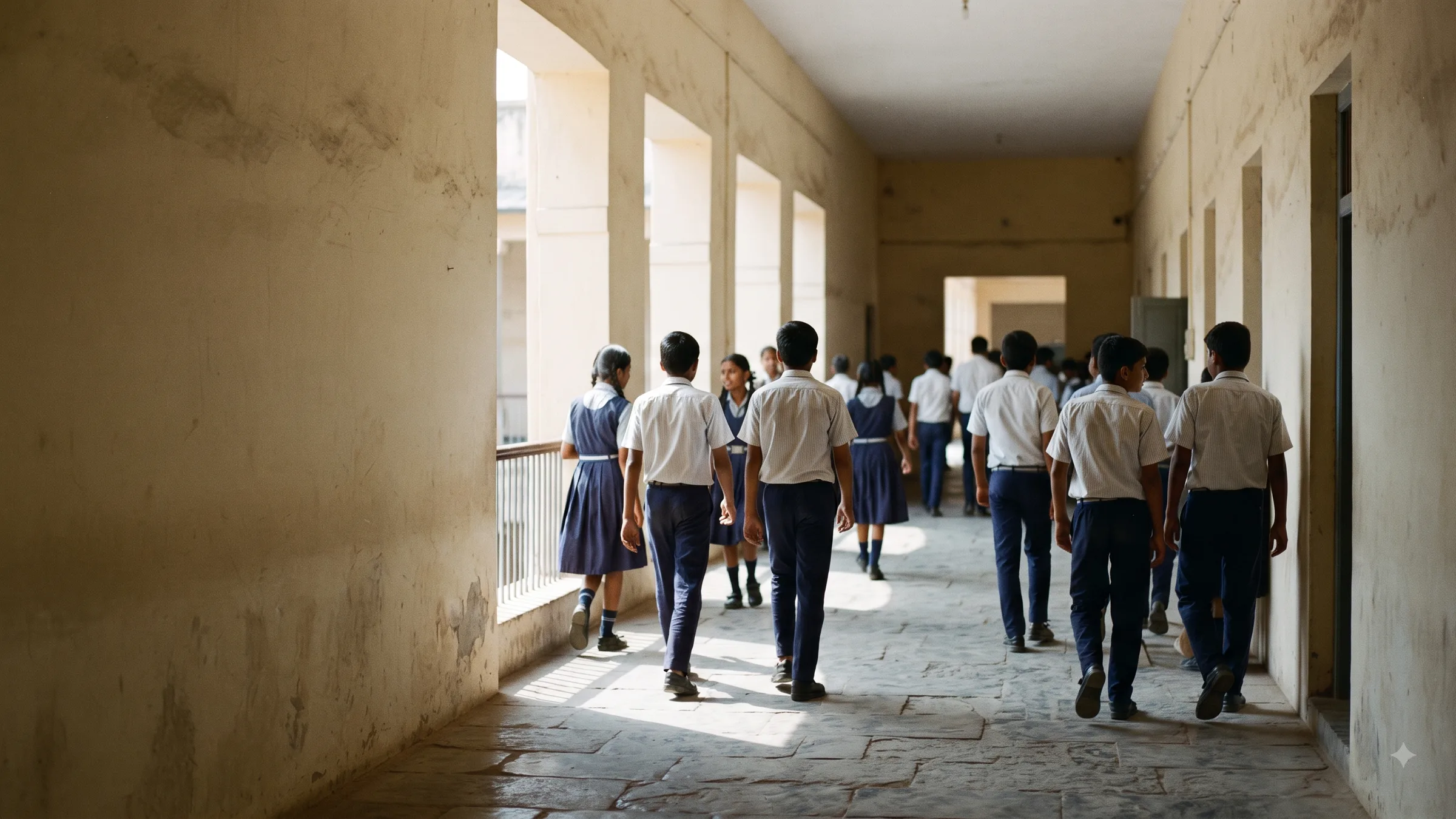
Every child in the same shade
School uniforms cut, stitched and guaranteed under one roof, from swatch approval to the last mid-session admission.
- Minimum order
- 50 pieces per style
- Guarantee
- One year on stitching, woven garments* terms
- Made
- One building, measured across Gujarat, delivered anywhere in India
- Fabric
- Branded mills, approved on swatch before it is bought
- Order by
- January or February for a June session start
Understanding the industry
The School’s Year
A school uniform order is decided by people, not procurement software. A principal, a trustee, sometimes a purchase or PTA committee. The sequence is settled trade practice: shade approved against a physical swatch, a stitched sample for each garment and size band, a rate card fixed for the session. Then either one consolidated order or an approved-vendor arrangement where parents buy directly. The window is short. In Gujarat the session opens in early to mid June, so cutting must finish through April and May. The whole year arrives in a few weeks, followed by a long tail of odd sizes, replacements and new admissions.
The wearer is a child in the garment five to eight hours a day, through a North Gujarat year: dry heat that approaches 45 degrees before the monsoon, humidity after it, a short cool spell that adds a sweater. Classrooms are fan-cooled, not air-conditioned. The fabric meets chalk dust, ink, playground grit, floor seating and mid-day meal spills. Washing is domestic: detergent bar, hard water, then line-drying in full sun, over a hundred cycles in a garment’s life. The child grows three to six centimetres a year inside a garment expected to last twelve months, and it is often passed to a younger sibling after that.
Design stability matters as much as durability. CBSE and several state education departments have cautioned schools against compelling parents to buy from a single vendor and against changing uniform designs frequently, and common guidance asks that a design hold for about three years. That favours a maker who can keep a shade and a pattern stable across sessions. Girls’ uniform is rarely one garment: the same school may run a pinafore in primary, a skirt in middle school and salwar-kameez with dupatta in senior classes, all of which must read as the same colour though they are cut from different fabrics.
Why uniforms matter
Why the Uniform Matters
The uniform is the most visible thing a school produces. It stands at the gate every school morning in front of every parent, and it is the first physical evidence of the school a family handles after admission. When it keeps its shade and its seams for a full session, the school hears nothing. When it does not, the complaint arrives at the principal’s office, not ours.
- 01Identity at the gateEvery child in the same shade is the school’s public face at assembly, on excursions and on the road home. Two children in visibly different greys in the same line is the complaint that ends a supply relationship.
- 02A level classroomUniform dress removes visible income difference in a classroom where family circumstances vary widely. That only works if the garment a scholarship child wears looks and lasts like everyone else’s, which is a manufacturing decision, not a design one.
- 03The parent’s budgetThe school sets the specification but the parent usually pays. Fabric is the largest single component of the piece cost, so a garment that survives the session protects a household from a second unbudgeted purchase in December.
- 04Comfort is attentionA child in the wrong fabric in a fan-cooled classroom at 42 degrees does not sit still through the afternoon. Breathability and weight are chosen for the wearer first, and the rate card second.
- 05A defensible arrangementWith boards and education departments scrutinising how schools handle uniform purchase, a supplier who holds the design, the shade and the rate steady through the session gives the school an arrangement it can defend to any parent or authority.
Our approach
How Uniform Corner Works
Uniform Corner has made school uniforms since 2001, and grew out of Asopalav, a generational cloth shop in Satlasana that still trades. Everything happens in one building, retail counter and manufacturing unit together, measurement to finished garment on the premises. For a school this means one accountable maker from swatch to delivery, and a counter a parent can walk into in January when a child outgrows a trouser.
- 01One lot, one shadeThe session’s fabric is booked from a single mill lot wherever quantity allows, and the lot number is recorded against the school. A signed swatch is sealed with the school and a counter-swatch kept in-house, so repeat orders are approved against the fabric itself, not a colour name.
- 02Growth built into the patternJunior bottoms take elastic or extension waistbands. Trousers, skirts and pinafores carry a generous hem allowance so a hem can be let down at home. Shoulders and armholes are graded for two years of wear, not a close fit.
- 03Measured before cutMeasurement camps at the school before vacation give the real size distribution ahead of cutting. Bulk runs are then cut in graded size sets against a school-specific chart. Individual measurement is kept for seniors, outsize children and blazers.
- 04Sampled before bulkA stitched sample of each garment in each size band is signed off before production, so the pleat count, pocket position and collar the school approved are exactly what every parent receives.
- 05Reinforced where children wearBartacks at pocket mouths, fly and belt loops. Double-needle felled side seams and a reinforced crotch. Fused collar bands and cuffs that survive repeated washing without bubbling. Twill bottoms rather than plain weave, because knees and seats meet playgrounds and floors.
- 06Ready for the tailThe bulk run ends but the session does not. A buffer of fast-moving sizes can be planned into the order from the same fabric lot, so a January replacement matches the June issue.
Uniform collection
What an education order includes
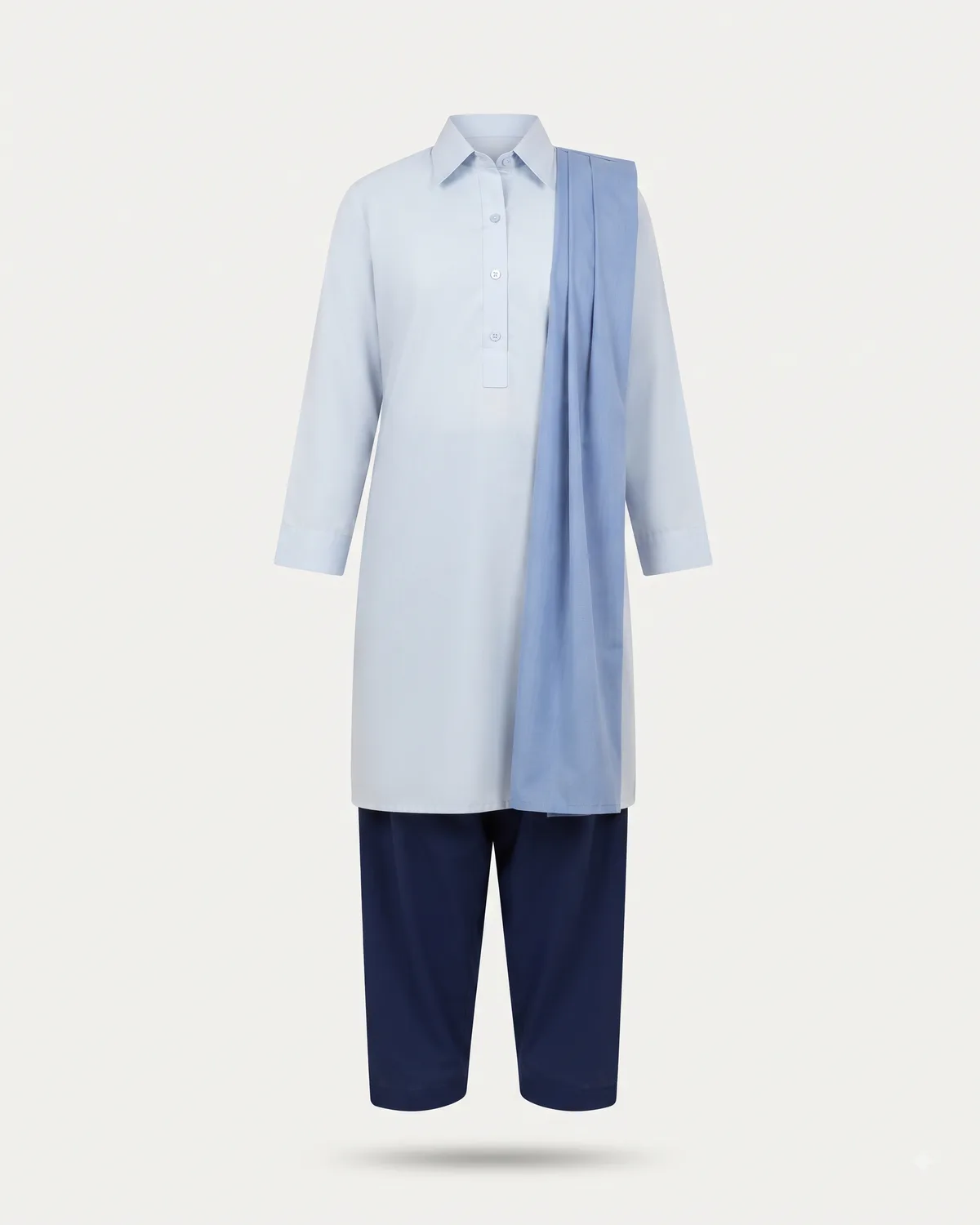
- Salwar-Kameez with Dupatta
- Senior girls’ three-piece; many schools specify the dupatta stitched into fixed pleats at the shoulder.
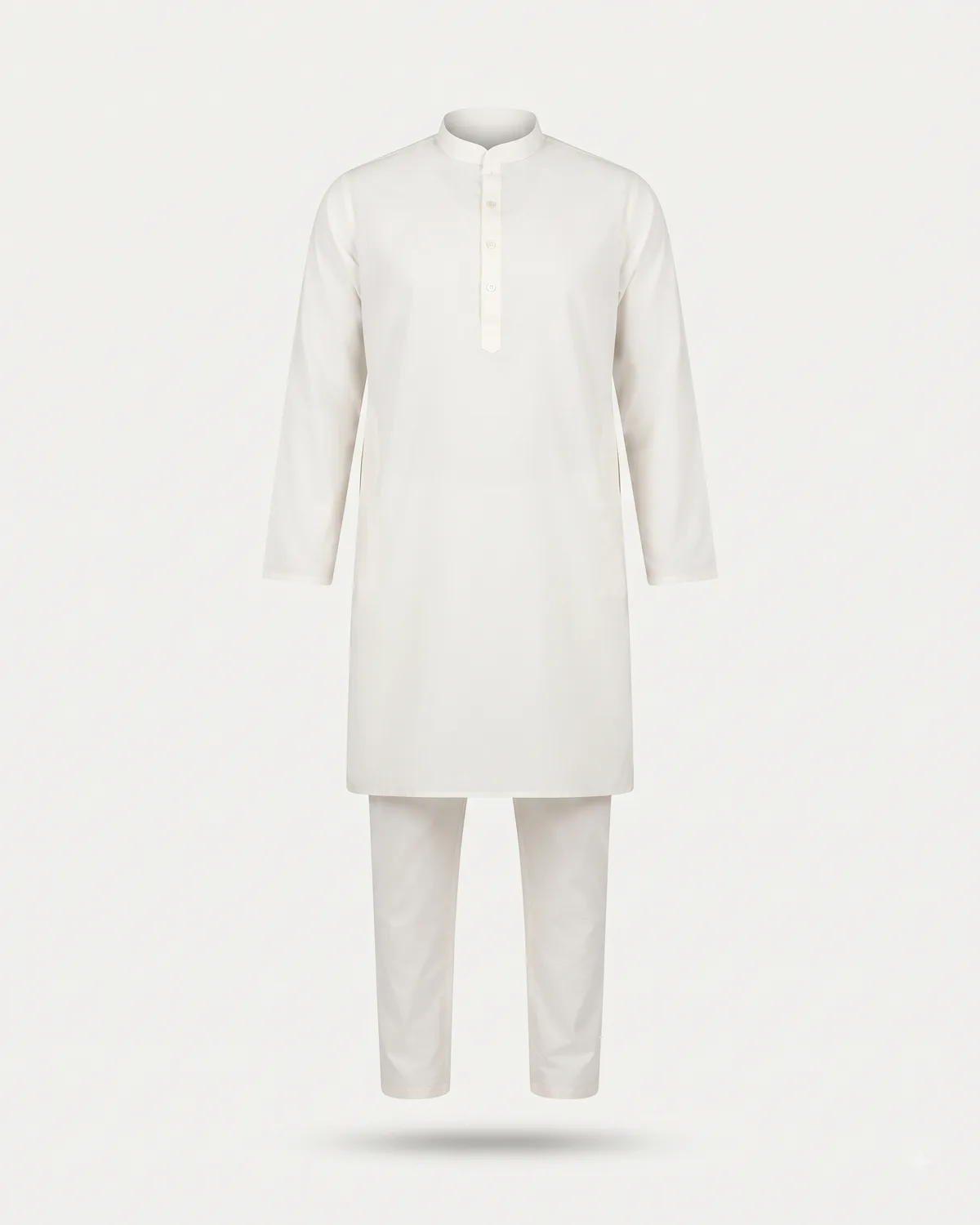
- Kurta-Pyjama
- Full uniform in some trust-run schools, a weekly or festival-day garment in many others.
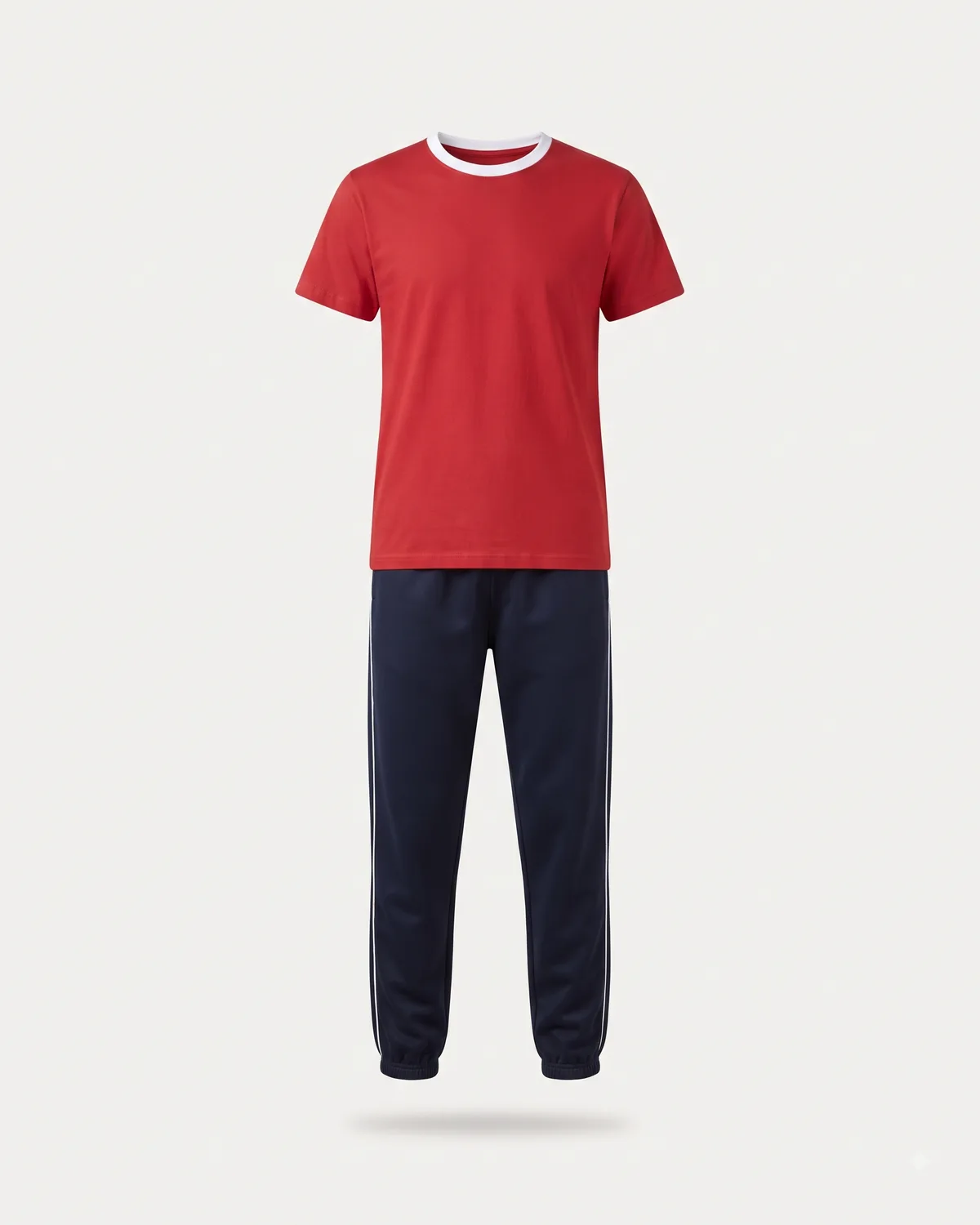
- PT and House T-shirt with Track Pant
- Knitted kit in house colours, with house name and number DTF printed, sized with knit-specific shrinkage allowance.
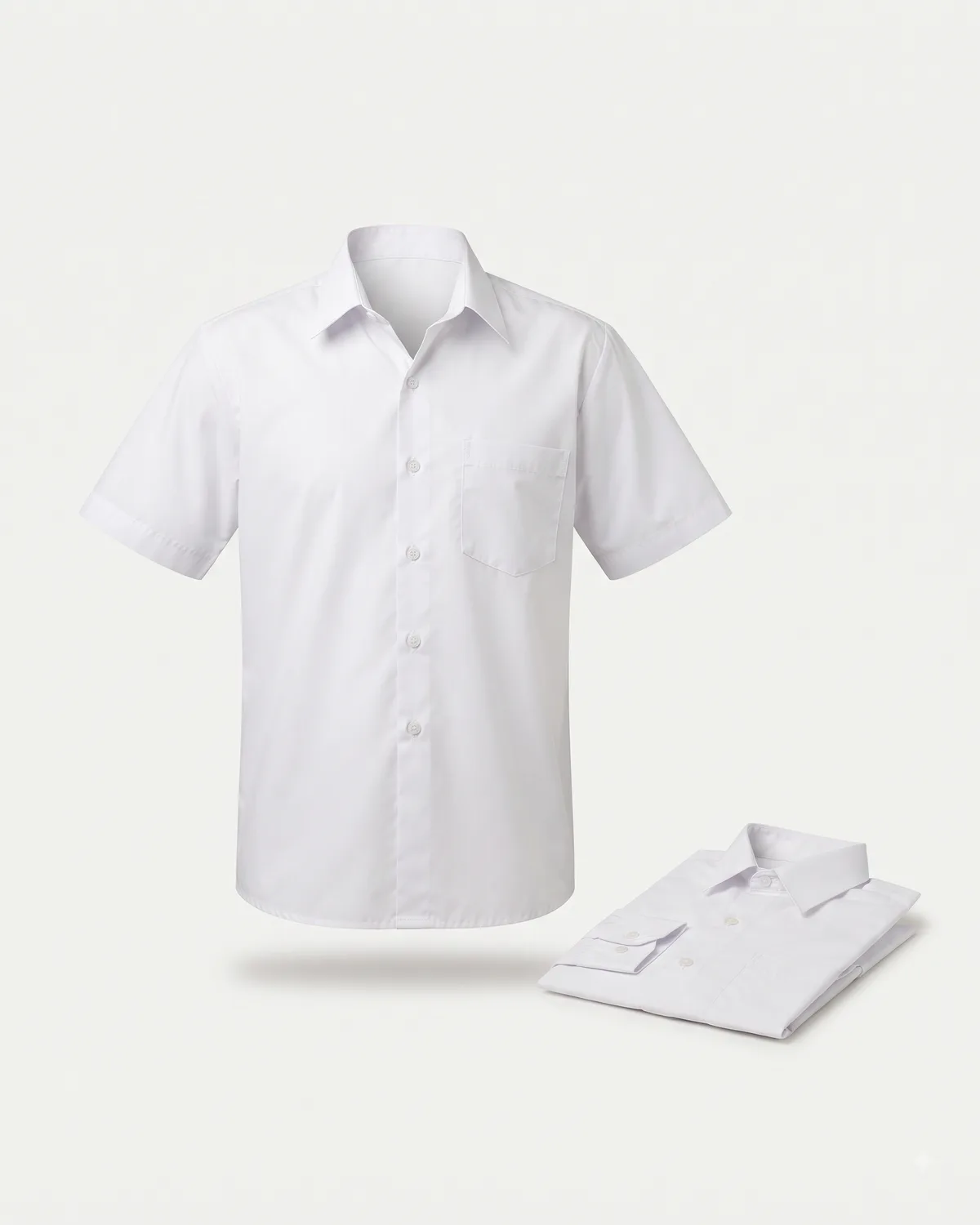
- Half Shirt / Full Shirt
- The core woven shirt, one chest pocket for the embroidered monogram, cut on separate boys’ and girls’ blocks.
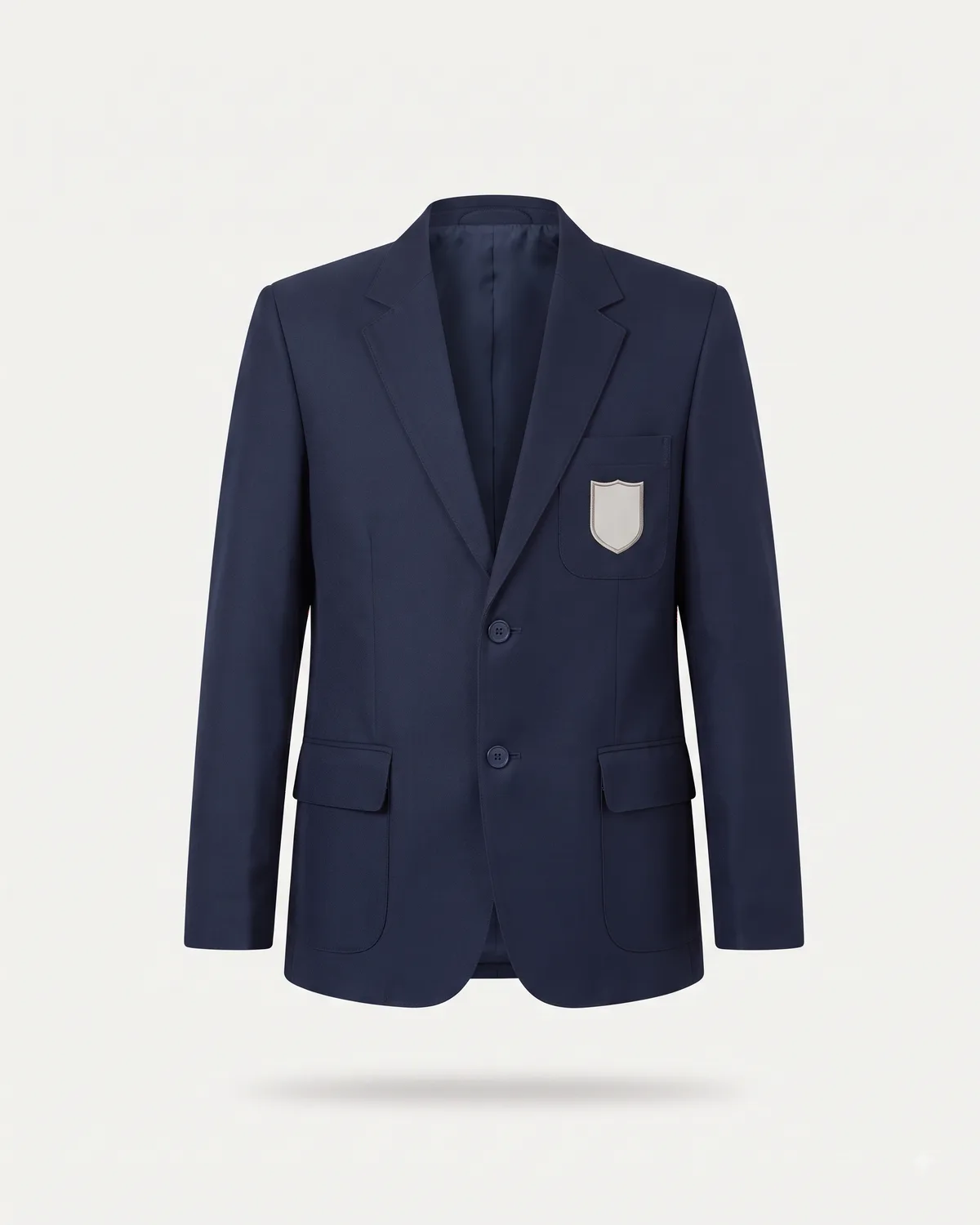
- Blazer
- Single-breasted and lined, crest on the breast pocket; usually bought long and worn for years.
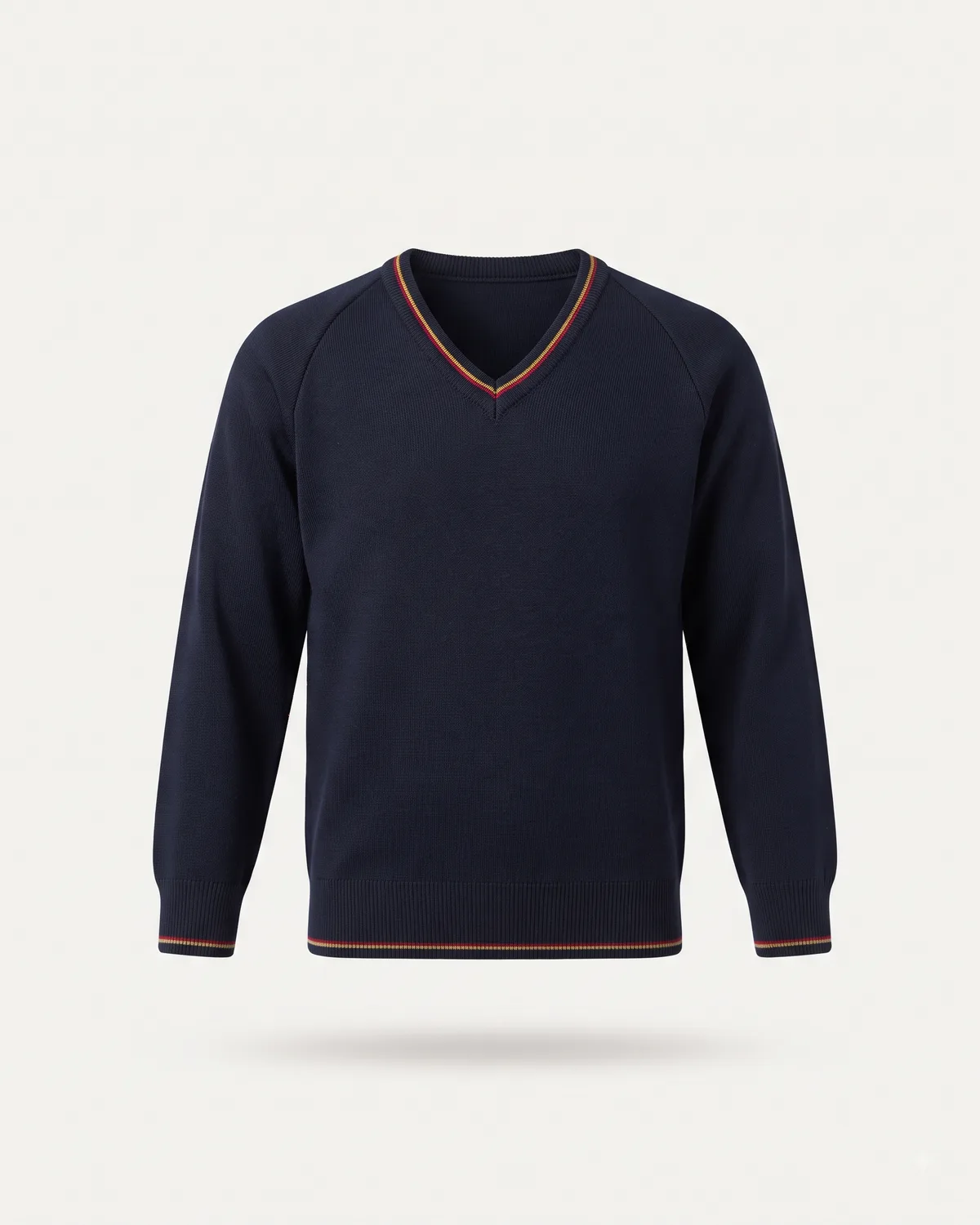
- Sweater / Cardigan / Slipover
- Acrylic winter layer with school-colour tipping, worn late November to early February.
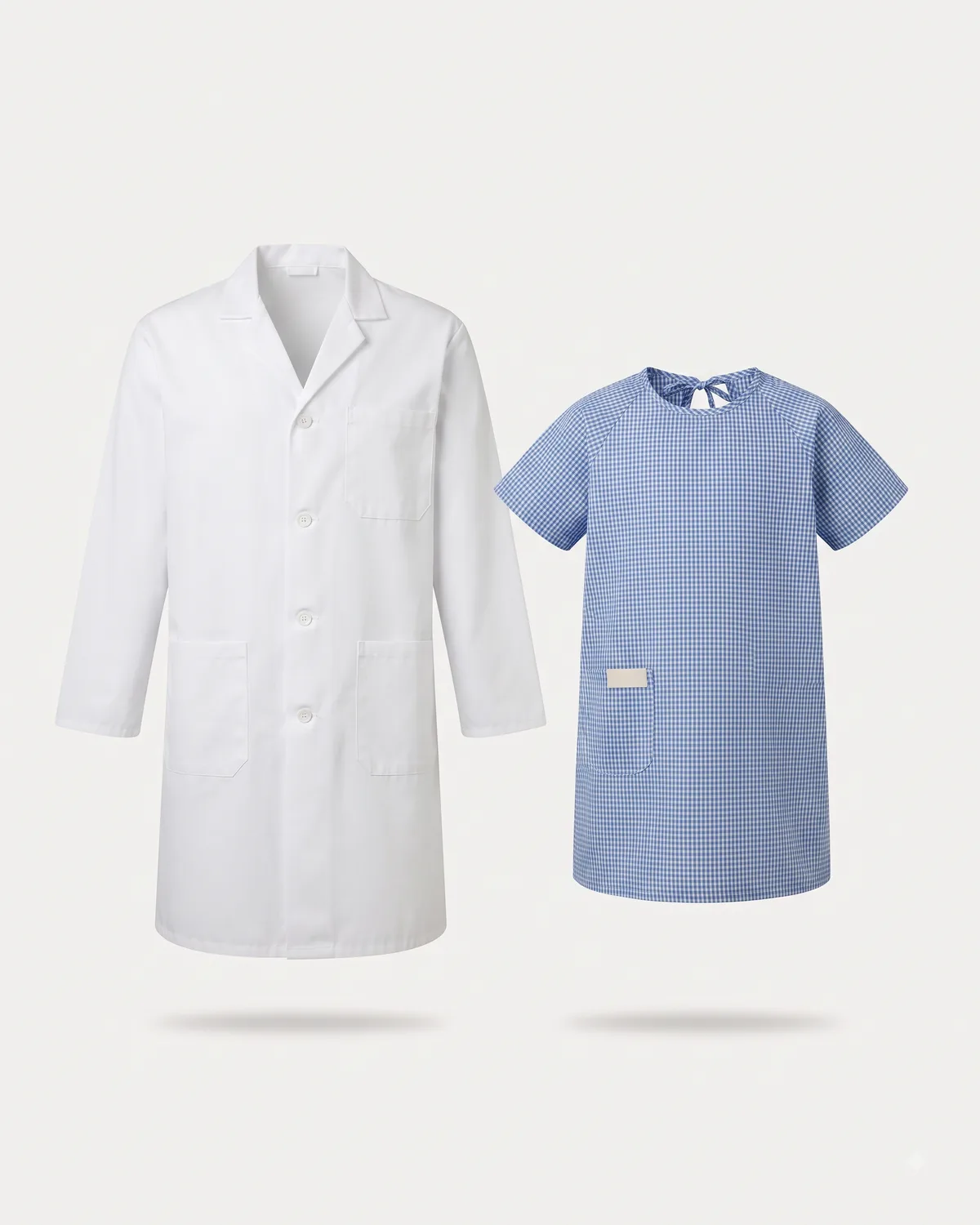
- Lab Coat and Pre-primary Smock
- White coats for senior practicals; smocks take the worst staining and are replaced mid-year.
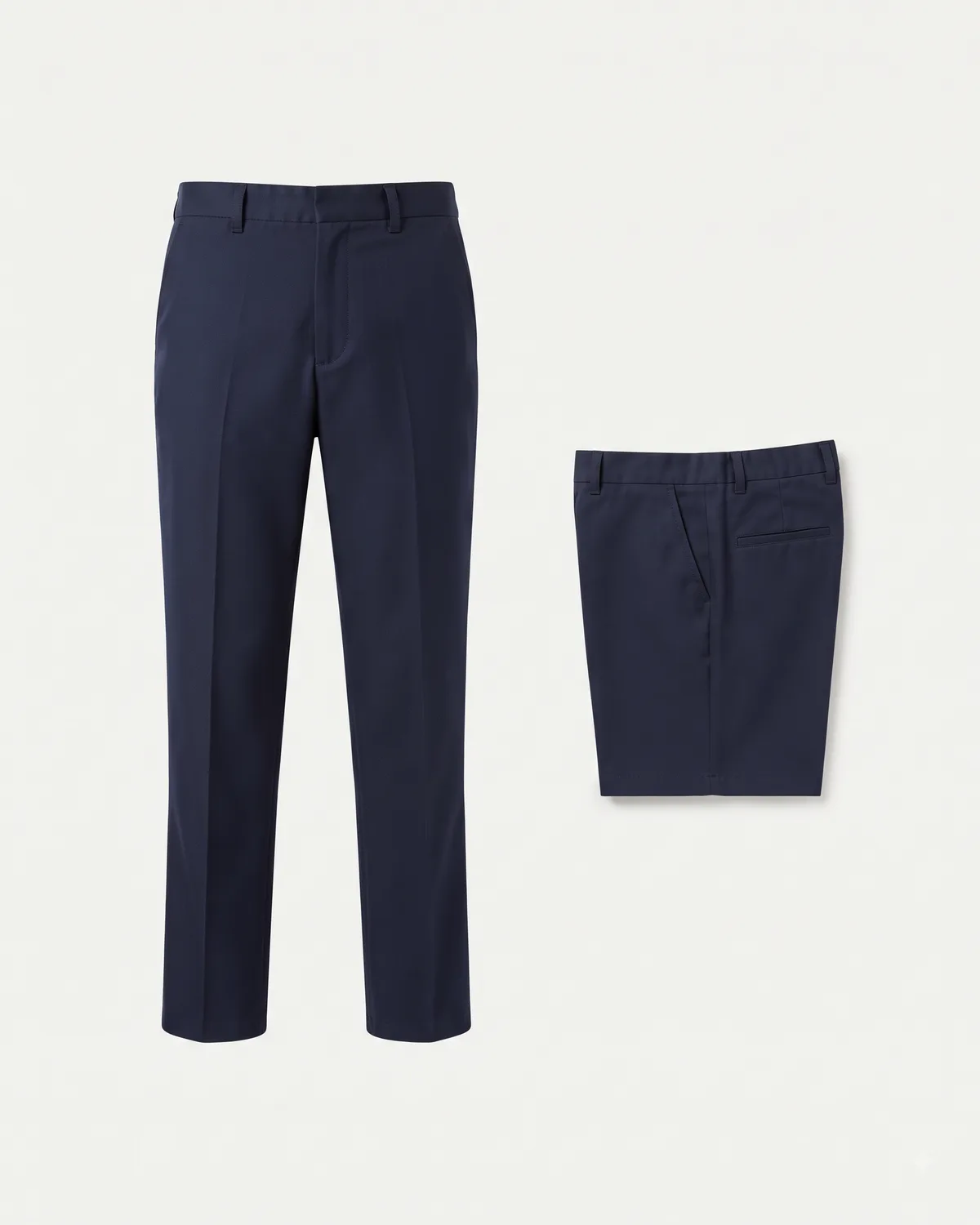
- Trouser and Half Pant
- Suiting-weight twill bottoms; elastic-back waists for juniors, belt loops for seniors.
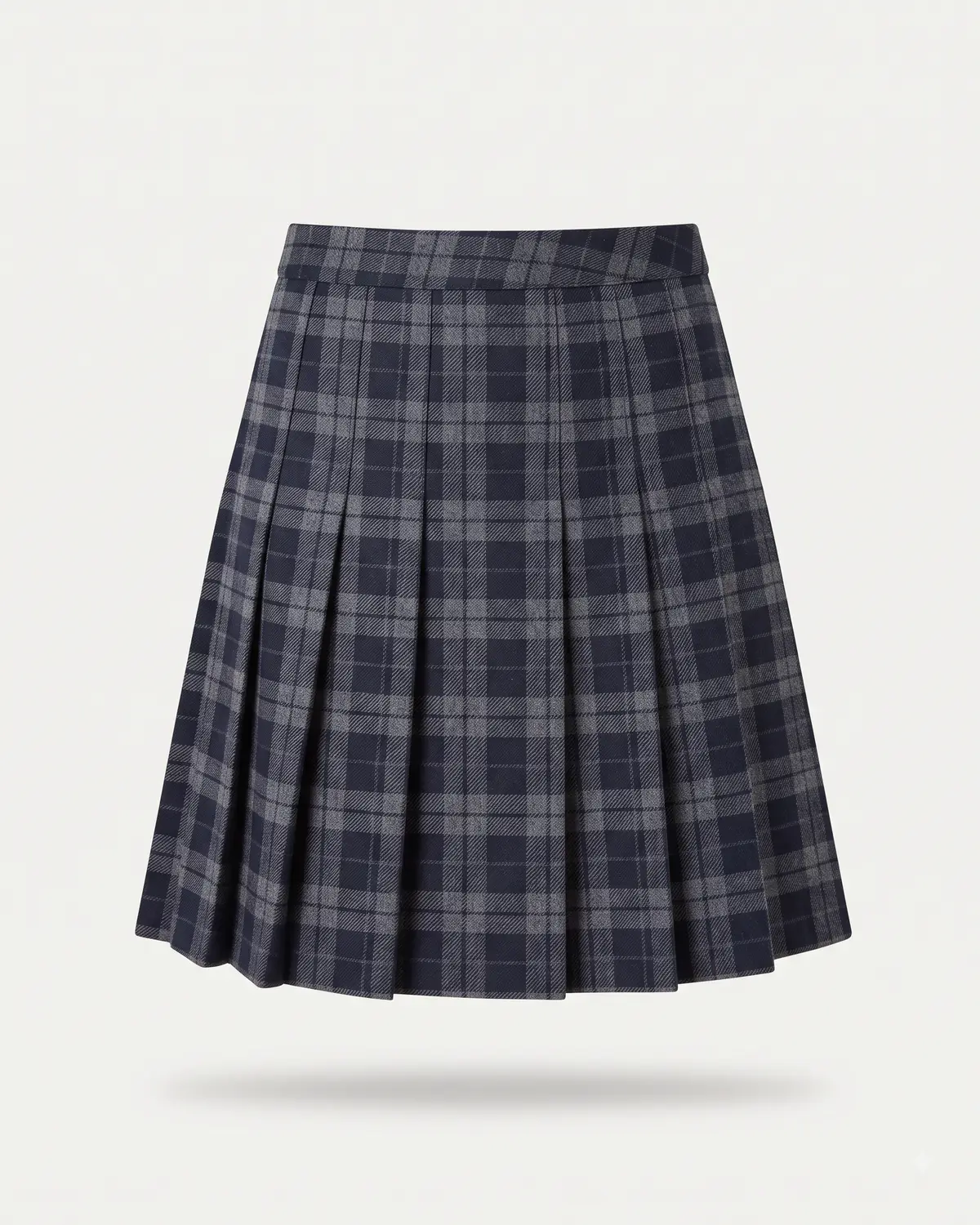
- Skirt with Bloomers
- Box or knife pleats edge-stitched to the hip so pressing survives domestic washing; bloomers for juniors.
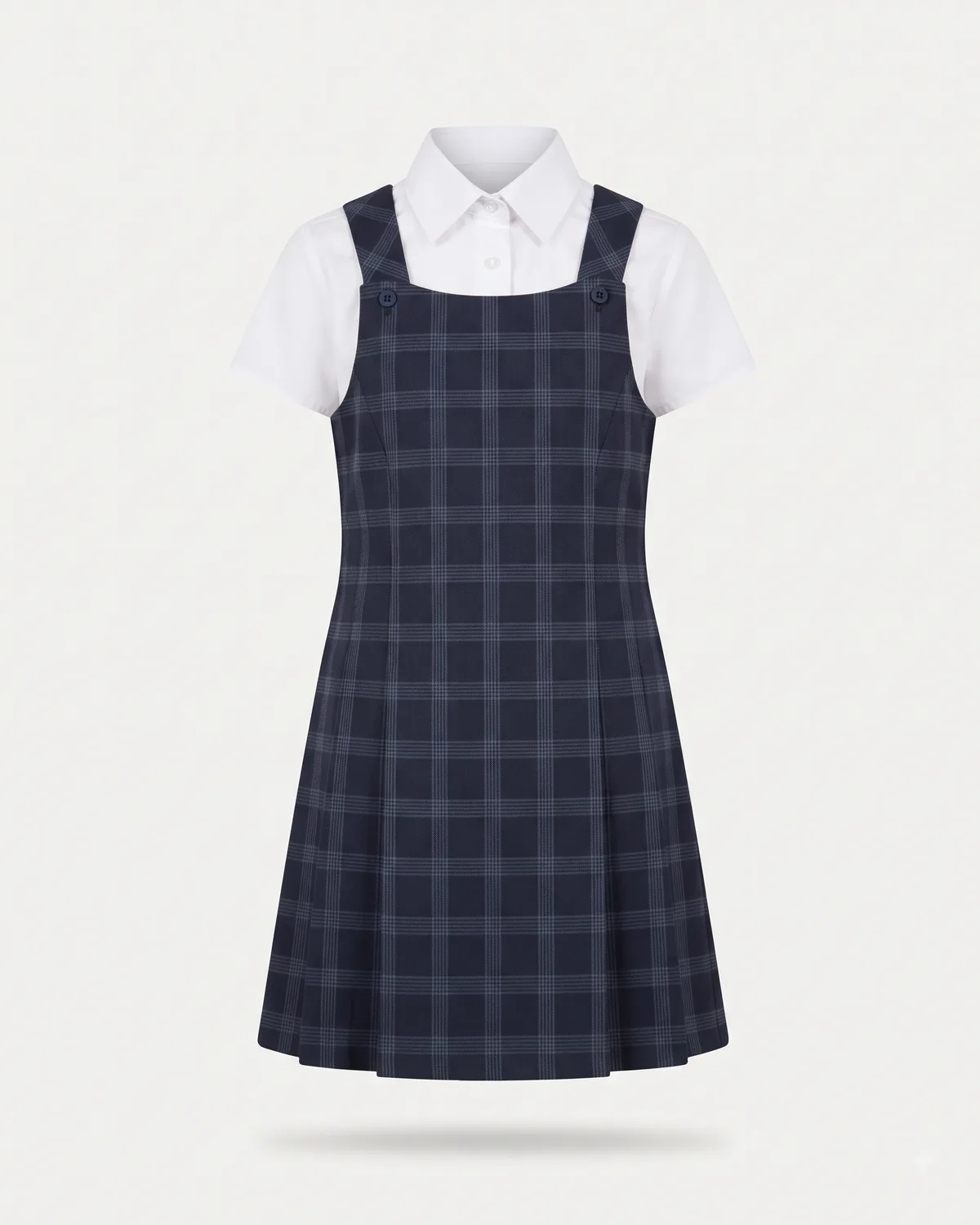
- Pinafore / Tunic / Frock
- The junior girls’ over-garment; the signed sample, not the word, defines what each school means.
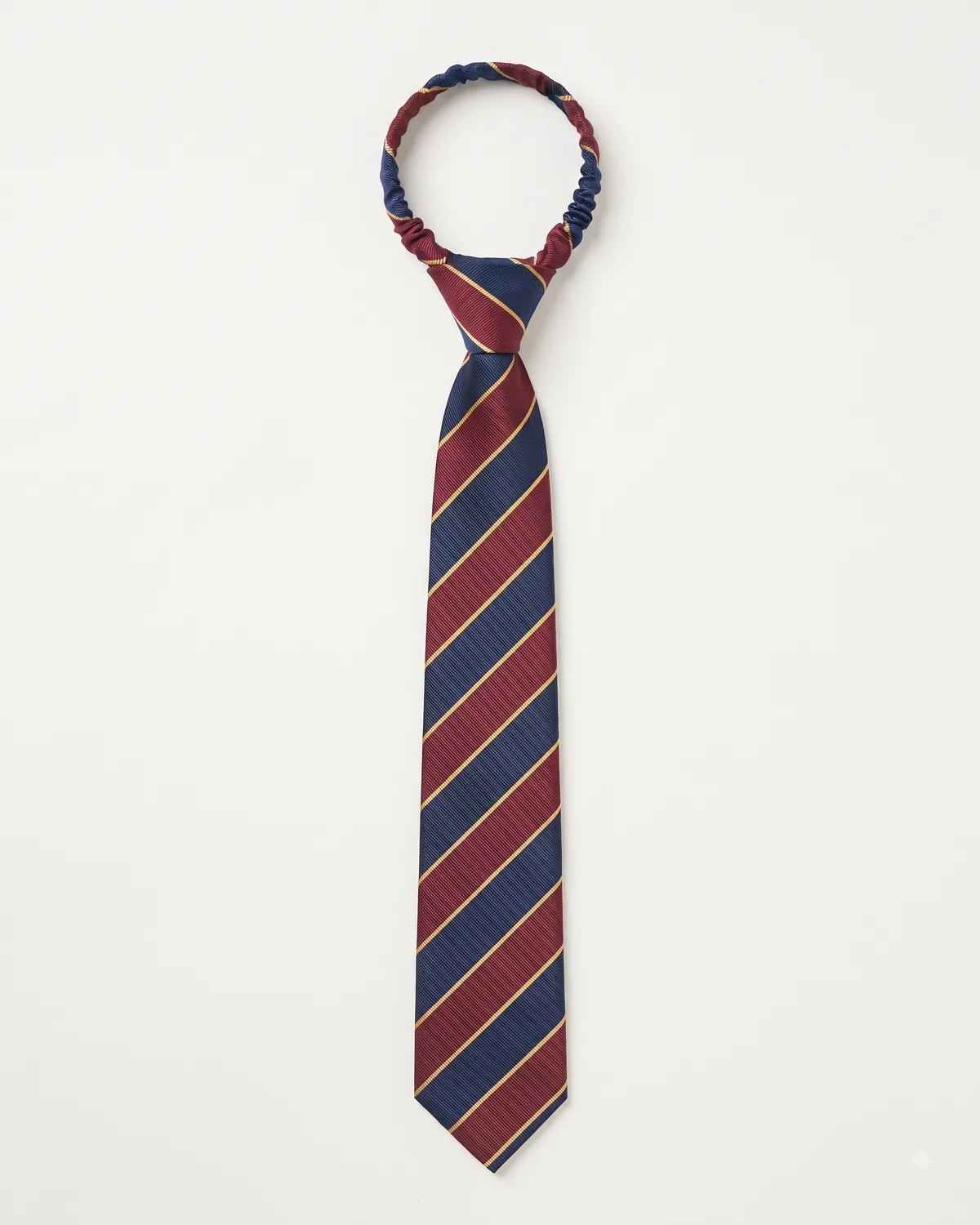
- Neck Tie
- Elastic pull-up tie for junior years and a hook-style tie once boys reach the age to knot it, both in house-stripe colours.
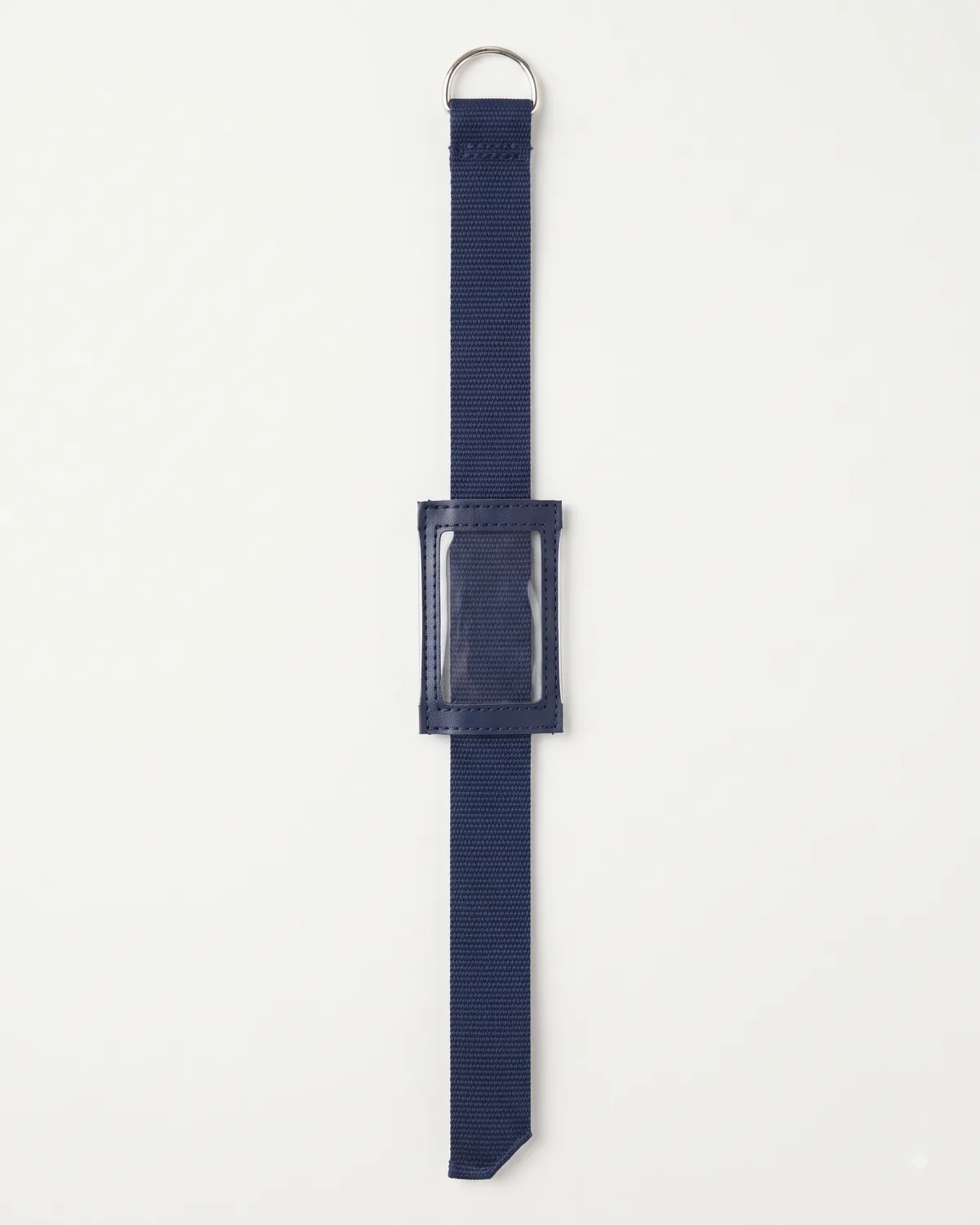
- School Name Belt
- The cross-body ID strap for pre-primary and junior classes, a clear window pocket for the name-class-roll card, adjustable for growth through the year.
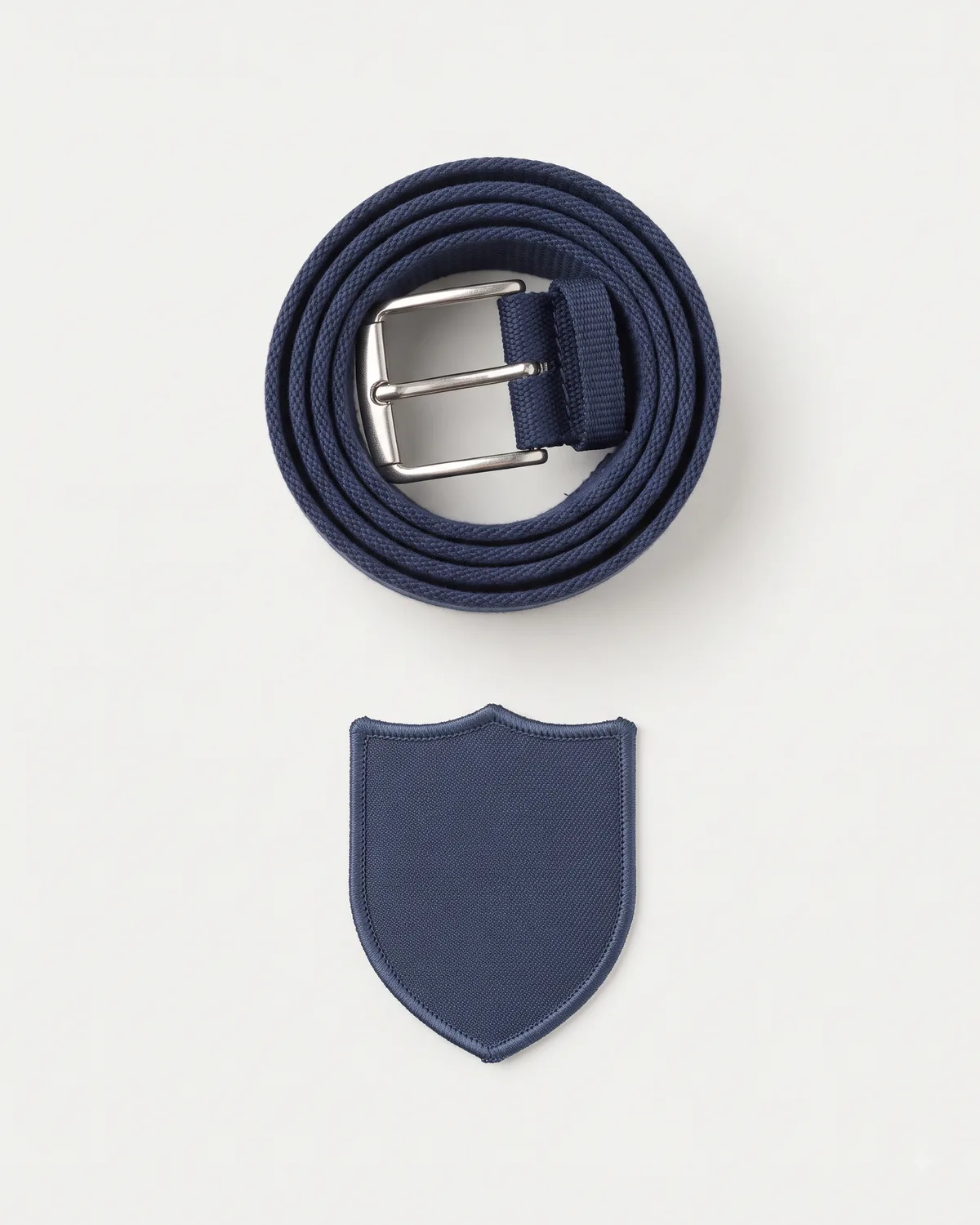
- Waist Belt and Badge
- Elastic or leather-look waist belt with a plain buckle, shown with the woven or acrylic blazer badge every school orders in its own crest.
Materials & craftsmanship
Fabric, Chosen and Approved
Fabric decides most of what a parent experiences: hand, shade, opacity, life. Fabric comes from branded mills, Raymond, Siyaram’s, Santosh and Qmax among them, and a school may nominate its preferred mill. Knitted goods, the PT kit and sweaters among them, are quoted on their own terms, because knit wears by pilling and relaxation shrinkage rather than seam failure.
| Fabric | Working spec | Why it suits |
|---|---|---|
| Poly-cotton shirting (PC, terry-cot) | 65/35 polyester cotton, 110 to 150 GSM at 58 inch | Cotton breathes; polyester survives bleaching. Kept above 110 GSM so whites stay opaque over a vest. |
| Poly-viscose suiting (PV) | 65/35 or 70/30 polyester viscose, 200 to 260 GSM | Viscose gives drape and deep shade for pleats; polyester carries abrasion and weekly washing. |
| Poly-cotton twill and drill | 65/35 polyester cotton, 2/1 or 3/1 twill, 190 to 240 GSM | A sturdier junior bottom for playground abrasion; takes bartacking without seam grin. |
| Cotton-rich shirting | 100% cotton or 60/40 cotton polyester, 120 to 160 GSM, pre-shrunk | For pre-primary comfort; must be sanforised, with creasing and slower monsoon drying stated plainly. |
| Knitted pique and jersey | 65/35 polyester cotton; pique 175 to 200 GSM, jersey 160 to 180 GSM | Holds collar and placket shape on sports days; polyester controls shrinkage and pilling. |
| Blazer suiting | Poly-viscose 65/35 or 70/30, or poly-wool near 70/30, 240 to 300 GSM | Enough weight to hold a lapel and shoulder line through years of school functions. |
Questions buyers ask
Asked before ordering
What fabric weight should a school specify for shirts and for bottoms?
Shirts work at 110 to 150 GSM in 65/35 poly-cotton; bottoms at 200 to 260 GSM in poly-viscose twill. One caution when comparing quotes: Indian mills often price fabric in grams per running metre at 58 inch width rather than GSM. Divide a running-metre figure by about 1.47 to compare like with like.
How far ahead of the session should a new uniform order start?
A school changing its uniform design should commit four to six months before the session opens; in Gujarat, with an early to mid June start, that means January or February. Lead time is governed by fabric, not stitching. Almost every school is served from ready mill fabric, chosen off the mill’s swatch and approved before it is procured, and stock shades move fastest. In the rare case a school wants a shade no mill carries, dyeing to order adds a mill minimum plus dyeing and finishing time before shade approval, sampling, measurement and cutting can even begin.
How do you make sure next year’s shirts match this year’s?
By managing the fabric lot, not by matching after the fact. The session’s requirement is booked from a single mill lot wherever quantity allows and the lot number is recorded against the school. A signed physical swatch stays sealed with the school and a counter-swatch stays in-house, so repeat orders are approved against the fabric itself rather than a colour name. Fabric is bought ready from the mill, and a fresh lot is always approved on swatch before cutting.
Do you measure the children at the school, or should we send a size chart?
Both are used, and the choice changes delivery risk. Measurement camps at the school before vacation give the real size distribution ahead of cutting, which prevents the middle-size shortfall that follows a guessed chart. Bulk runs are then cut in graded size sets against a school-specific chart. Individual measurement is kept for outsize children, seniors and blazers, where fit matters most and quantities are small.
Can parents buy directly from you, or must the school place one order?
Yes, parents can buy at the retail counter once the school has approved the design and rate; a single consolidated school order works equally well. The counter sits in the same building as the manufacturing unit, which is how mid-session admissions and outgrown sizes are handled without the school carrying stock or handling money. Boards and state departments have cautioned schools against compelling purchase from a single vendor, so many schools prefer the approved-design, open-counter model.
What does the one-year guarantee cover?
It covers the stitching on woven garments: shirts, trousers, skirts, pinafores, kameez, waistcoats and blazers. Seams, buttons, hems and bartacks are the work of this building, so they are guaranteed for a year. The fabric is not promised after the fact; it is approved on the physical swatch before it is bought, and a repeat order is judged against the sealed counter-swatch. Hosiery and t-shirts are excluded, because knitted goods wear by pilling and relaxation shrinkage, which is a wear characteristic, not a defect. Shade loss from bleach at home, deliberate damage and normal growth sit outside it.
What GST applies to school uniforms?
Since 22 September 2025, readymade garments attract 5% GST where the sale value is Rs 2,500 or less per piece, and 18% above that. Most school uniform pieces fall under the threshold; a blazer can cross it. The rate applies per piece on sale value, so a school should confirm the treatment of its own rate card, and of any bundled kit price, with its accountant.
Related identities
Next step
Tell us about the people who will wear it.
Roles, rough staff strength, and anything already decided about fabric or colour. That is enough for a written quotation for education uniforms.