Identities / Culinary
Chef Uniform Manufacturer in Gujarat
Chef whites built for Indian kitchens
Chef coats, kitchen checks and aprons specified for real Indian kitchens, from hotel brigades to halwai catering teams.
- Minimum order
- 50 pieces per style
- Guarantee
- One year on stitching, woven garments* terms
- Made
- One building, measured across Gujarat, delivered anywhere in India
- Fabric
- Branded mills, approved on swatch before it is bought
Understanding the industry
The Kitchen, Understood
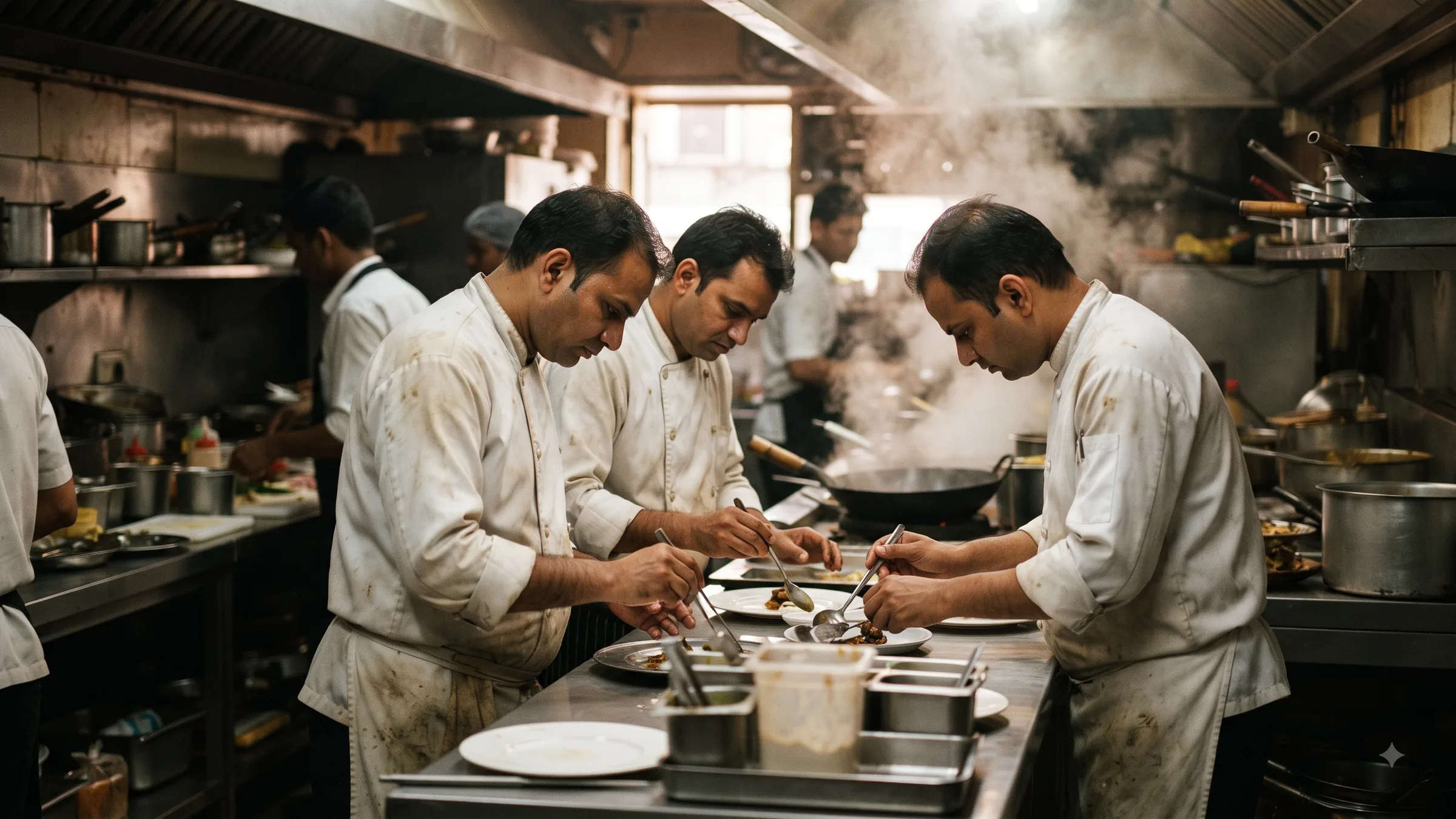
India’s culinary workforce is far broader than the hotel-chef image. It runs from five-star kitchen brigades through mid-market restaurants, QSR chains and cloud kitchens, bakeries and mithai counters, hospital and factory canteens, and institutional kitchens, out to the halwai teams who cook weddings and community feasts over open bhatti fires across Gujarat. The kitchens themselves are hot, enclosed and often under-ventilated. Published heat studies record Indian commercial kitchens above 45 degrees Celsius, and a garment is worn through split shifts of ten hours or more. Steam, hot oil, open flame, wet floors and constant grease are the conditions a uniform must live in.
The buying is rarely done by the chef. In hotels it sits with the linen and uniform room and the purchase department. In contract catering it is a central procurement cell buying against a client contract. In schools, hospitals and factories it is administration or HR. The decision is usually annual, priced per set, and settled on three questions: does the fabric survive the laundry, can sizes be topped up mid-year, and can one supplier cover kitchen, service and housekeeping together. Sampling before bulk is standard practice. A signed sample seals the specification and becomes the reference for every repeat order.
Laundering divides the specification. Star hotels and large institutional kitchens run on-premises laundries with hot alkaline washes and chlorine bleach, which punish cheap dyes and weak stitching. Most mid-market restaurants, canteens and outdoor caterers have no laundry at all; staff wash at home in cold water and line-dry overnight, so the fabric must dry by morning without going limp or grey. A serious kitchen uniform is specified for the wash it will actually meet: tested fastness reports from the mill for the hot-wash world, quick-drying blends for the home-wash world, and pre-shrunk fabric with the shrinkage figure stated in writing for both.
Why uniforms matter
Why the Uniform Matters in a Kitchen
In a kitchen the uniform is three things at once: protective clothing, a hygiene control and an audit artefact. FSSAI Schedule 4 requires food handlers to wear clean protective clothing, head covering and appropriate footwear, and the catering rules go further on hair, beard and street shoes. An FSSAI hygiene inspection, a client-side food safety audit or a hotel’s own HACCP check will all look at what the brigade is wearing.
- 01Compliance that survives an auditFSSAI Schedule 4 asks for clean protective clothing, covered hair and beard, and no street shoes in the preparation area. A buyer who orders coats and trousers but omits headwear and kitchen footwear fails their own inspection. The order has to carry the whole requirement.
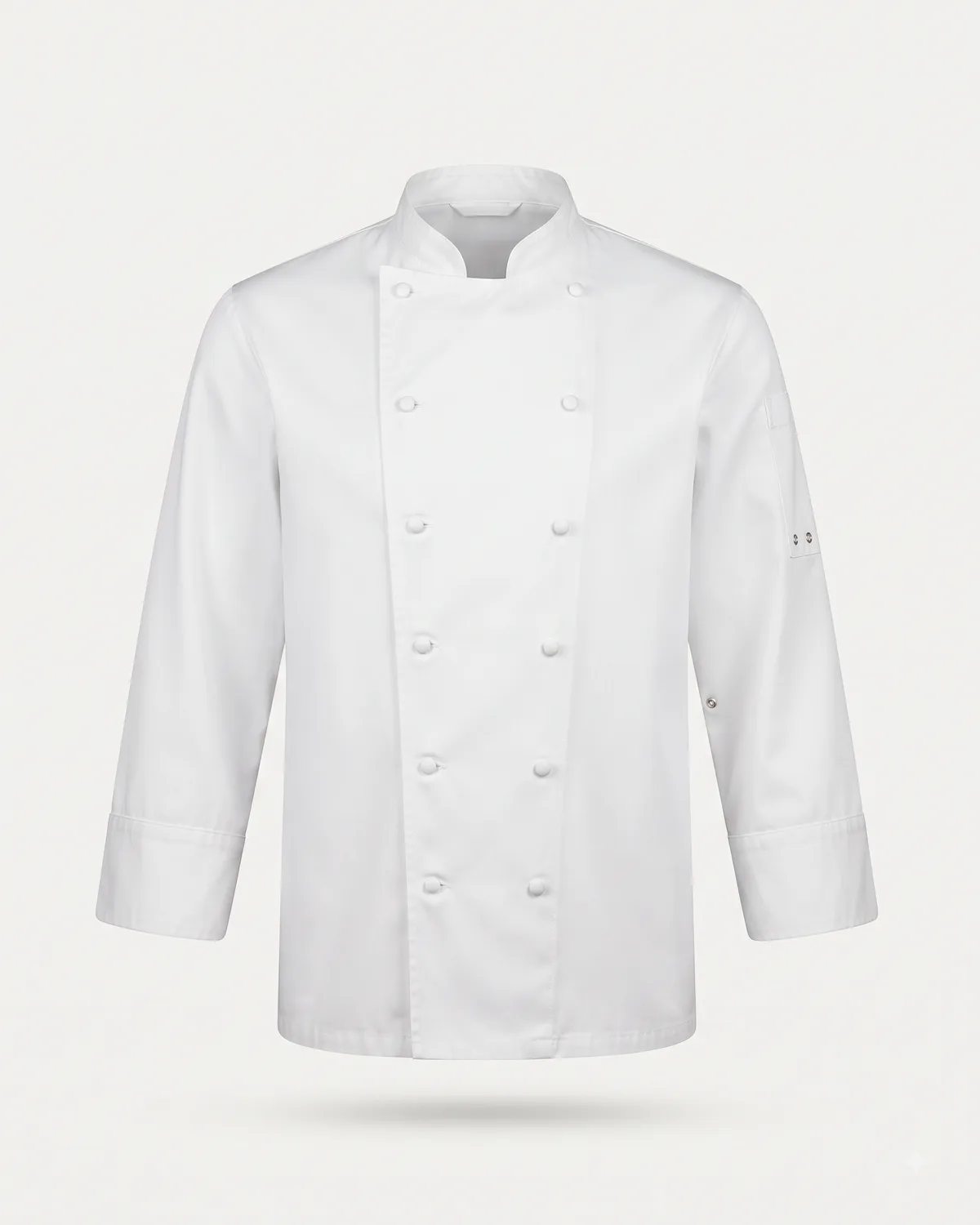
- 02The double breast is functionalTwo layers of fabric across the chest take hot oil and steam splash, and the front can be re-buttoned to turn a stained panel inward. On a chef coat the classical form is protection first and presentation second.
- 03Heat strain is a garment problemHeat stress in Indian commercial kitchens is a documented occupational health issue. A vented back yoke, underarm eyelets and a cotton-rich face make a real difference to the person standing at the range through a twelve-hour split shift.
- 04Headwear is the first controlHair is the most common physical contaminant in food, and a cap that actually contains it is the cheapest control in the whole programme. Full-coverage designs must also work over a bun or a turban, which is a real fitting consideration in Indian kitchens.
- 05The kitchen is now on showLive counters, open kitchens and chef’s tables put the brigade in front of the guest. The coat carries the property’s name as much as any front-of-house jacket does, which is why black coats are increasingly specified where staining would show.
Our approach
How We Work
Uniform Corner has made uniforms since 2001, and grew out of Asopalav, a generational cloth shop in Satlasana that still trades. The retail counter and the manufacturing unit share one building, so a kitchen order moves from measurement to finished garment on the premises, under one roof and one set of eyes. That matters for culinary work, where a signed sample becomes the reference for a year of repeats and top-ups.
- 01Sample first, then bulkA stitched sample is approved and signed before cutting begins, and can be wash-tested first. Measured shrinkage then goes into the pattern, so the coat fits after the tenth wash, not only on the day of issue.
- 02Sized for churnKitchens turn staff over quickly, so bulk orders are cut to graded stock sizes in two-inch chest steps, with drawstring waists and adjustable apron necks. A new commis is dressed from the graded run rather than a fresh order cycle.
- 03Nominate your millFabric comes from branded mills including Raymond, Siyaram’s, Santosh and Qmax. A hotel group with its own fabric standard can nominate a mill, and the quality is fixed against a swatch, a stated blend and a stated GSM before cutting.
- 04Colour and stain guidanceTurmeric dyes the fibre and no finish removes it. Where whites cannot be laundered hot, the honest specification is darker coats for prep and junior staff, kitchen check for trousers, and a planned replacement cycle for the whites that remain.
- 05One order, the whole brigadeCoats, trousers, aprons, caps and the stewarding line are specified together, so the range, the pot-wash and the counter are covered in one specification rather than split across three suppliers.
Uniform collection
What a culinary order includes
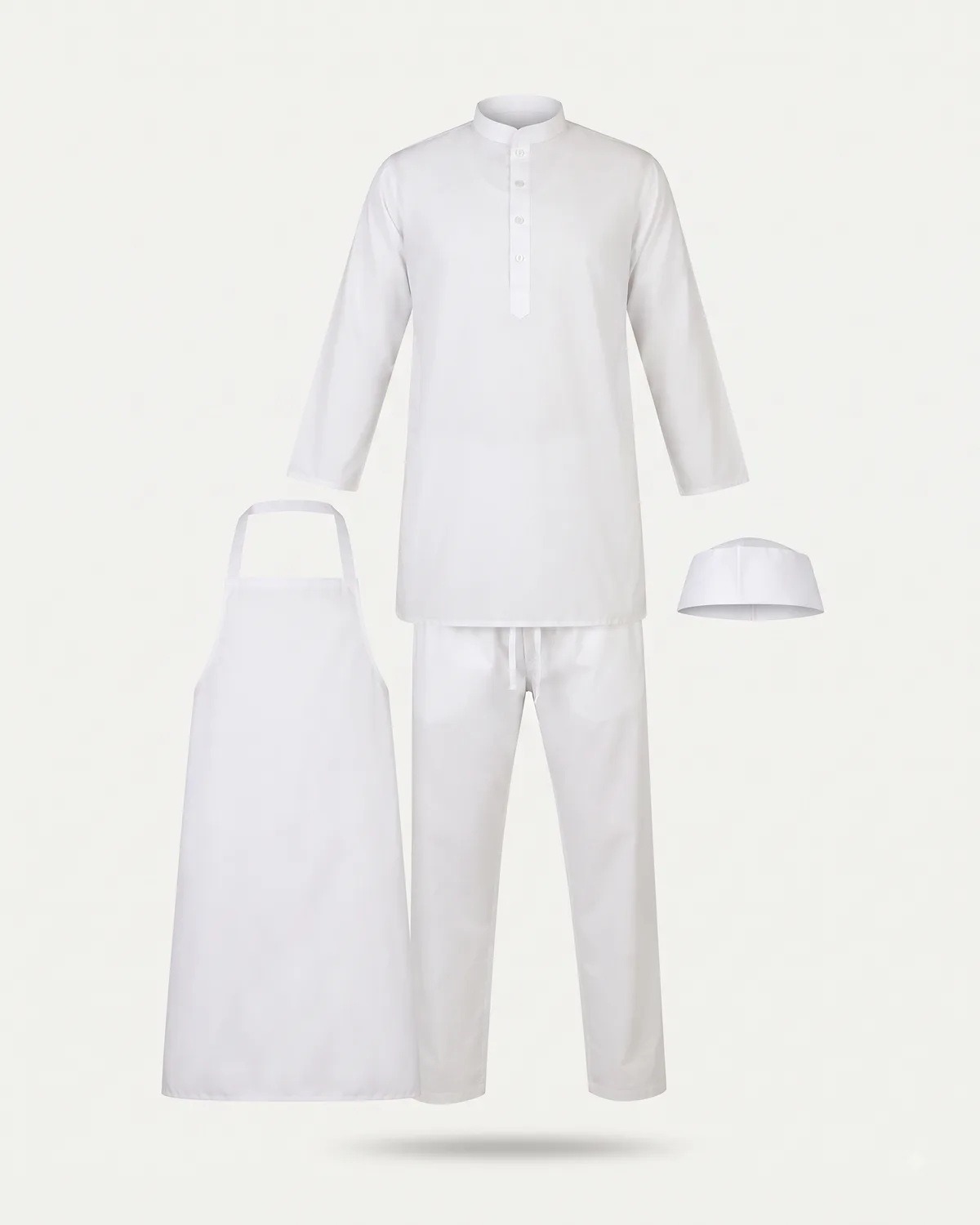
- Halwai kurta set
- White cotton kurta and pyjama with long apron and cap, for wedding and outdoor catering teams.
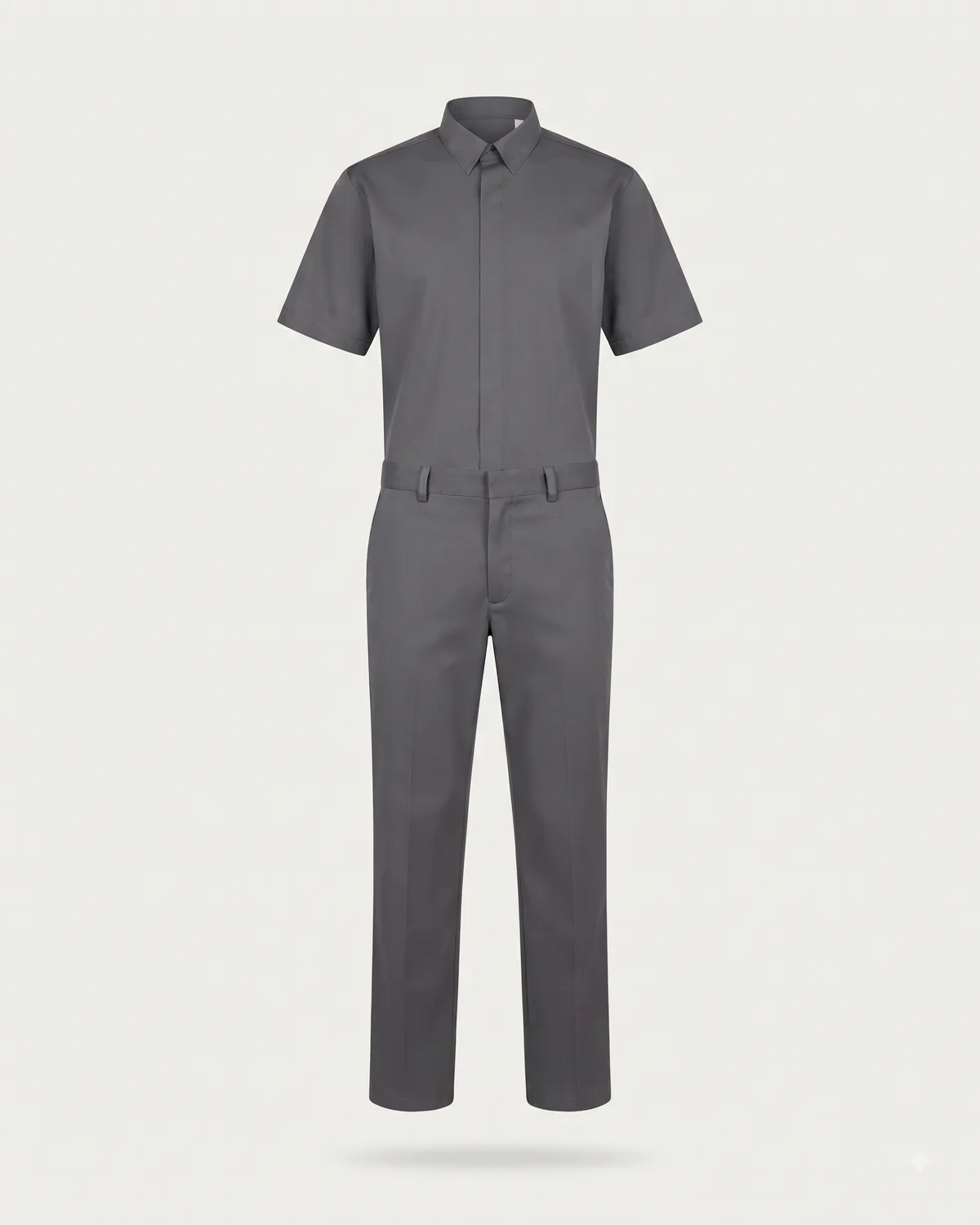
- Kitchen stewarding set
- Quick-drying shirt and trouser for pot-wash and dishwash, built to work under a waterproof apron.
- Chef coat
- Double-breasted with stand collar, vented back yoke and underarm eyelets, cut for kitchens that run hot.
- Commis and trainee coat
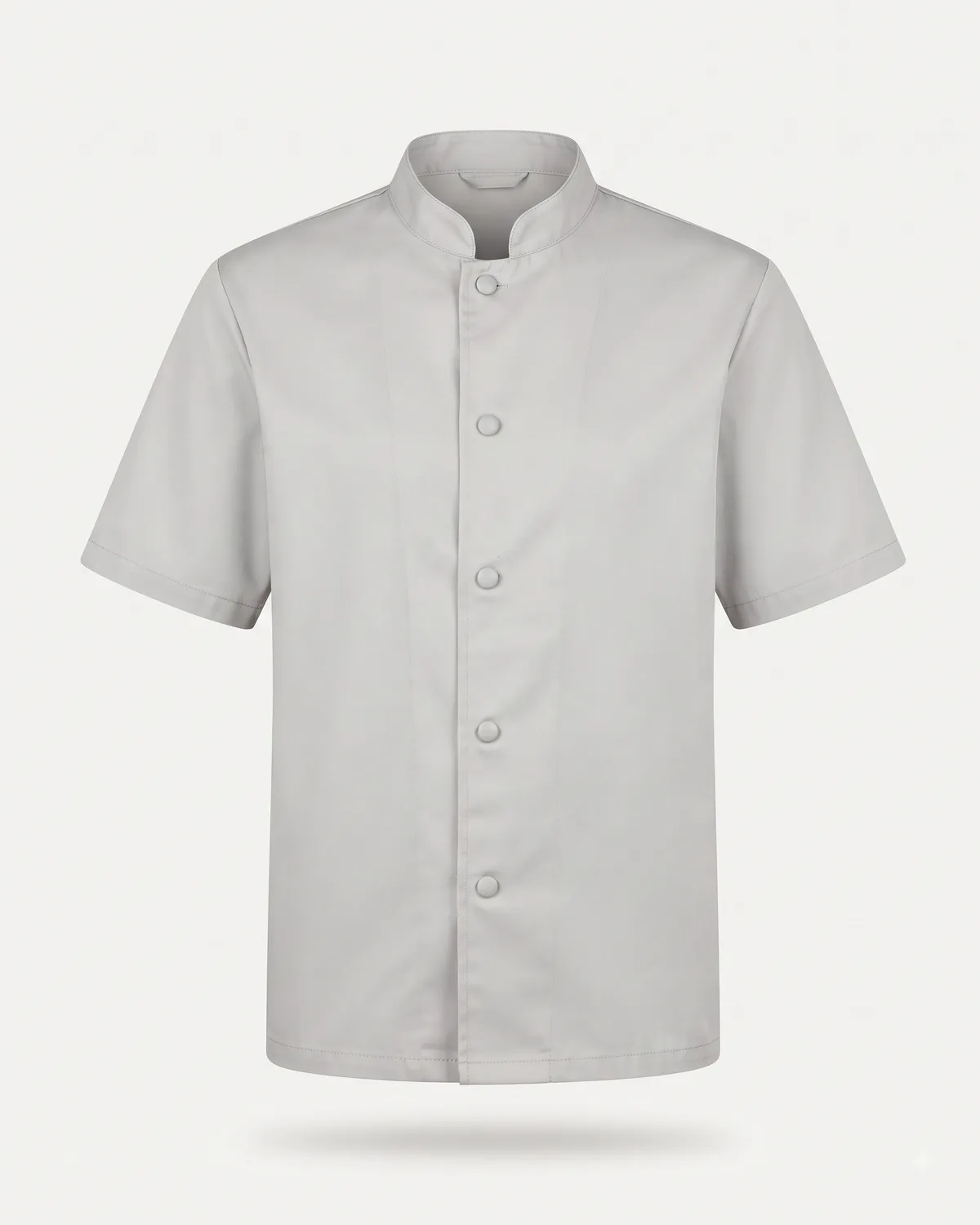
- Short-sleeve coat in grey or light blue, bought in deep size ranges for seasonal intakes.
- Bakery whites
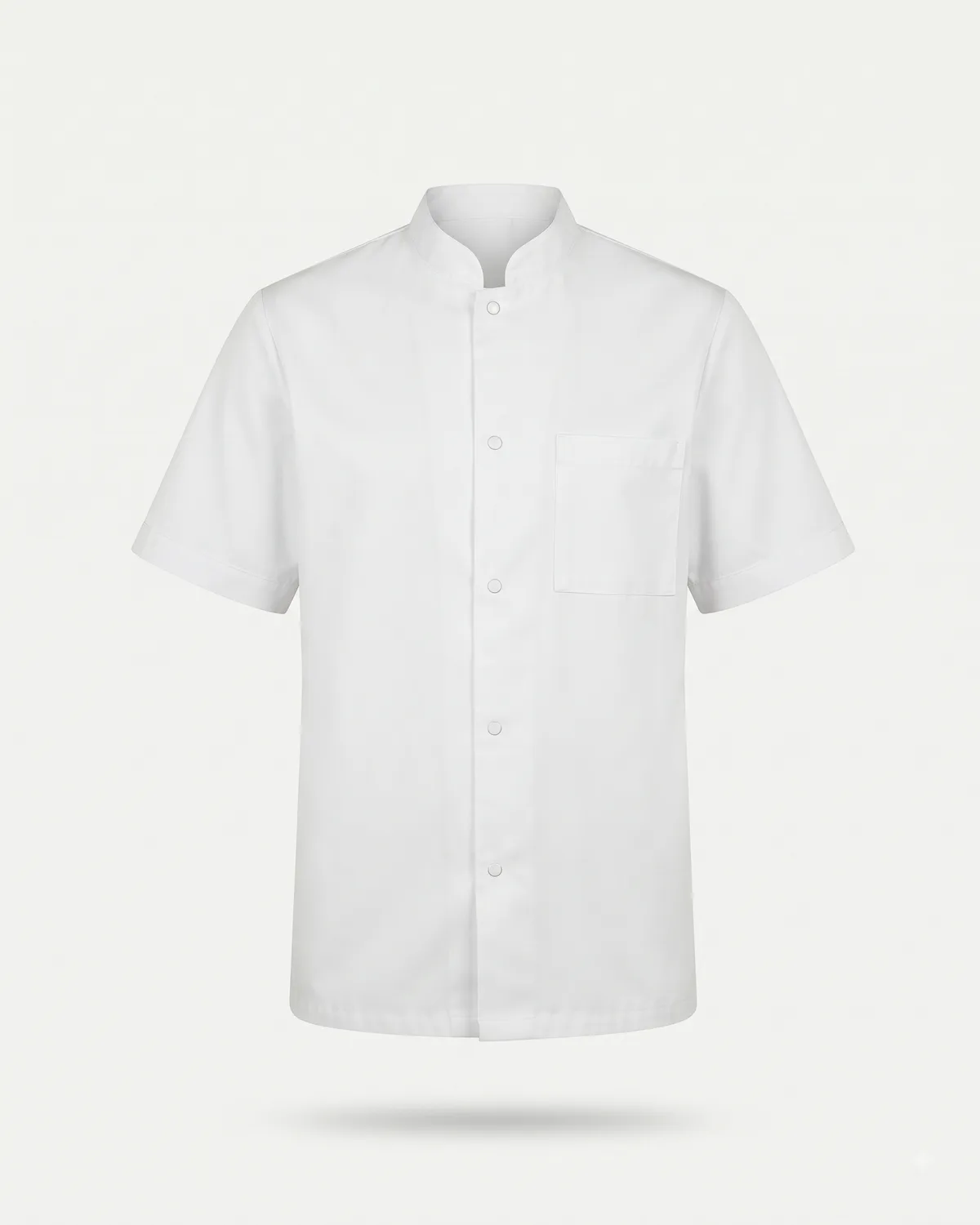
- Lighter single-breasted tunic with press studs and fewer pockets, so flour has nowhere to settle.
- Kitchen trouser
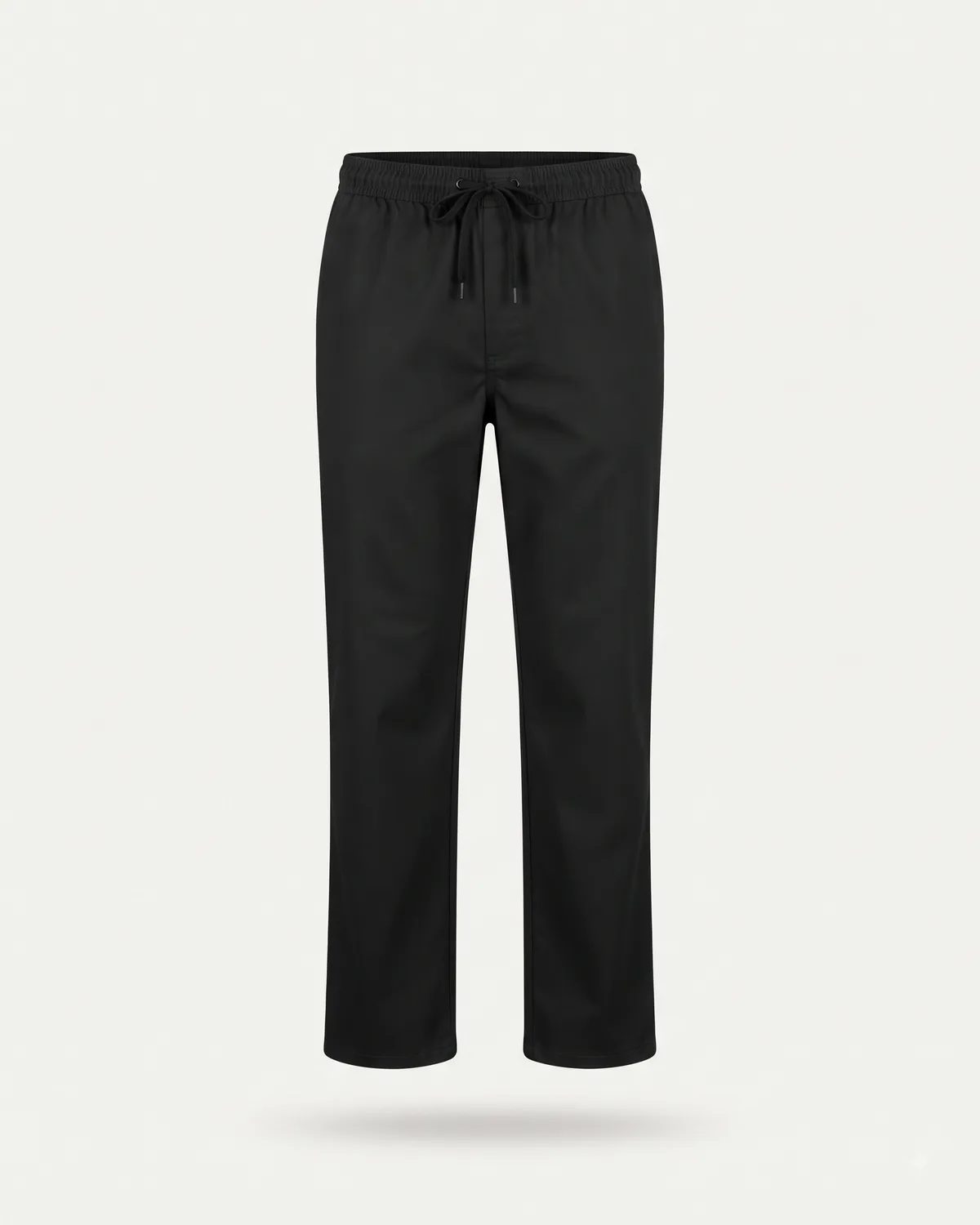
- Straight leg with drawstring or elasticated waist, in plain black or yarn-dyed kitchen check. No turn-ups.
- Long apron
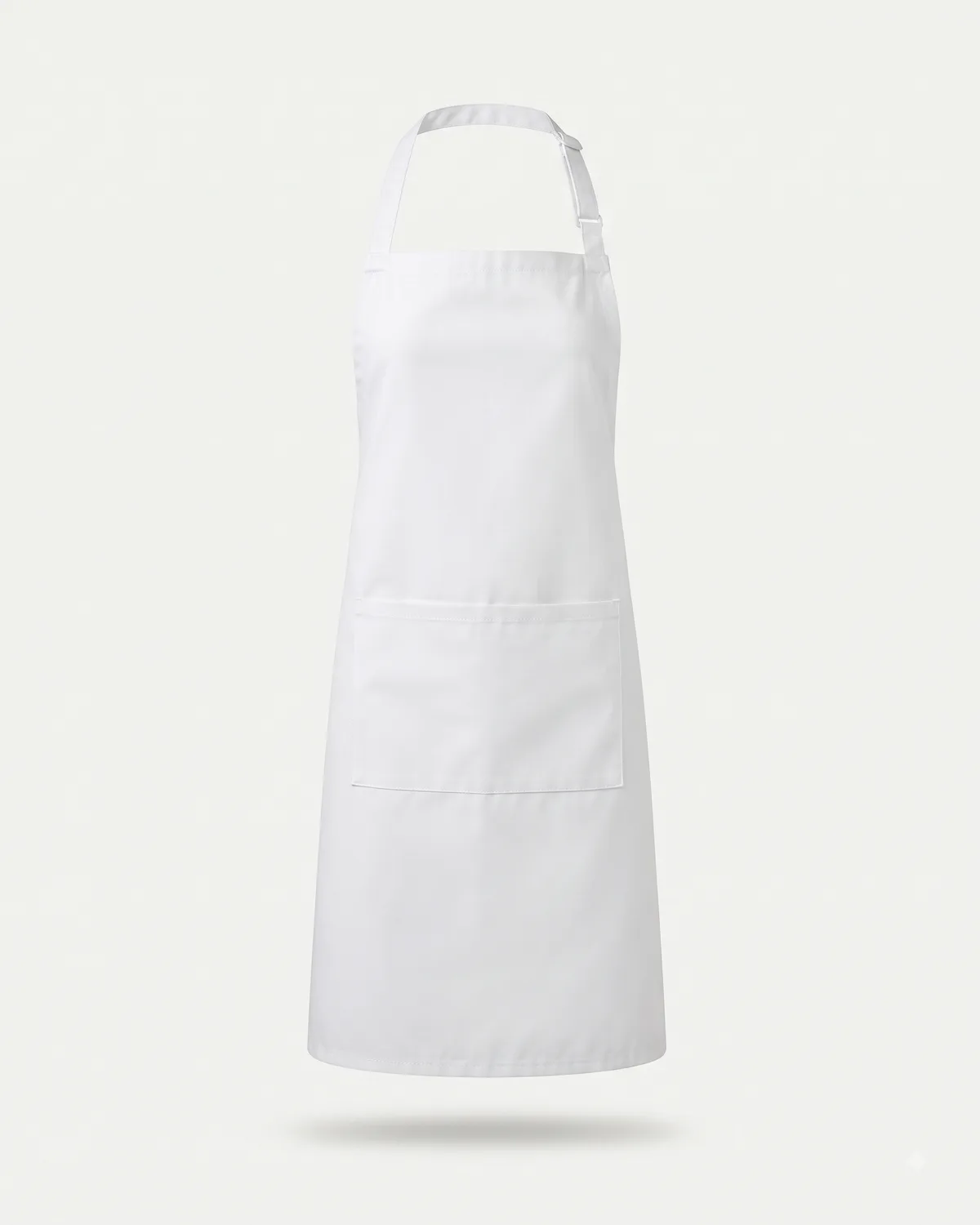
- Chest to below the knee. The changeable layer that takes the shift’s soil off the coat.
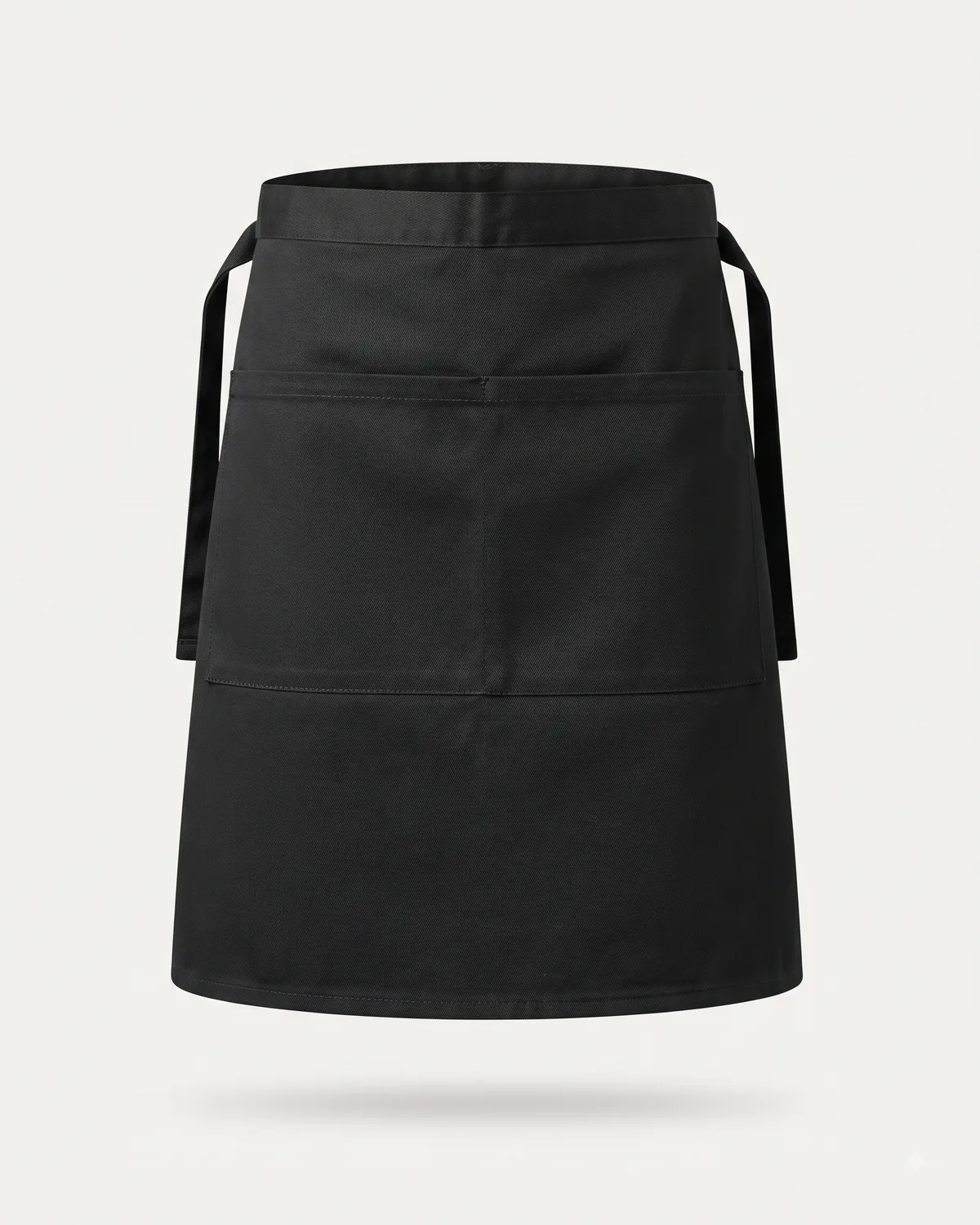
- Half apron
- Waist to mid-thigh with front pockets. The same piece often spans kitchen and service counters.
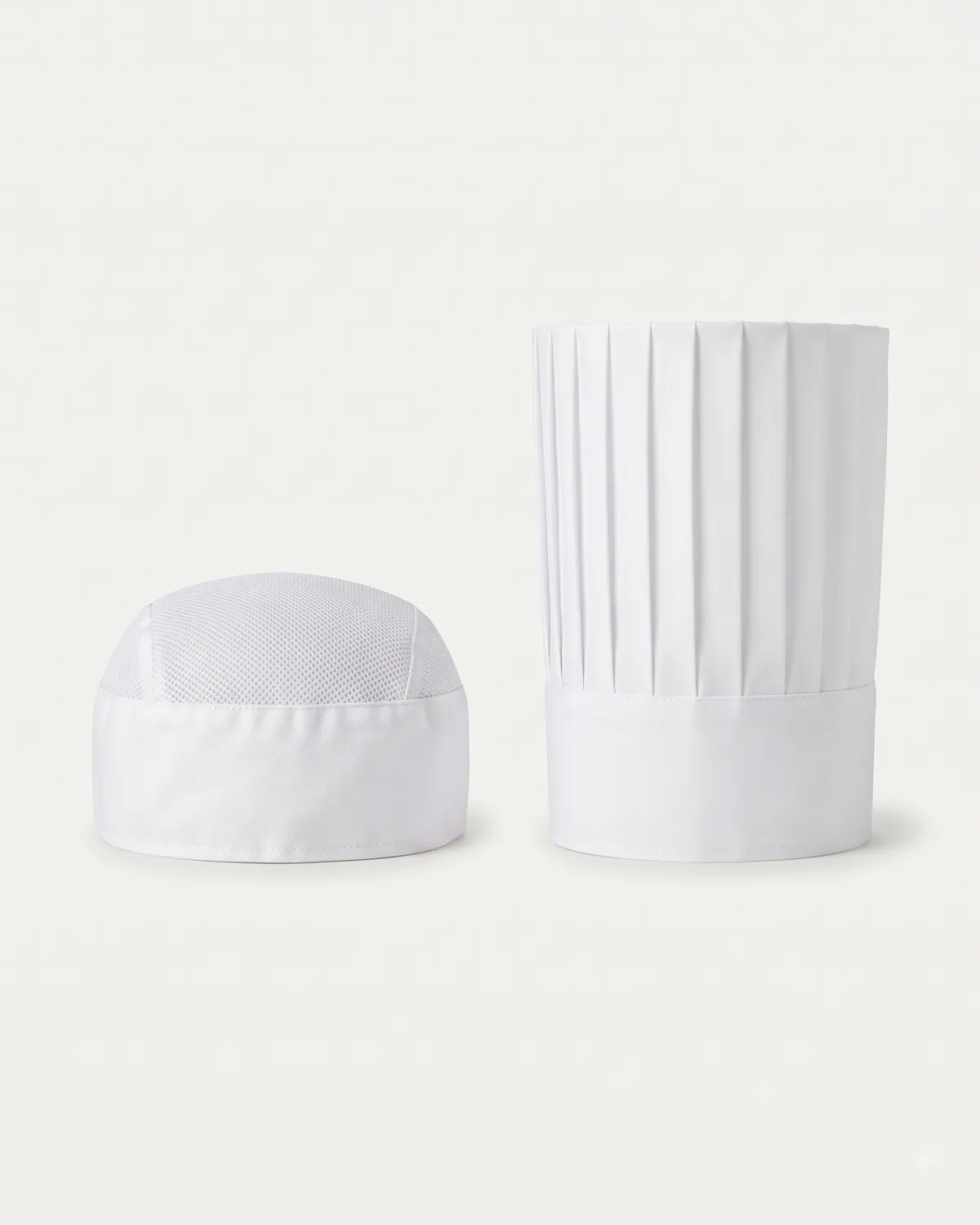
- Chef cap
- Mesh-topped skull cap, bouffant or toque, cut to contain hair fully, including over a bun or turban.
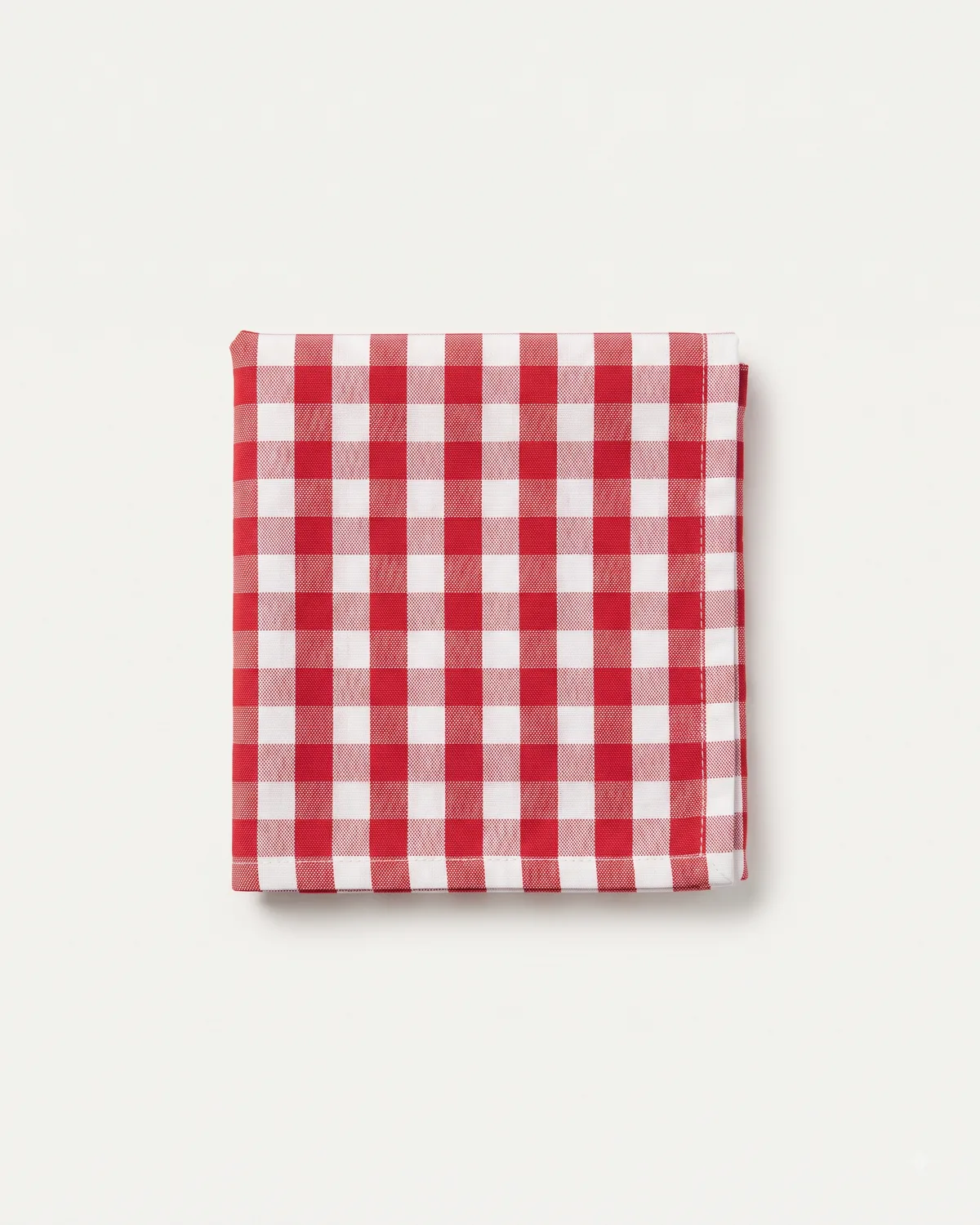
- Chef scarf
- Cotton neck cloth that keeps sweat out of the collar. Often the brigade’s only colour coding.
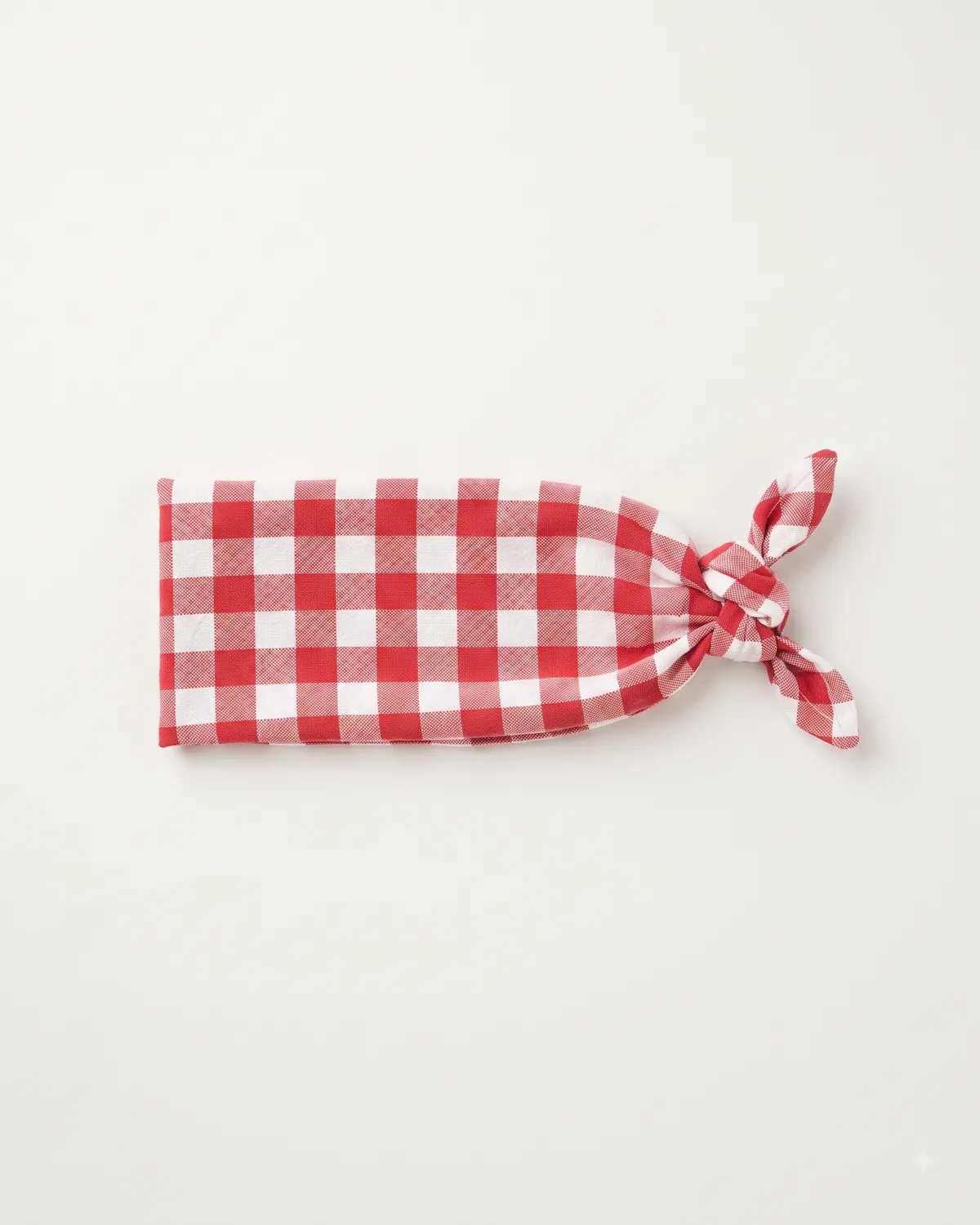
- Chef Bandana
- A folded cotton bandana tied at the back, the informal alternative to a cap on a hot line.
- Hairnet and Beard Net
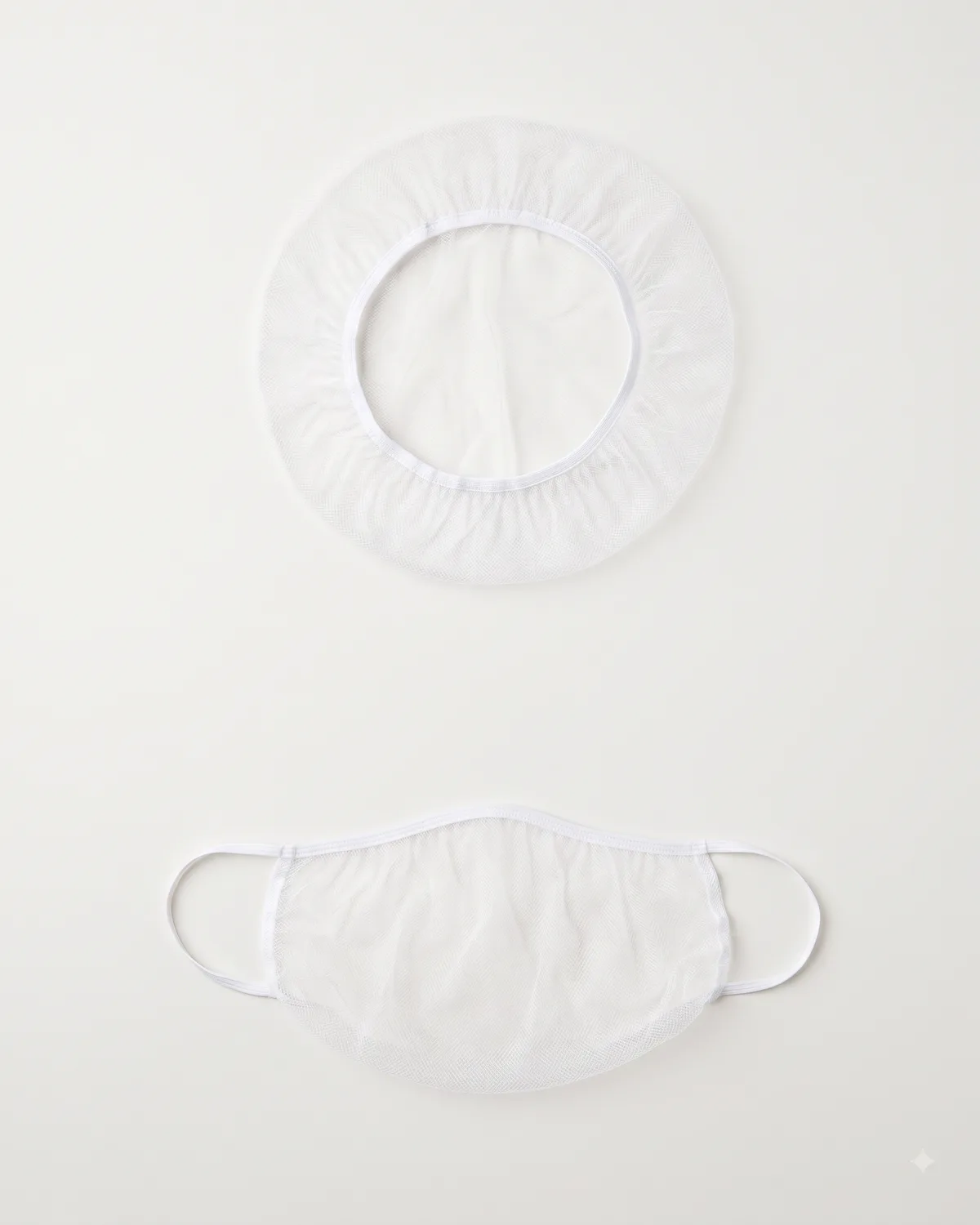
- Fine mesh hairnet and a matching beard net, ordered by the carton for FSSAI-compliant kitchens.
Materials & craftsmanship
Fabric for the Kitchen
Fabric comes from branded mills including Raymond, Siyaram’s, Santosh and Qmax, and a client with a house standard may nominate its own mill. Every quality is fixed against an approved swatch with a stated blend and GSM before cutting, and the sample can be wash-tested so measured shrinkage is built into the pattern. Knit crew sets are always quoted on their own terms, separate from the woven whites.
| Fabric | Working spec | Why it suits |
|---|---|---|
| Poly-cotton twill | 65/35 polyester-cotton, 200 to 240 GSM | Holds shape and whiteness through daily washing and dries overnight from a cold home wash. |
| Cotton satin | 100% cotton, 170 to 200 GSM | The smoother executive coat fabric, and the most breathable choice in a hot kitchen. |
| Cotton drill | 100% cotton, 200 to 240 GSM | Chars rather than melting, so preferred over polyester near the tandoor. It is not flame protection. |
| Yarn-dyed kitchen check | 65/35 polyester-cotton, 190 to 240 GSM | Yarn-dyed check keeps its pattern through repeated washing and hides what the wash cannot lift. |
| Heavy drill and canvas | 100% cotton, 240 to 340 GSM | The apron is the sacrificial layer, so it runs heavier than the coat it protects. |
| Pique and single jersey knits | Cotton or poly-cotton, 180 to 200 GSM | For QSR and canteen crew tees. Hosiery, so quoted outside the woven guarantee. |
Questions buyers ask
Asked before ordering
What GSM should chef coats be for an Indian kitchen?
For the general brigade, 200 to 240 GSM in 65/35 poly-cotton twill is the practical band. Below 200 GSM a white coat turns translucent once the wearer sweats, which matters in an open kitchen. Above 240 GSM the coat grows uncomfortable through a long split shift in a kitchen that can sit above 45 degrees Celsius. For 100% cotton at the high-heat stations, 200 to 240 GSM drill is the equivalent.
Do turmeric and masala stains come out of white chef coats?
Not reliably. Curcumin from turmeric dyes the fibre rather than sitting on it, so it behaves like a dye that has been deliberately applied. A soil-release or stain-repellent finish helps with fresh oil and grease but does not remove turmeric. Plan for it in the specification: shorten the replacement cycle on whites, or move prep and junior staff to grey, navy or black coats and darker aprons.
Does FSSAI mandate a specific uniform for kitchen staff?
No, it sets a duty rather than a garment specification. FSSAI Schedule 4 requires food handlers to wear clean protective clothing, head covering and appropriate footwear, and the catering rules require hair and beard to be covered and bar street shoes from the food preparation area. It names no fabric, GSM or colour. An order that includes coats and trousers but omits headwear and kitchen footwear will still fail an inspection.
Do chef coats need BIS or flame-retardant certification?
Ordinary chef coats do not. India’s Protective Textiles Quality Control Order covers clothing sold as flame protective, certified against IS 15742, and heat-protective industrial clothing under IS 15748. A standard cotton or poly-cotton chef coat is not sold as protective equipment and sits outside that scope. Where a site genuinely needs flame-resistant clothing, it must be bought as certified FR workwear, never as a heavier chef coat with a claim attached.
How many sets should we order per person?
Three to four sets per person is what Indian hotels and institutional kitchens typically order, since uniforms are laundered daily and one set is always in the wash. Below three, staff run out during a laundry breakdown or a festival rush. Aprons should be ordered at a higher ratio than coats, typically one and a half to two per coat, because the apron is meant to change mid-shift.
How is sizing handled for a bulk kitchen order?
Bulk kitchen orders are cut to graded stock sizes rather than individual measurement, because turnover is high and a bespoke set is stranded when the wearer leaves. A graded chest range in two-inch steps covers most brigades. Drawstring or elasticated waists on trousers, adjustable apron necks and a small buffer of larger sizes in the first lot save a mid-year scramble.
What does the one-year guarantee cover on kitchen uniforms?
Woven garments carry a one-year guarantee on the stitching: seams, buttons, bartacks and construction, the work done in this building. Fabric is fixed against an approved swatch with a stated blend and GSM before cutting, which is where fabric questions are settled, rather than promised afterward. Hosiery and t-shirts are excluded, which matters for QSR and canteen crew sets cut in knits; those are quoted on different terms, and buyers are told so before the order. Staining is wear, not a defect: turmeric and oil marking on whites sits outside any guarantee.
Related identities
Next step
Tell us about the people who will wear it.
Roles, rough staff strength, and anything already decided about fabric or colour. That is enough for a written quotation for culinary uniforms.