Identities / Hospitality
Hotel Uniform Manufacturer in Gujarat
Sewn for service, built for the laundry
Uniforms for hotels, banquet caterers and restaurants that hold their colour and their line through daily industrial washing.
- Minimum order
- 50 pieces per style
- Guarantee
- One year on stitching, woven garments* terms
- Made
- One building, measured across Gujarat, delivered anywhere in India
- Fabric
- Branded mills, approved on swatch before it is bought
Understanding the industry
Understanding the hospitality buyer
Hospitality is a far wider buying base than hotels. It runs from branded chains and business hotels through resorts, banquet halls and party plots, wedding and industrial caterers, QSR and dining chains, clubs, and the facility firms that staff housekeeping on contract. In Gujarat, banquet and wedding catering is a large, seasonal, high-headcount buyer alongside the Ahmedabad, Vadodara and Surat hotel market and industrial township guest houses. Buying is department-led. The Executive Housekeeper owns the uniform room. The Executive Chef specifies kitchen. The F&B Manager specifies service. Purchase raises the order and the GM signs off on colour.
Indian hotel kitchens run hot. Tandoor and range sections sit above already high line temperatures, and in Gujarat that sits on top of forty-degree summers and monsoon humidity. Shifts run eight to twelve hours, longer on banquet days. The laundry is the harder enemy. Hotel uniforms are washed daily in an on-premises laundry running hot wash, alkaline detergent and often chlorine bleach on whites, then steam pressed. That cycle, not wear, is what kills a uniform: residual shrinkage, colour loss, seam failure, puckering around embroidery. Staining from turmeric, chilli oil, tea and masala never fully leaves white cotton.
Orders are almost never one-shot. Garments are issued on a par system, commonly one set in use, one in the laundry and one in the uniform room, so a 120-staff hotel buys three or more sets per person. On that par a garment in the heaviest departments goes through roughly 100 industrial wash cycles a year. Turnover in housekeeping, stewarding and service is high, so the programme is built for continuous replacement: a stable size grade, buffer stock in common sizes, and shade discipline so a reorder cut six months later still matches the blazer beside it.
Why uniforms matter
Why uniforms matter in hospitality
In hospitality the uniform is the operational signal a guest reads before anyone speaks. Department colours tell a guest who to ask, tell a duty manager whether the floor is staffed, and tell security who belongs behind a service door. In the kitchen it is a hygiene control the law recognises, and on the range it is the barrier between hot oil and skin. It is also the least expensive brand asset in the building, and the one refreshed most often.
- 01Guest wayfindingDepartment colour-coding lets a guest find help without asking twice and lets a duty manager read the floor at a glance. One property, one look, with each department distinguishable inside it.
- 02Hygiene the law can auditFSSAI’s Schedule 4 hygiene requirements oblige food businesses to give food handlers clean protective clothing and head covering. Provision and cleanliness are auditable, so the par quantity you hold is a compliance question, not just a purchasing one.
- 03A burn barrier on the lineNear open flame, cotton chars where polyester melts and sticks to skin. Chef coats stay cotton-dominant next to the range, long sleeved, with a heavier cotton apron worn over them as the barrier layer.
- 04Dignity and retentionAttrition in housekeeping, stewarding and service is already high. An ill-fitting or visibly worn uniform is one of the cheapest ways a property tells its own staff they are temporary. A well-fitted one says the opposite.
- 05The rate on the doorUniform either supports the rate the property charges or quietly undercuts it. A front-of-house shirt that creases by 2pm is a visible failure in front of every guest for the rest of the shift.
Our approach
Our approach
Uniform Corner has made institutional uniforms since 2001 and grew out of Asopalav, a generational cloth shop in Satlasana that still trades. Retail counter and manufacturing unit share one building, so a hotel’s programme goes from measurement to finished garment on the premises. Cloth knowledge came first, and it shapes how hospitality work is specified: the laundry is designed for before the logo is.
- 01Laundry-tested samplingA sample garment can go through the property’s own wash cycle before bulk cutting. Hot wash, alkaline detergent and steam pressing reveal shrinkage and seam behaviour that no showroom inspection can.
- 02Lot discipline on reordersMill, quality number and lot number are recorded on file, fabric from the original lot can be reserved for the year’s replacements, and reorders are approved against a retained cut swatch, not a shade card.
- 03One shade, parallel garmentsHousekeeping can run kurta-tunic, salwar kameez and saree options in the same shade and matched fabric, so the property reads as one uniform while each person wears what they work best in.
- 04Built for replacementA stable size grade, buffer stock planned into the order in the common sizes, generous seam allowances for on-site alteration, and drawstring or adjustable waists that keep fitting as staff change.
- 05Size-set fittingA graded trial set is fitted on site across separate male and female blocks. Staff self-select and only outliers are measured individually. It is faster than a measurement camp and stays accurate through turnover.
- 06Embroidery that survives the pressLogos and department marks are direct embroidery with backing matched to fabric weight. Old vinyl transfers fail first under chlorine and steam. DTF print holds far better than those and is the right call on knits and full-colour artwork, though embroidery still leads on anything going through the on-premises laundry daily. On light shirting, stitch density is reduced so the panel never puckers.
Uniform collection
What a hospitality order includes
- Kitchen stewarding uniform
- The heaviest fabric in the building, worn with waterproof apron and gumboots for dishwash and pot wash.
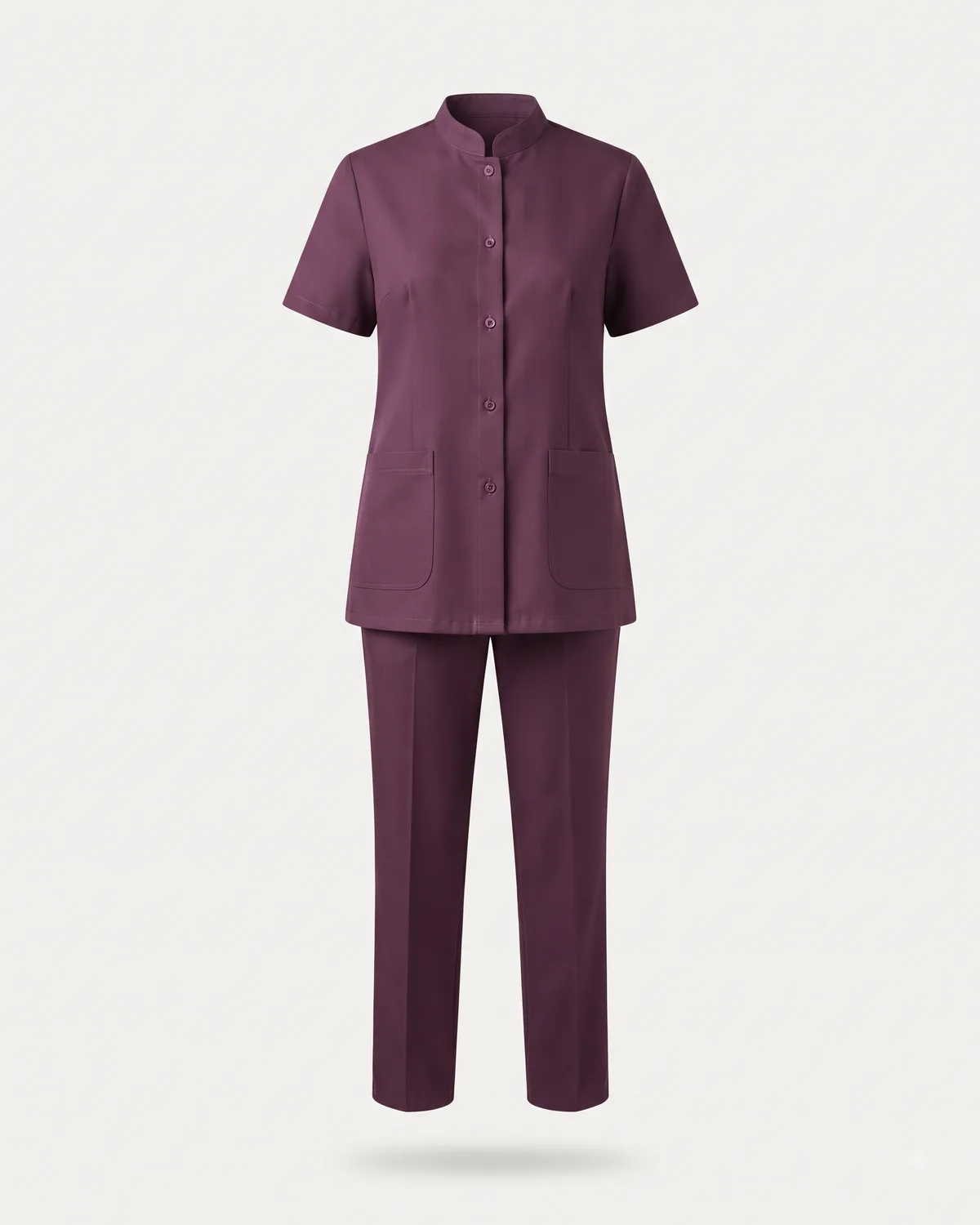
- Housekeeping attendant set
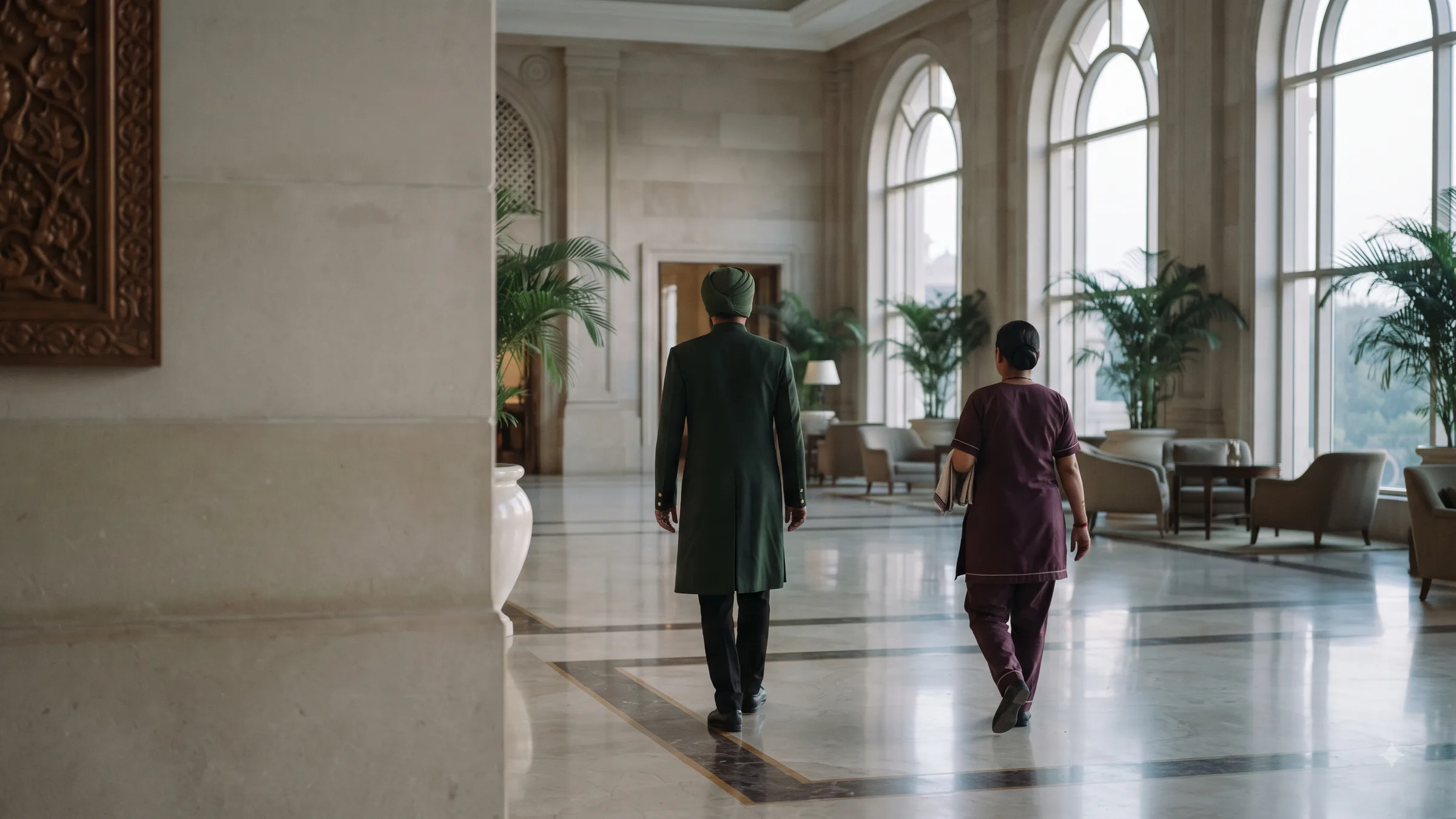
- Kurta-tunic, salwar kameez or saree in one matched shade, with deep pockets for cloths and amenities.
- Public area uniform
- Same base garment as housekeeping, distinguished by a contrast waistcoat, Nehru jacket or coloured apron.
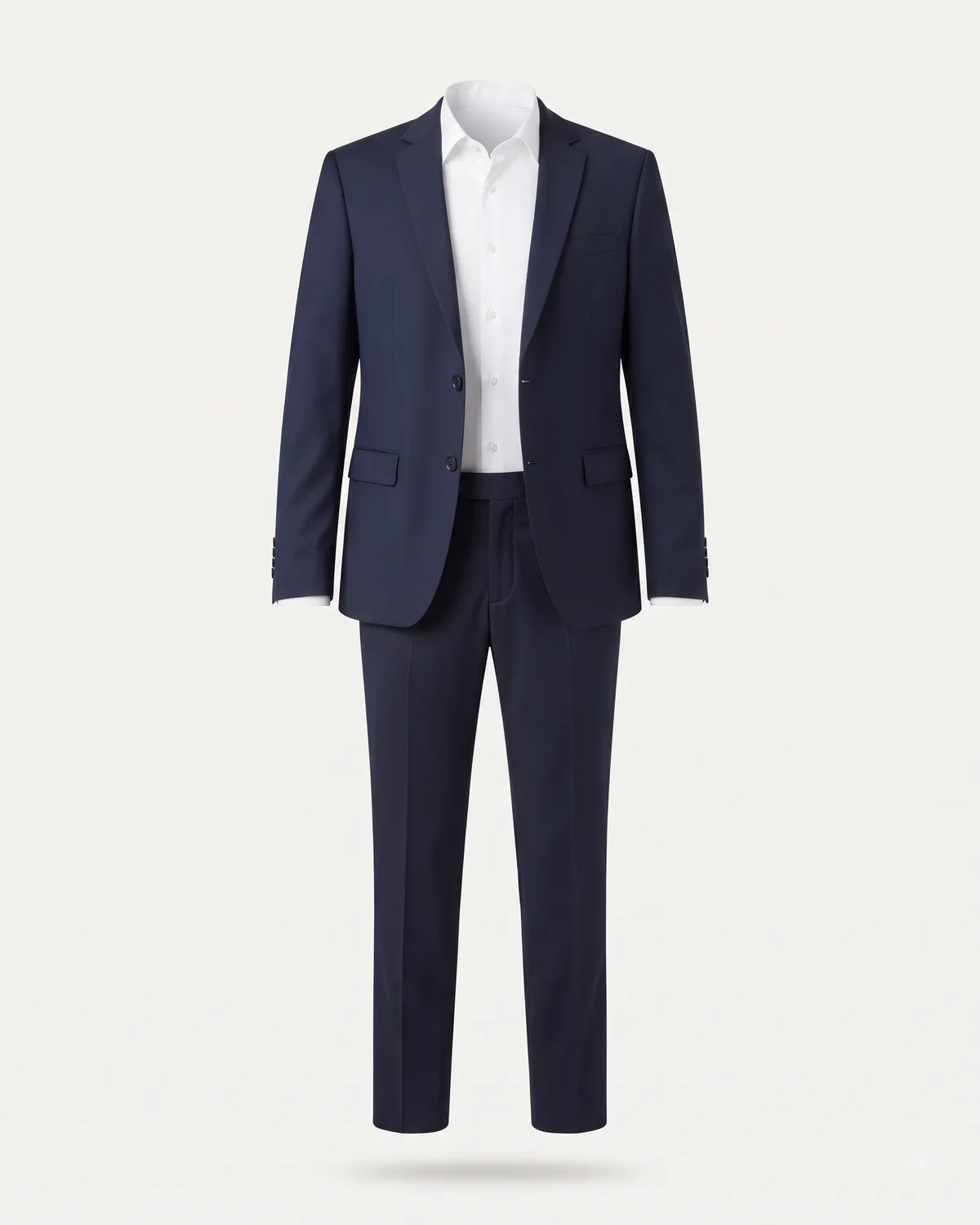
- Front office set
- Structured blazer, shirt and trouser, the standard front-of-house set for bell and concierge teams.
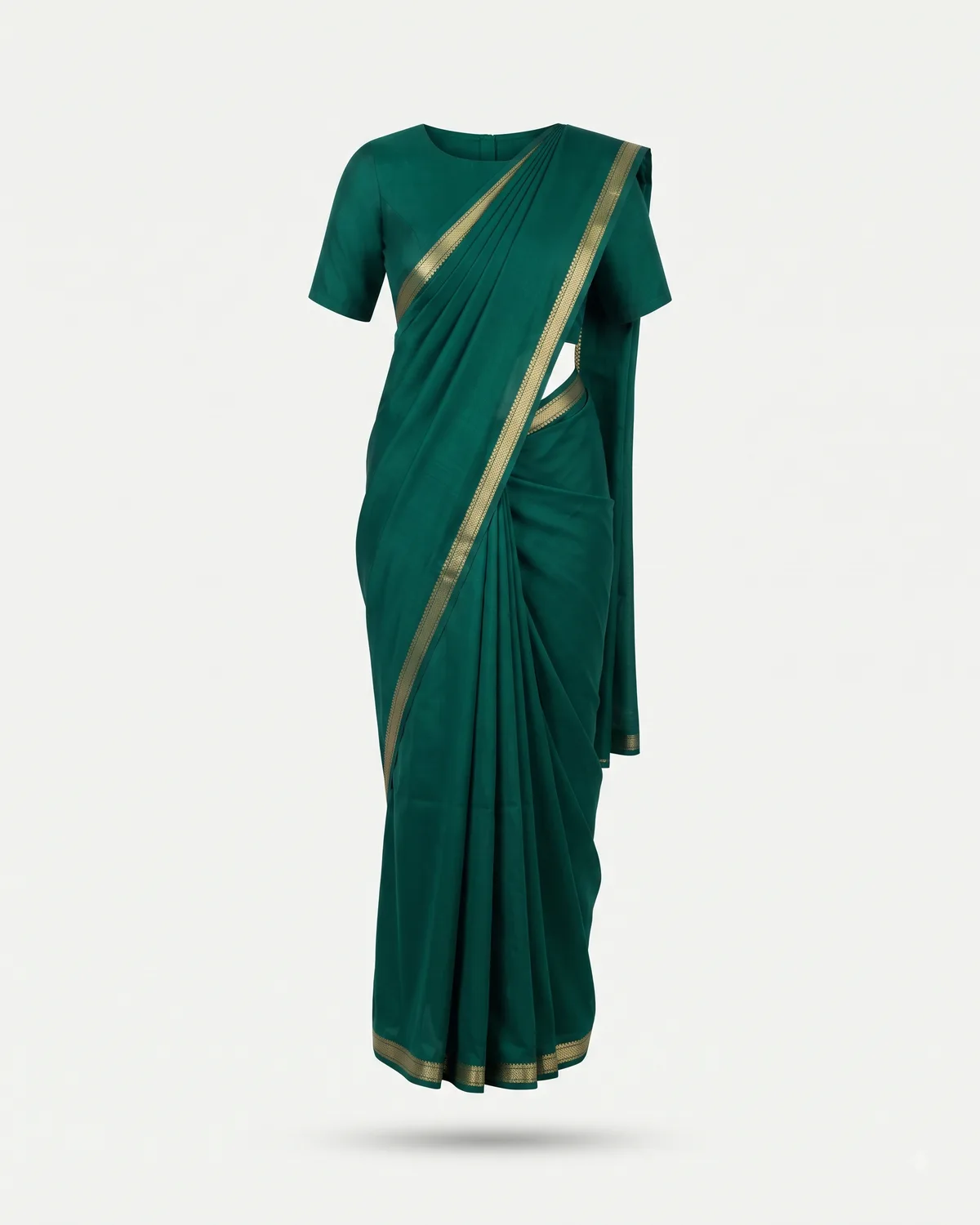
- Front office saree set
- Uniform saree with the blouse stitched to individual measurement, the front-desk alternative many hotels keep for guest-relations and reception staff.
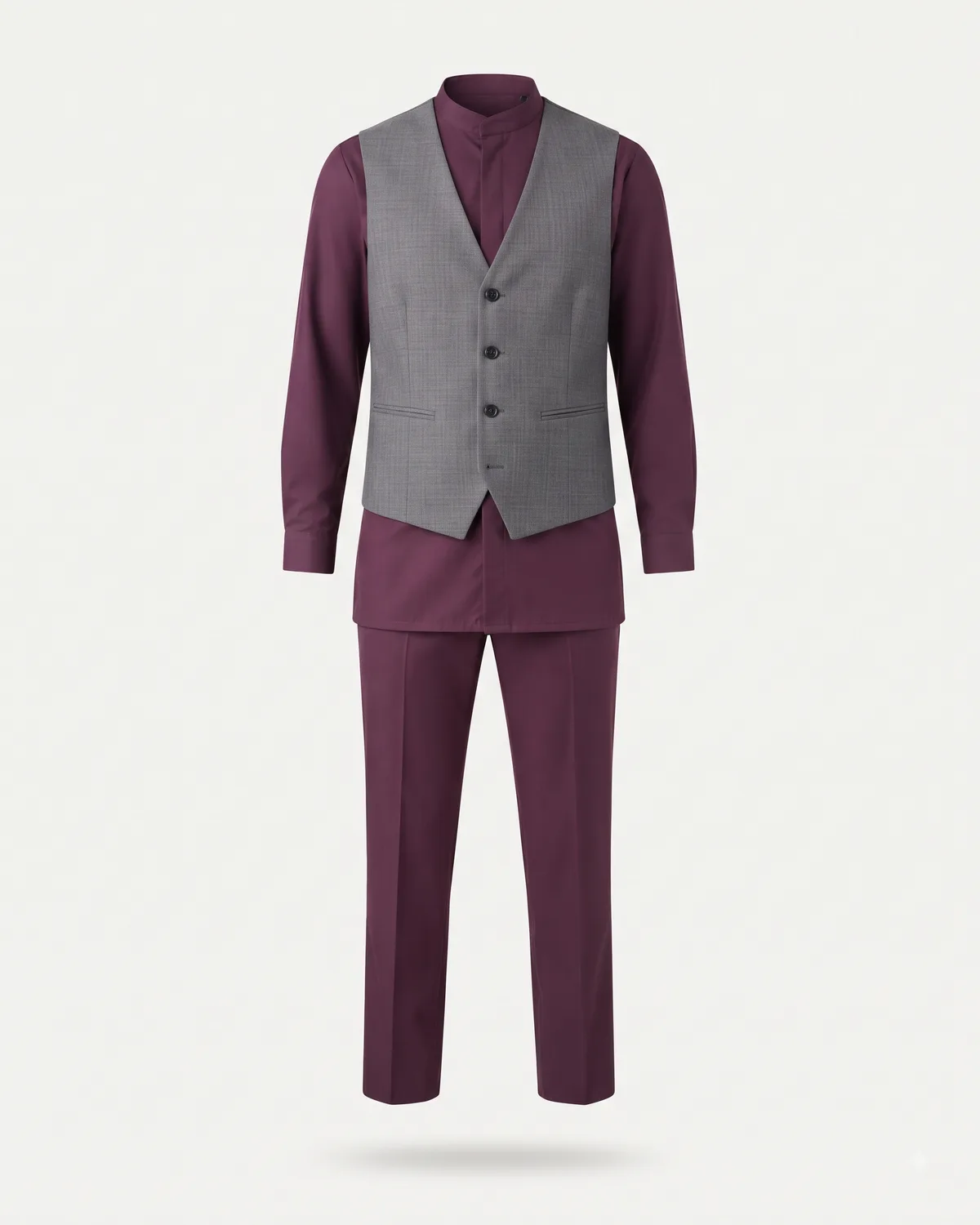
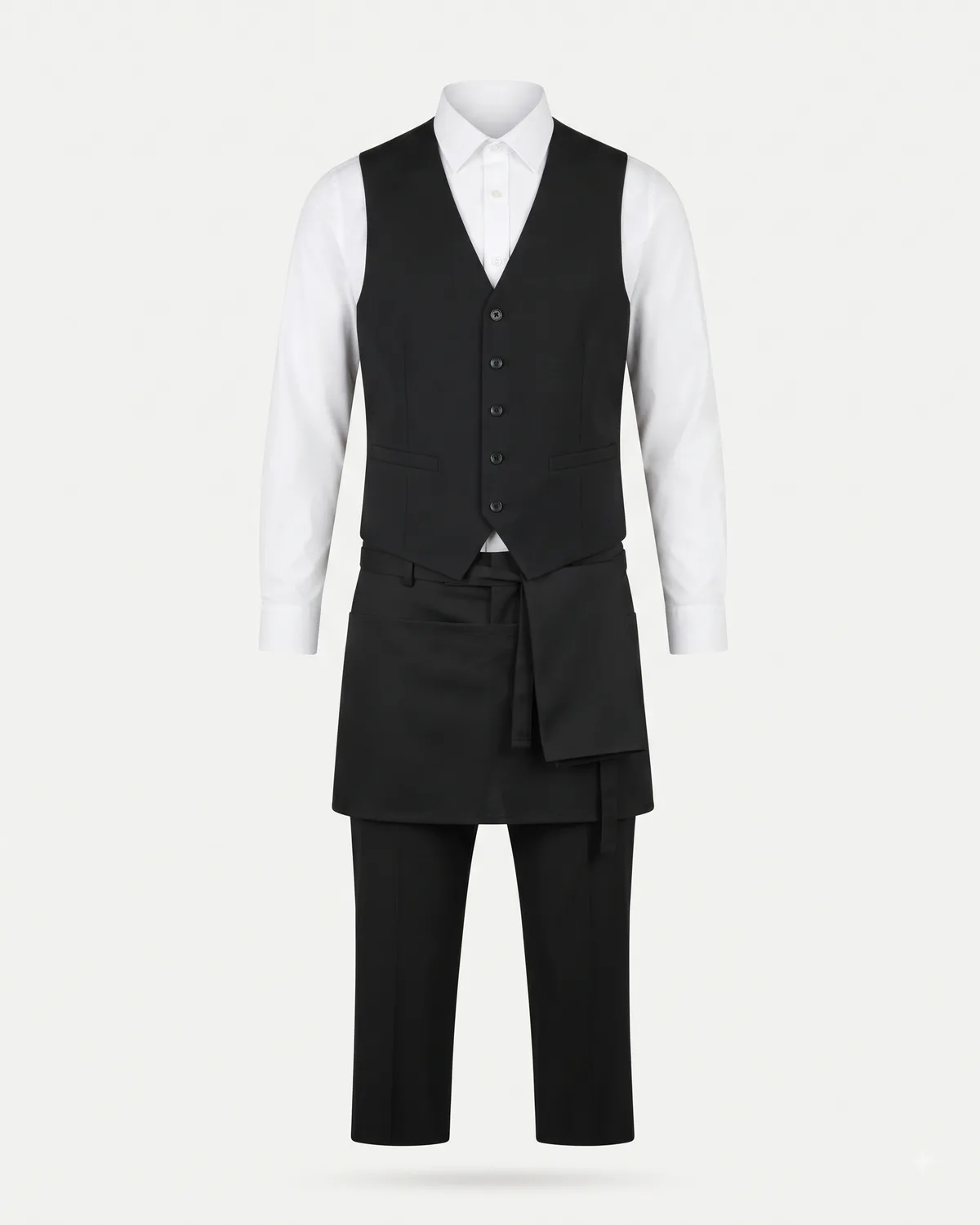
- F&B service set
- Waistcoat and trouser for all-day dining; bandhgala or Nehru jacket for fine dining and banquets.
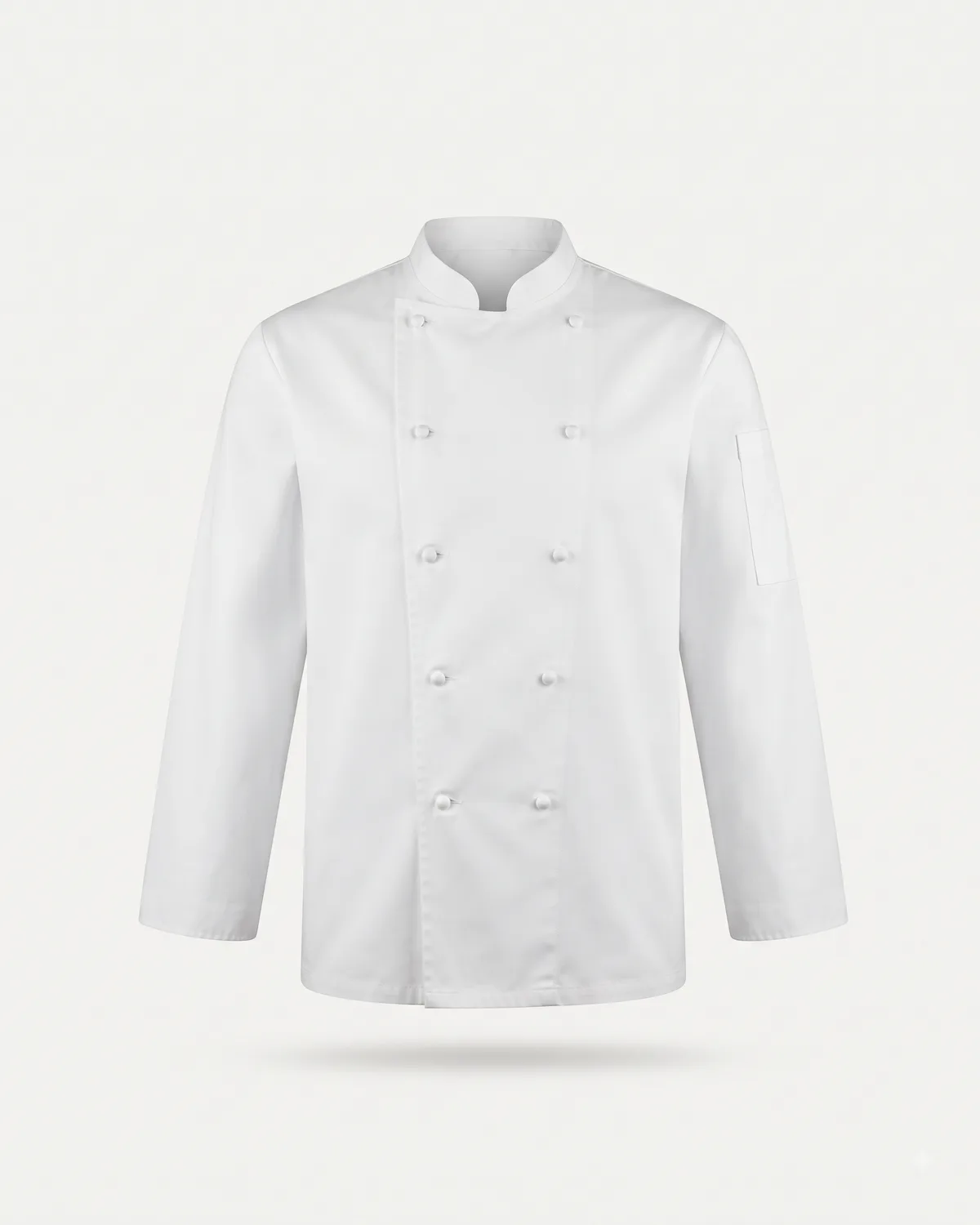
- Chef coat
- Double-breasted, with a reversible front panel to show a clean face mid-service and a sleeve thermometer pocket.
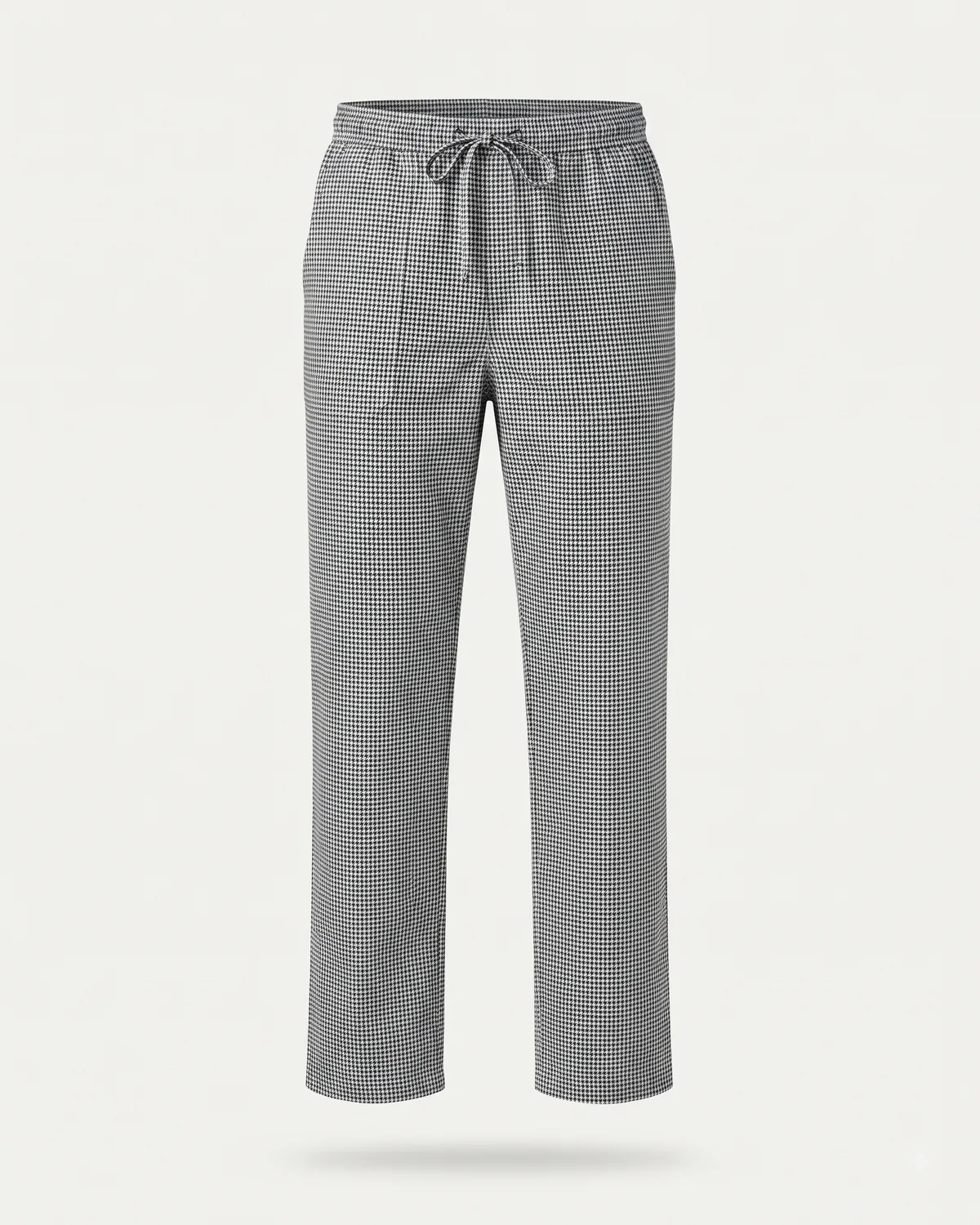
- Chef pant
- Black-and-white chef check or plain black, drawstring waist that fits across a wide size range.
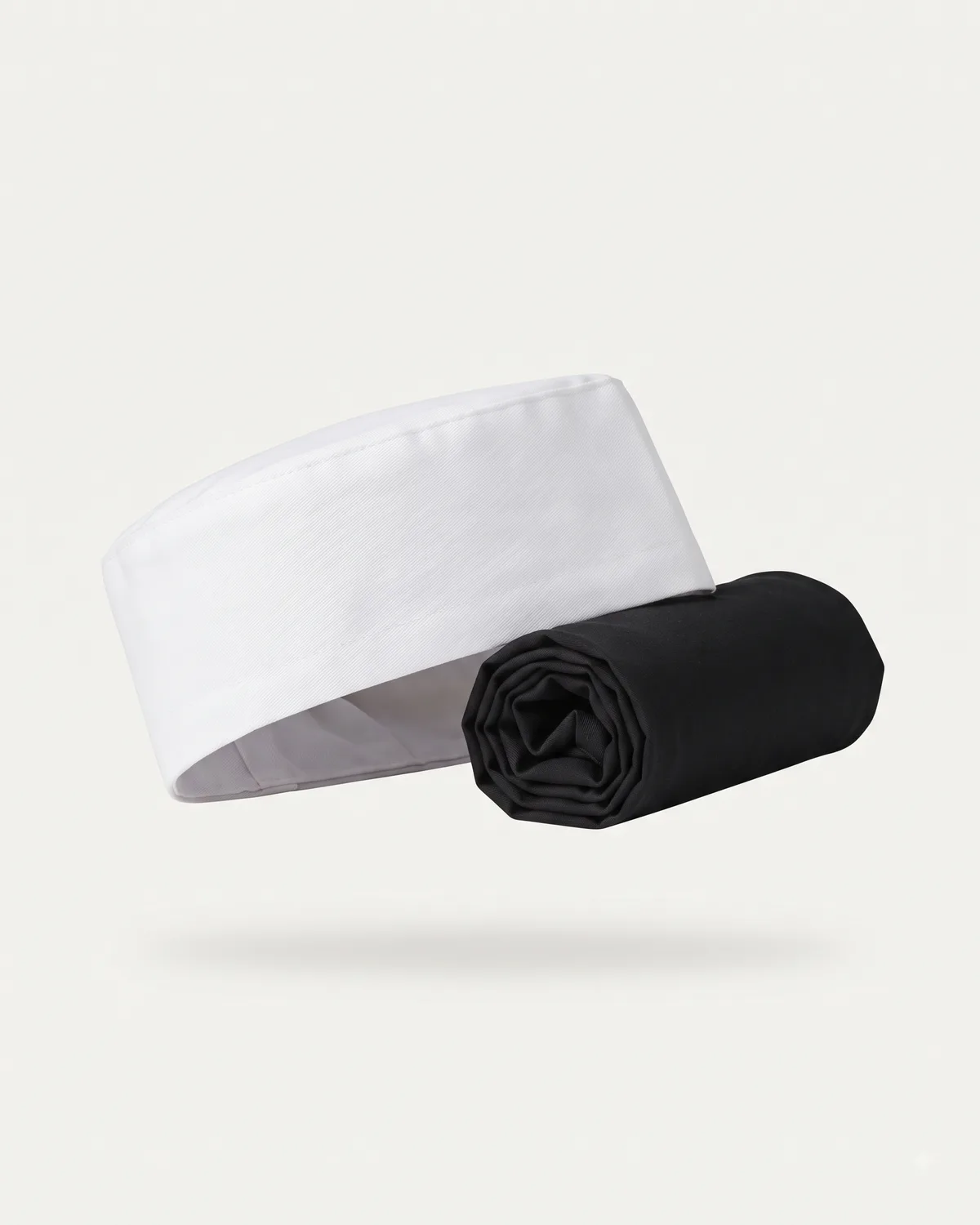
- Chef cap and neckerchief
- FSSAI requires head covering, so caps are ordered in far higher multiples than coats.
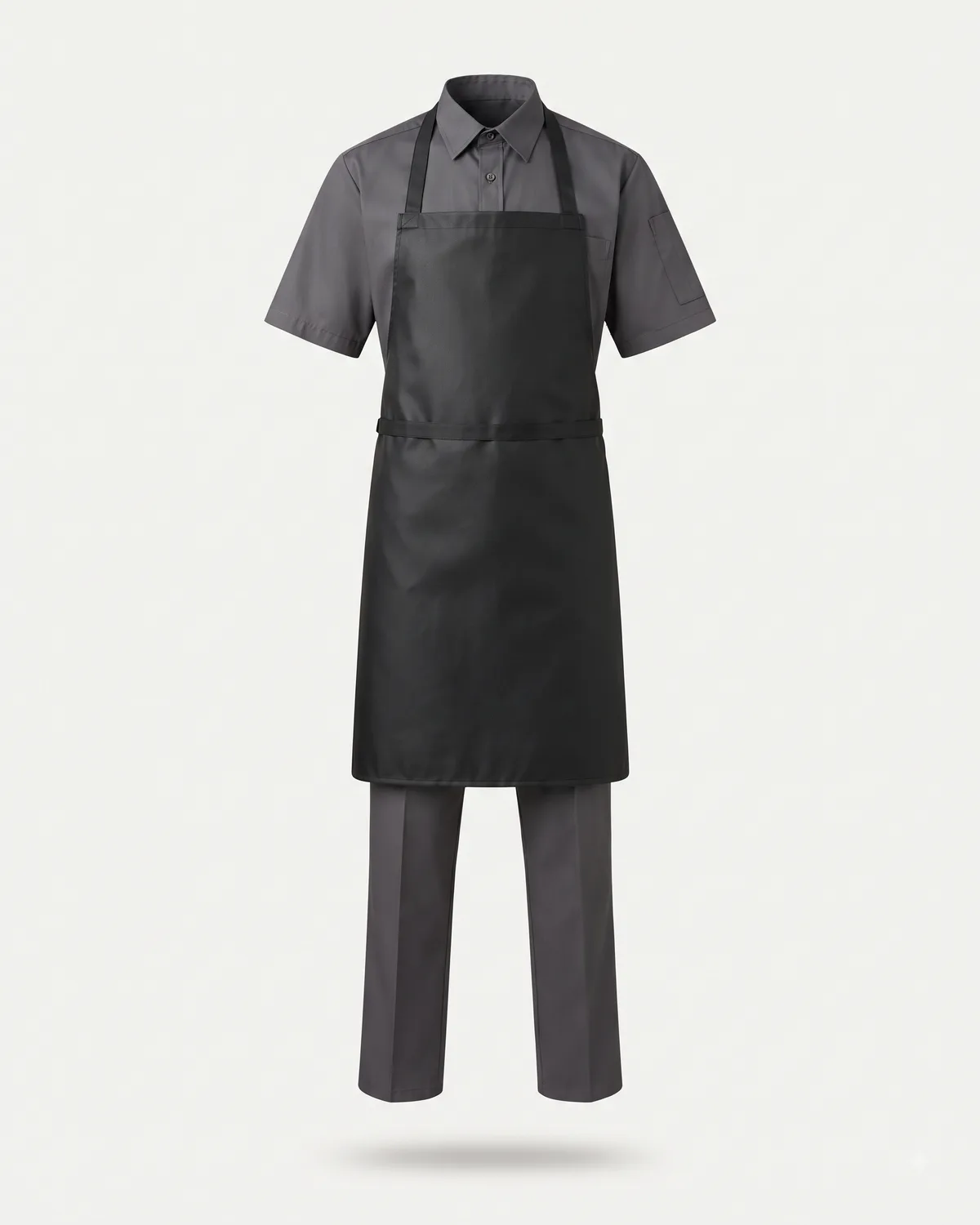
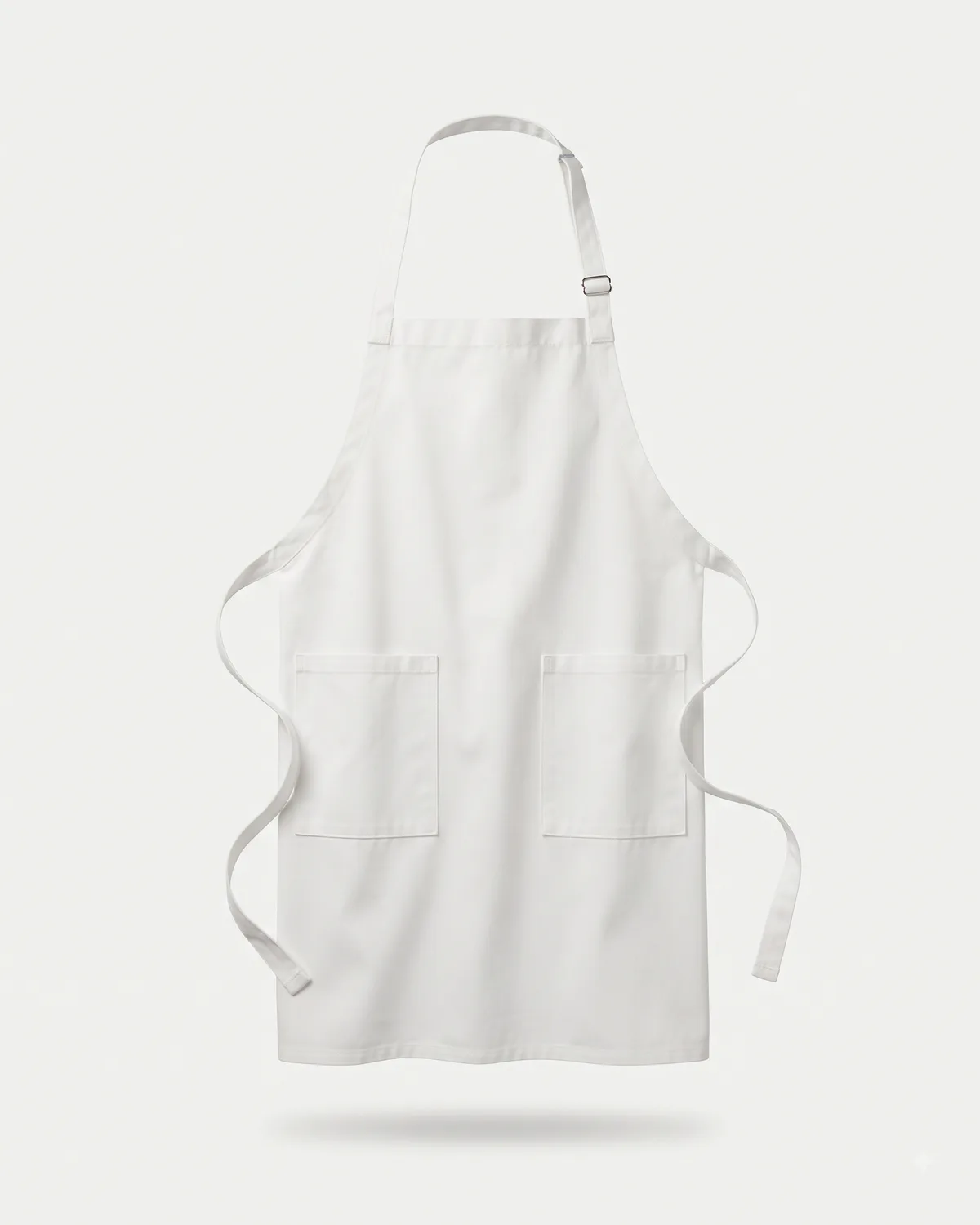
- Bib apron
- The primary stain and heat barrier, with an adjustable neck loop so one apron fits any height.
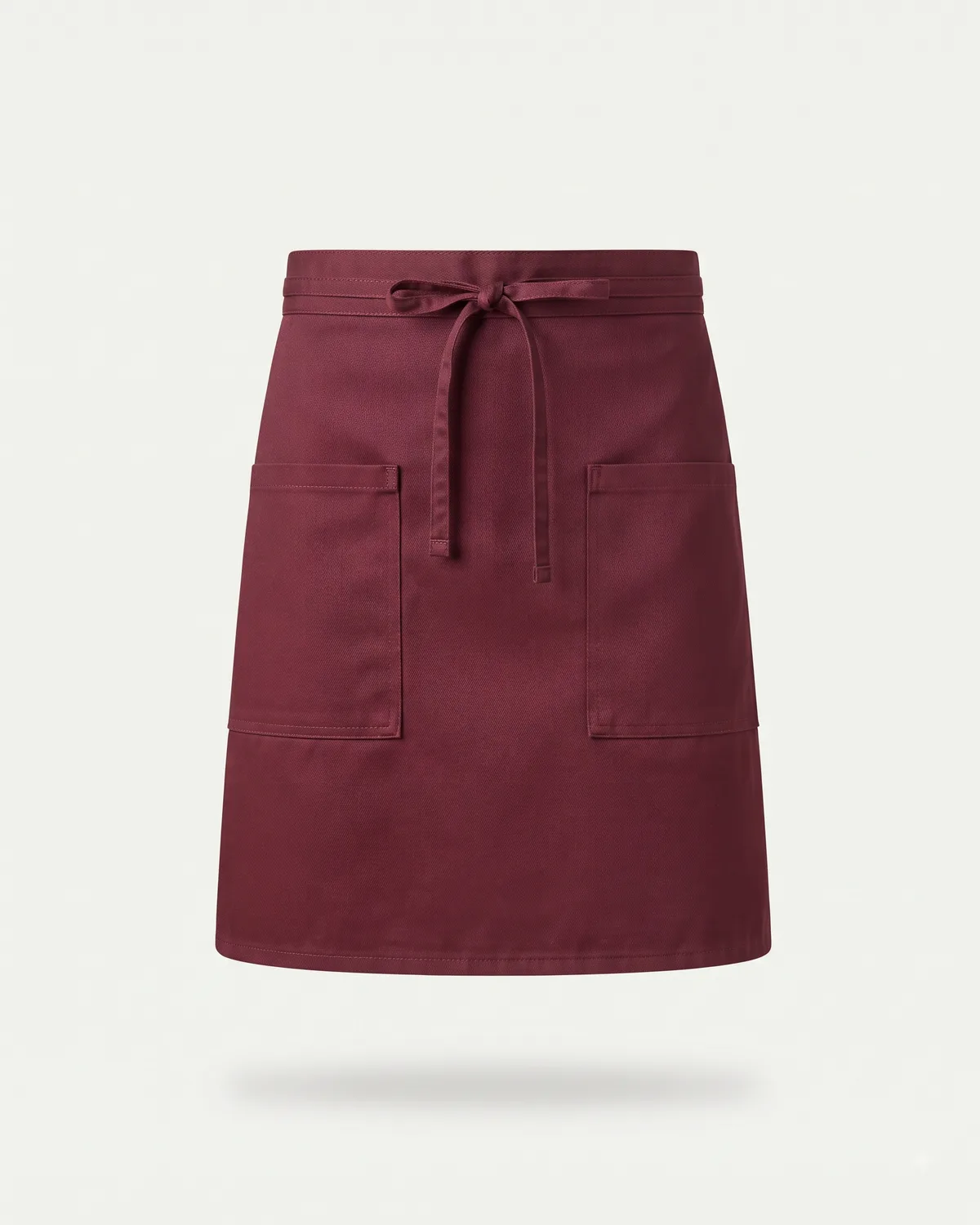
- Waist apron
- For F&B service, with front pockets for order pad and opener, often in an outlet contrast colour.
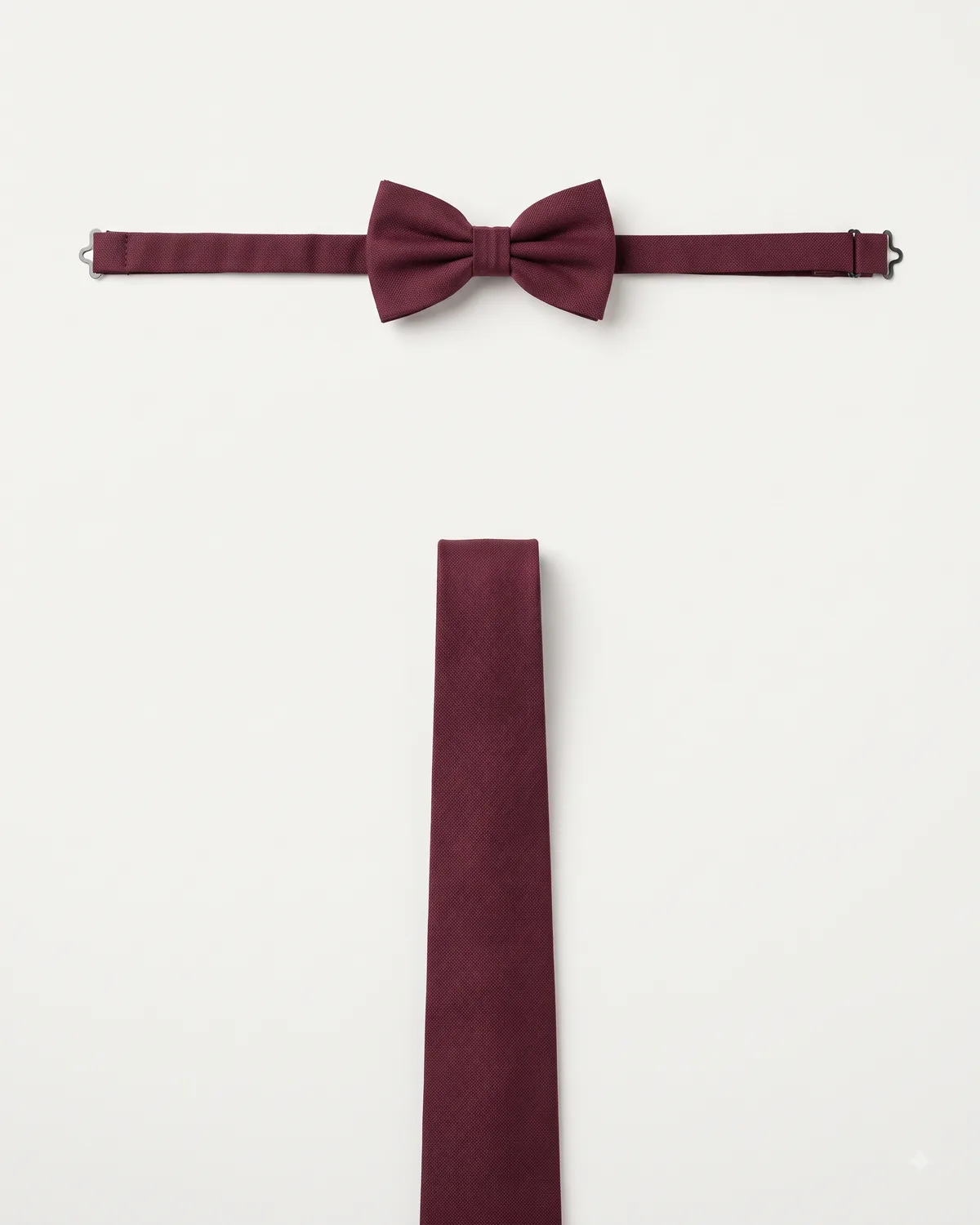
- Bow Tie and Neck Tie
- F&B service accessories, a pre-tied bow tie for banquet staff and a long tie for front office, both in the property's chosen colourway.
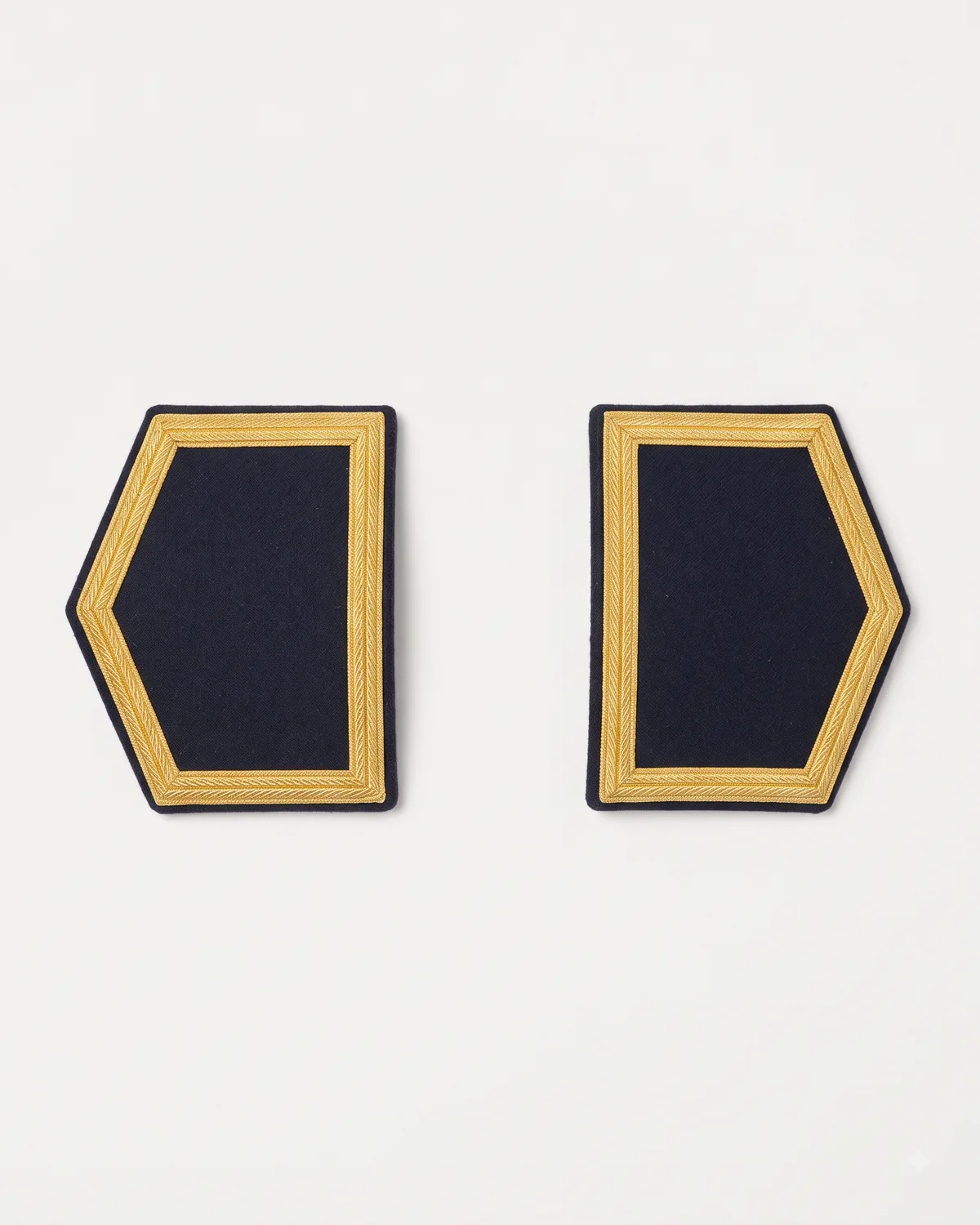
- Shoulder Epaulette
- Doorman and bell captain shoulder boards in gold braid on a matching base cloth, insignia position left blank for the property's own design.
Materials & craftsmanship
Fabrics for the laundry
Every hospitality programme starts with the fabric. Fabric comes from branded mills including Raymond, Siyaram’s, Santosh and Qmax, and clients may nominate a mill or a specific quality number, which makes reorders reproducible. Knitted crew wear is quoted on its own terms, because knitted fabric loses shape and fades under commercial laundering in a way woven fabric does not.
| Fabric | Working spec | Why it suits |
|---|---|---|
| Poly-viscose suiting | 65/35 or 70/30 polyester viscose, 220 to 280 GSM | Crease recovery and drape for front office and service tailoring, reorderable by quality number. |
| Cotton drill for chef coats | 100% cotton, 190 to 240 GSM | Chars rather than melts near open flame, and takes hot wash and chlorine bleach on whites. |
| Poly-cotton shirting | 65/35 polyester cotton, 110 to 150 GSM | Breathable under a blazer, stable at the collar through daily washing and steam pressing. |
| Poly-cotton tunic and trouser fabric | 65/35 polyester cotton, 170 to 210 GSM | Housekeeping weight: takes trolley abrasion and kneeling, holds shade in guest corridors. |
| Heavy poly-cotton drill | 65/35 polyester cotton, 210 to 260 GSM | For stewarding and maintenance. Survives caustic dishwash chemicals and constant wetting, dries fast. |
| Cotton drill and canvas for aprons | 100% cotton, 240 to 340 GSM for kitchen bib aprons | The barrier layer, visibly heavier than the garment under it, resists splash penetration. |
Questions buyers ask
Asked before ordering
Will the colour match if we reorder the same uniform six months later?
Not automatically. Fabric is bought ready from the mill, shade varies slightly from one mill lot to the next, and a garment cut from fresh fabric can read visibly different beside one that has been through months of daily washing. The practical controls are to reserve fabric from the original lot for the year’s expected replacements, record the mill, quality number and lot number on file, and approve every reorder against a retained physical swatch rather than a printed shade card.
How many sets per employee should we budget for?
Three per person is the common hotel par: one in use, one in the laundry, one in the uniform room. Kitchen and stewarding often need more, because coats are changed mid-shift in hot months and stewarding garments wear out fastest. Front office soils less and can hold at three. Add a floating buffer in the common sizes; that buffer is what prevents emergency mid-year orders.
How much will a cotton chef coat shrink after industrial laundering?
A pre-shrunk cotton chef coat holds a fitted coat true to size through industrial washing. Unsanforised cotton can lose noticeably more in the first industrial cycles, so the pre-shrinking is stated in the quotation rather than assumed. Keep one washed sample coat as the reference against later deliveries.
Does FSSAI require a particular fabric or certification for kitchen uniforms?
No. Schedule 4 of the FSS (Licensing and Registration) Regulations, 2011 requires food businesses to provide food handlers with clean protective clothing and head covering, plus aprons, gloves and appropriate footwear where relevant. It prescribes no fabric, colour or garment certification. Compliance rests on provision, cleanliness and change frequency, which is why the par quantity you hold matters as much as the garment specification.
Which logo method survives hotel laundry: embroidery, woven patch, DTF or screen print?
Direct embroidery survives commercial laundering best, provided the backing suits the fabric weight. Woven or printed patches applied as appliqué can lift at the edges after repeated hot washing and pressing. Old vinyl heat transfers fail first under chlorine and steam. DTF print, printed on film and heat pressed, is far more durable than those and is the practical choice for full-colour artwork and for knitted crew wear, but on a garment washed hot every day in an on-premises laundry, embroidery still outlasts it. On light shirting the stitch density has to be reduced or the panel puckers permanently after the first few hot washes. Chest and sleeve embroidery is standard on chef coats.
How do you size 200 or more staff without measuring every person?
Two methods. A measurement camp records every individual, which is accurate but slow, and it dates quickly where attrition is high. A size-set approach fits a graded trial set on site across separate male and female blocks; staff self-select and only outliers are measured individually. Most large properties use the size-set method and then hold buffer stock in the common sizes for new joiners.
What does the one-year guarantee actually cover?
It covers the stitching and workmanship on woven garments for one year: seam failure, buttons, bartacks and construction. Fabric is approved on the physical swatch before it is bought rather than guaranteed after, and the recorded mill quality number is what keeps reorders honest. Hosiery and t-shirts are excluded, because knitted fabric loses shape, pills and fades under commercial laundering in a way woven fabric does not. It does not cover stain damage, chemical bleaching by the property’s own laundry, or incorrect wash procedure.
Related identities
Next step
Tell us about the people who will wear it.
Roles, rough staff strength, and anything already decided about fabric or colour. That is enough for a written quotation for hospitality uniforms.