Identities / Industrial
Industrial Workwear Manufacturer in Gujarat
Workwear for the people who make things
Boiler suits, two-piece sets and shop coats, measured on your premises and stitched on ours, by a maker at work since 2001.
- Minimum order
- 50 pieces per style
- Guarantee
- One year on stitching, woven garments* terms
- Made
- One building, measured across Gujarat, delivered anywhere in India
- Fabric
- Branded mills, approved on swatch before it is bought
Understanding the industry
What industrial means on an Indian shop floor
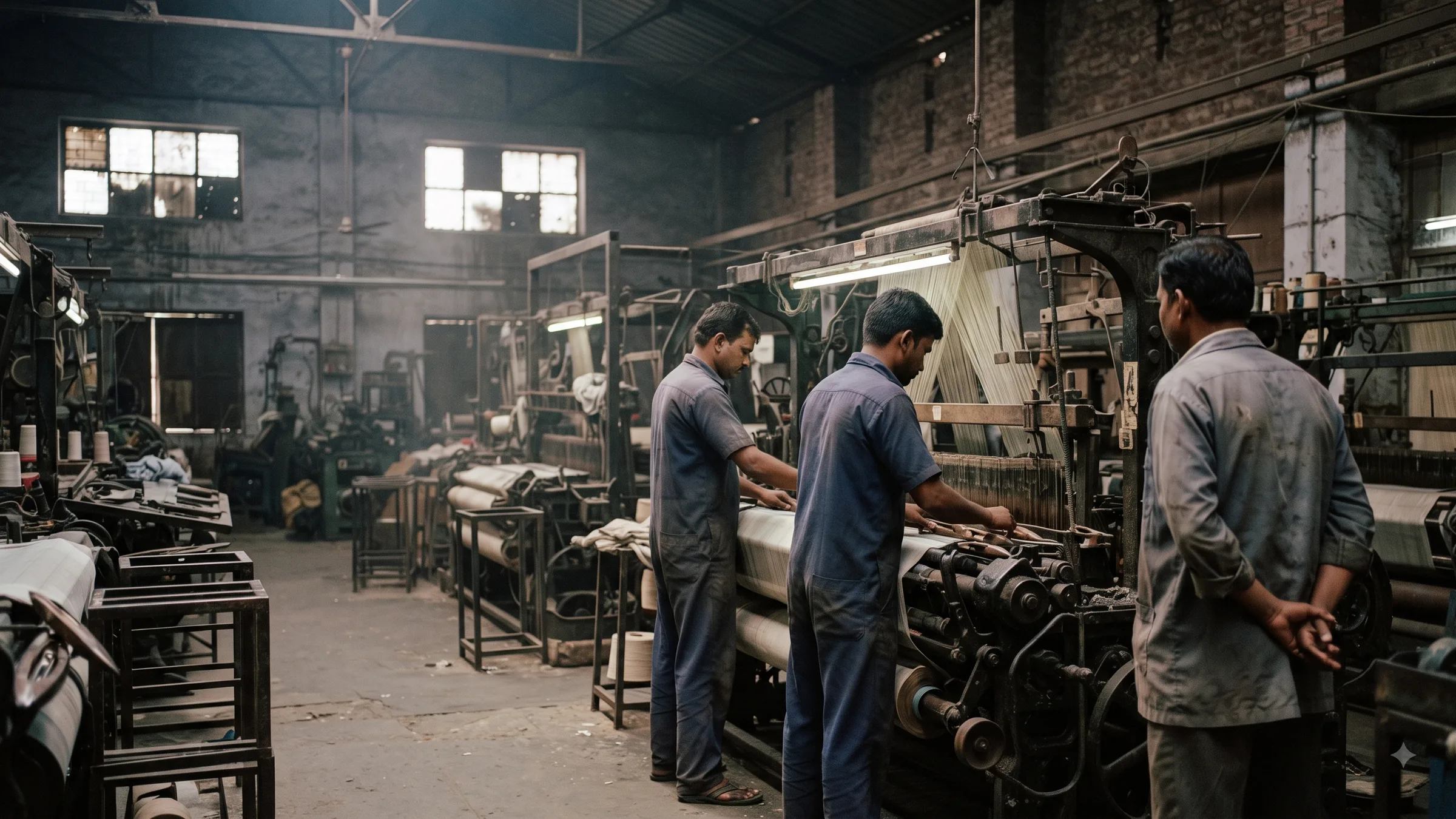
Industrial uniform in India covers the whole spread of manufacturing: engineering and fabrication, chemical and pharmaceutical plants, ceramics and cement, auto component lines, textile mills, dairies, onshore oil and gas. Most plants issue one or two sets per worker per year, with a top-up for new joinees and often a separate colour for contract labour. Buying is rarely one person’s decision. The safety officer sets the specification, HR decides how many sets and to whom, and purchase negotiates the rate. Large plants and PSUs buy on tender against a fixed technical annexure. Mid-size units buy on quotation against an approved sample garment.
North Gujarat shows the mix in one district. Mehsana district carries onshore oilfield operations, large dairy processing and industrial clusters at Kadi, Visnagar and Vijapur. The Becharaji and Hansalpur automobile belt sits at the district edge, and Morbi ceramics, Rajkot engineering and the chemical belt from Vapi to Dahej are all within a day’s reach. Each of these buys a different garment in a different fabric under the same word, industrial. A manufacturer who does not ask which one you mean is guessing.
The environment decides the garment. Gujarat shop floors run past 40 degrees in summer, with radiant heat from furnaces, kilns and machinery, and shifts of eight to twelve hours keep a worker in the same garment for most of the waking day. Contamination lands where the work is: oil, cutting fluid, cement dust and welding spatter at knees, seat, elbows and pocket mouths. And across this trade the washing happens at home, in hard water with bar soap, dried in direct sun. A fabric chosen without that wash in mind goes grey within a season.
Why uniforms matter
Why the uniform matters here
On an industrial floor the uniform is frequently the PPE, not an accessory to it. The choice between a polyester blend and pure cotton in a welding bay is a burn decision. The choice between stitched tape and a certified high-visibility class is a forklift decision. A school uniform that fails embarrasses. A factory uniform that fails injures. That difference runs through every specification on this page.
- 01Often the PPE itselfPolyester melts and adheres to skin near sparks and molten metal. Where welding, foundry or furnace work happens, the daily uniform is the first layer of protection, and its fibre content is a safety decision before it is a costing one.
- 02Access control at a glanceColour and chest embroidery are how a gate guard knows in two seconds whether a man belongs inside the fence. Separate shades for company workmen and contract labour keep that judgement fast, and the colour code is yours to define.
- 03An audit artefactAutomotive OEM supplier audits, pharma and food customer audits, and Factories Inspectorate visits all look at whether suitable clothing is issued and actually worn. The garment is evidence, and it has to look like the specification it was bought against.
- 04Cost per wear, not piece priceA set that fails at month seven forces an unbudgeted re-issue for a whole department, plus the cost of re-measuring and re-embroidering. The cheaper garment is the one still in service at month twelve, not the one with the lower rate.
- 05A garment worn is a rule keptA worker issued a garment that fits, dries by morning and holds its colour is a worker who wears it. A plant where everyone wears the issue is a plant where the clothing rule can be enforced at all.
Our approach
How we build for the shop floor
Uniform Corner grew out of Asopalav, a generational cloth shop in Satlasana that still trades. Since 2001 the retail counter and the manufacturing unit have shared one building, and a bulk order moves from measurement to finished garment on the premises. For industrial work that matters, because the expensive failures happen early: a size set that misfits, a shade fixed too late, a seam that was never going to survive the job.
- 01Measurement camps on siteFor a large workforce, measuring runs on your premises, department by department, planned around shifts, with sizes recorded against employee number. Standard size sets alone misfit a large Indian workforce, particularly on seat, thigh and sleeve length.
- 02Inlay, not scrapTrousers are cut with extra seat and thigh room, and inlay is left in side seams, crotch and sleeves. A garment that no longer fits gets altered, not replaced.
- 03Reinforced where the work landsDouble knee panels, felled seams on crotch and inseam, and bar tacks at pocket mouths, fly base and belt loops. Abrasion concentrates at a few points, so the build concentrates there too.
- 04Two fabrics, one setA lighter shirting of 140 to 180 GSM for the shirt and a heavier drill for the trouser, in the same shade family. One heavy fabric throughout makes a shirt nobody wears buttoned.
- 05Colour fixed before cuttingShade codes for departments and contract labour are agreed before the first lay. A mid-year change means a fresh fabric lot and a visible shade break between batches of workers.
- 06One shade, one lotShade is matched against a physical swatch rather than a colour code, because mill lots of workwear fabric vary slightly. Where consistency across the whole workforce matters, the year’s fabric is booked in one lot.
Uniform collection
What an industrial order includes
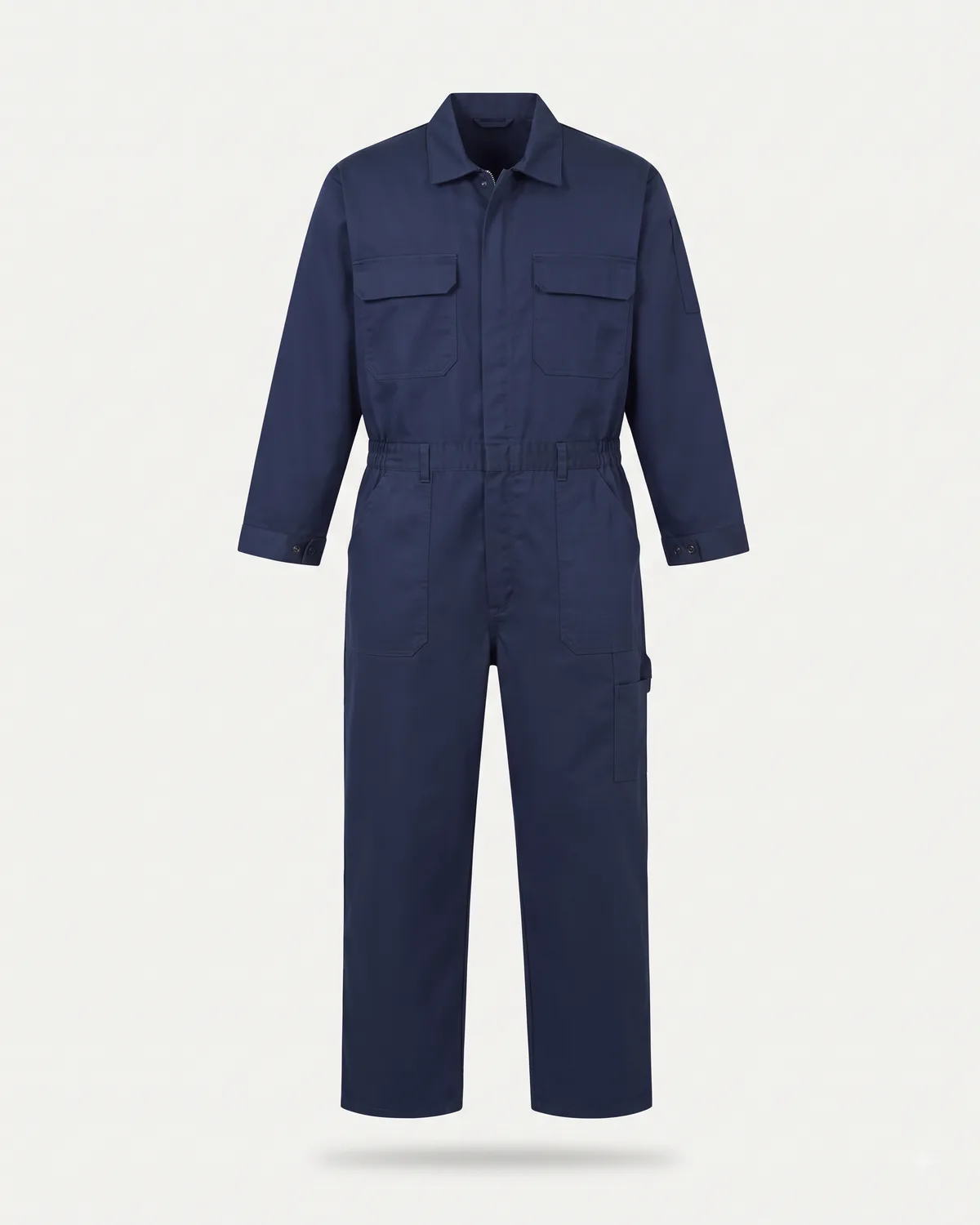
- Boiler suit (dangri)
- One-piece coverall with covered metal zip and action back. The default for maintenance, fabrication and plant work.
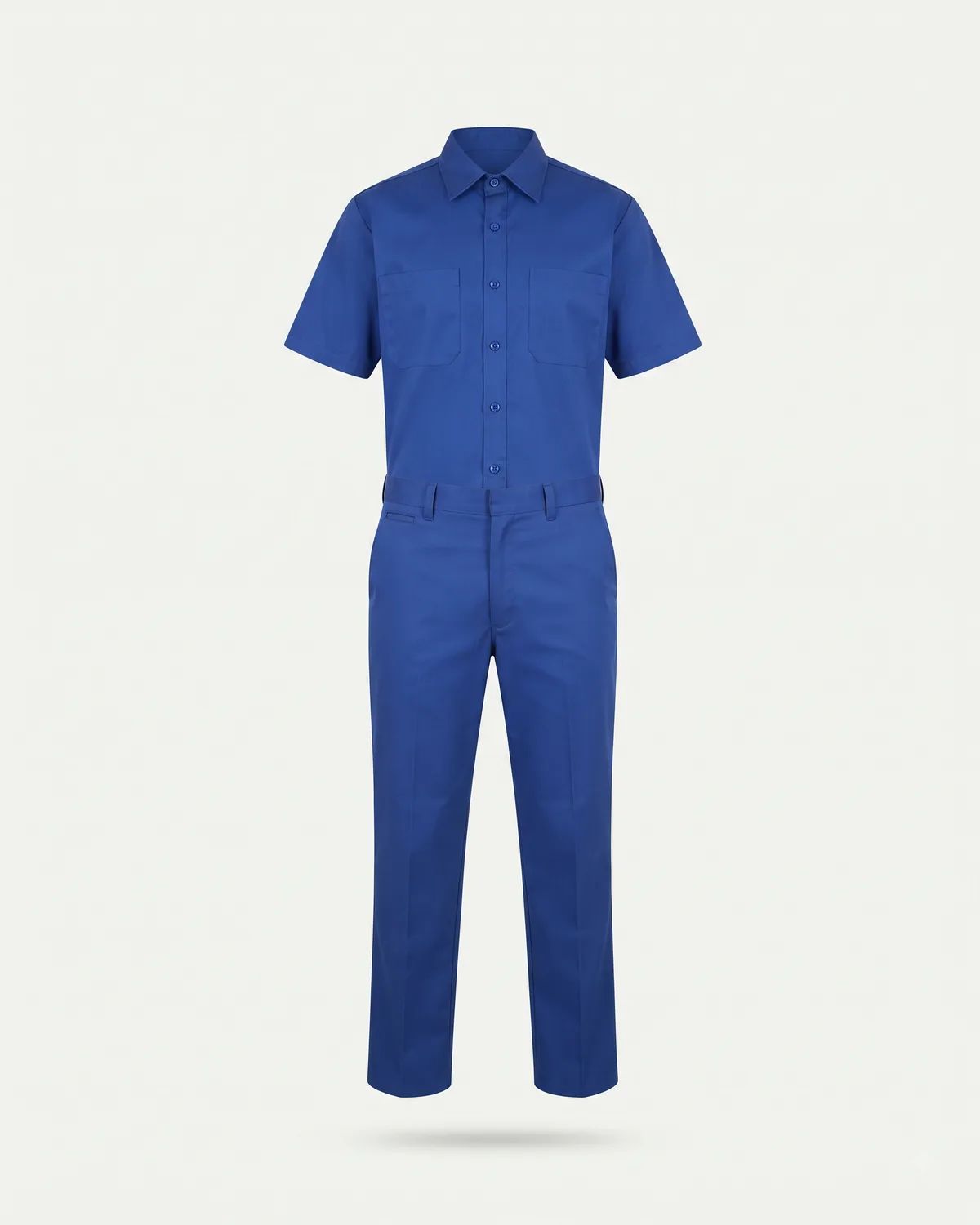
- Two-piece worker set
- Shirt and trouser in two weights of the same shade family. The most common general-factory issue.
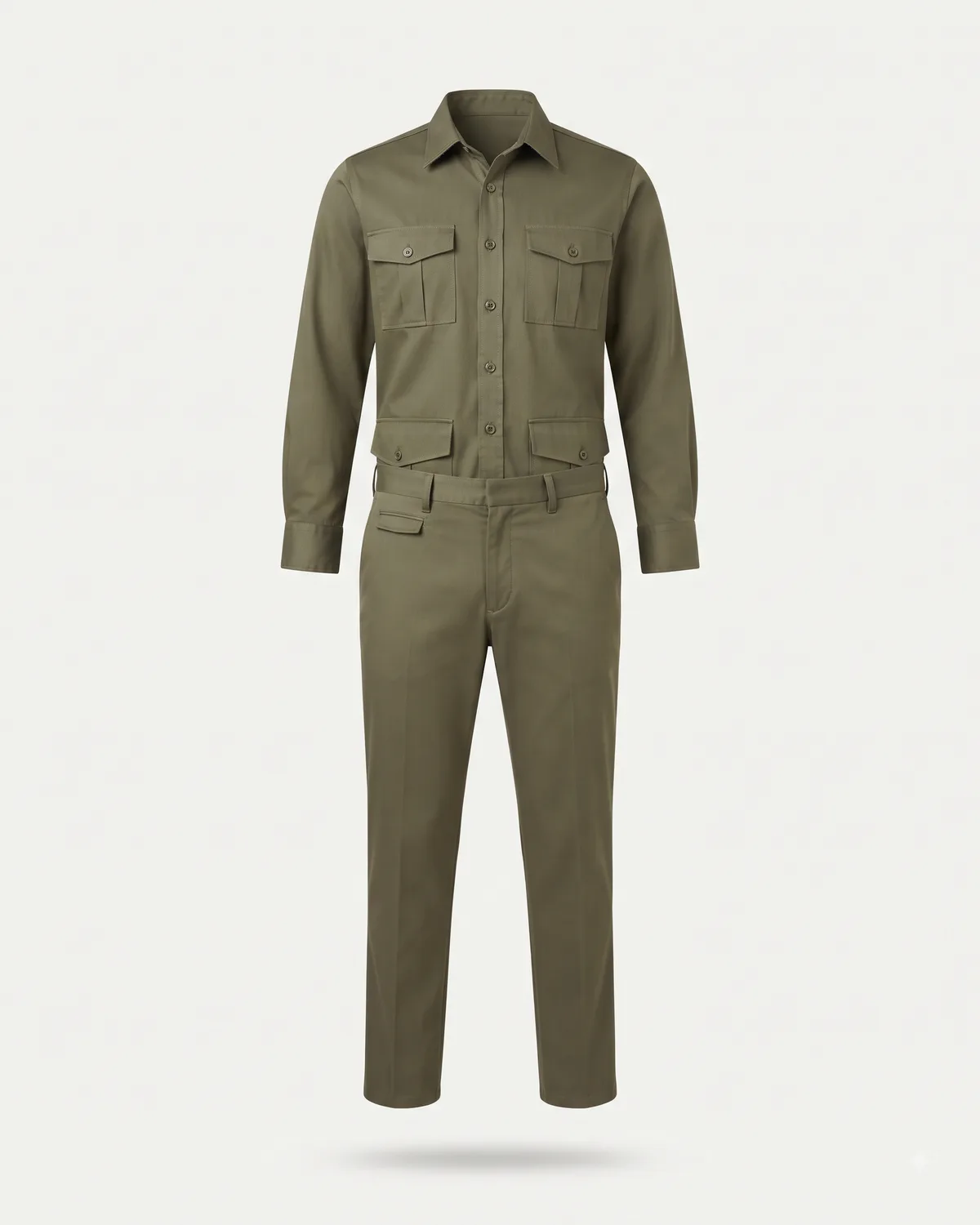
- Safari suit
- Four-pocket bush shirt with matching trouser. Still supervisor and junior-engineer dress in PSUs and dairies.
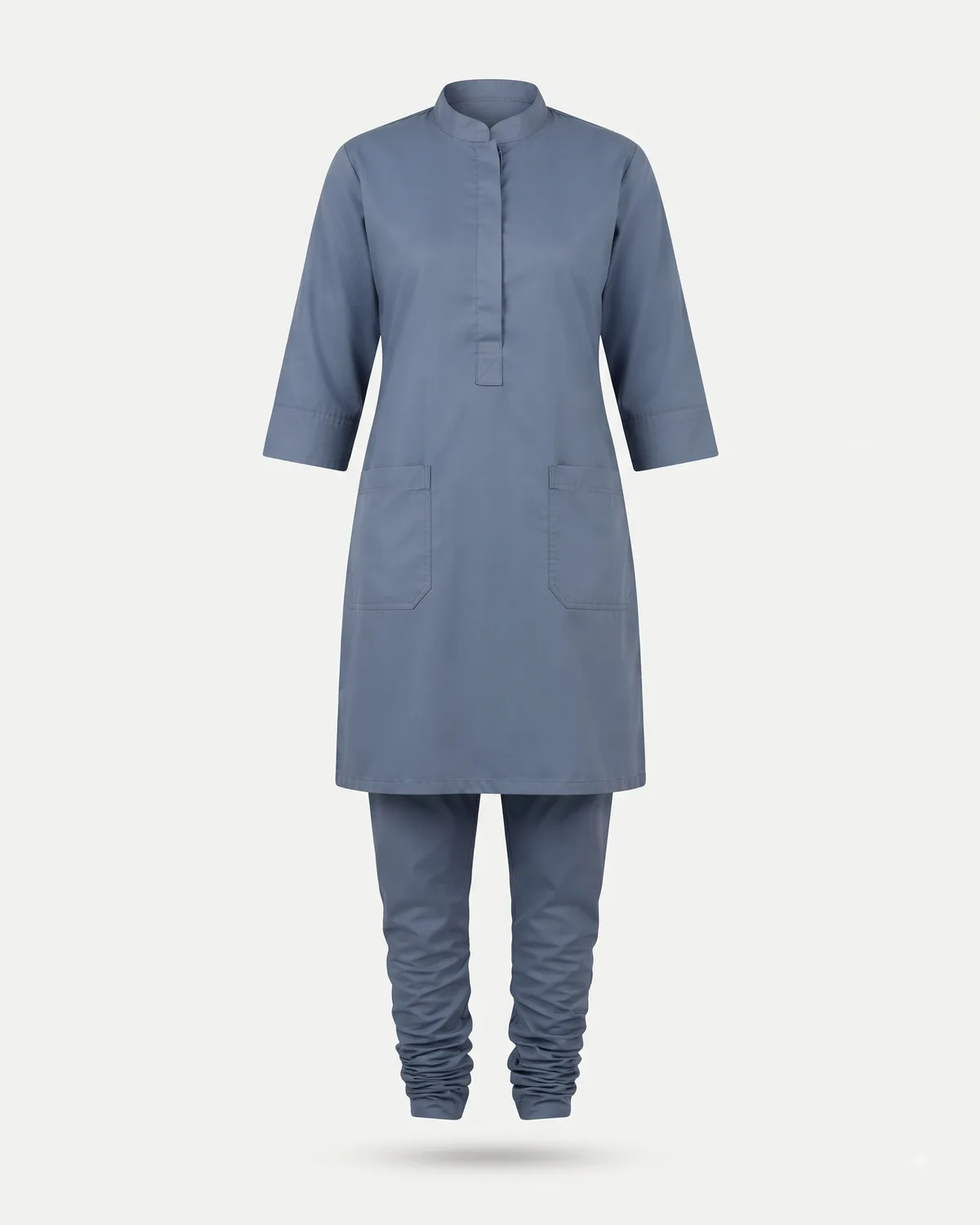
- Women’s factory set
- Kurta with churidar or trouser, closed neck, no dupatta near machinery. Cut for movement.
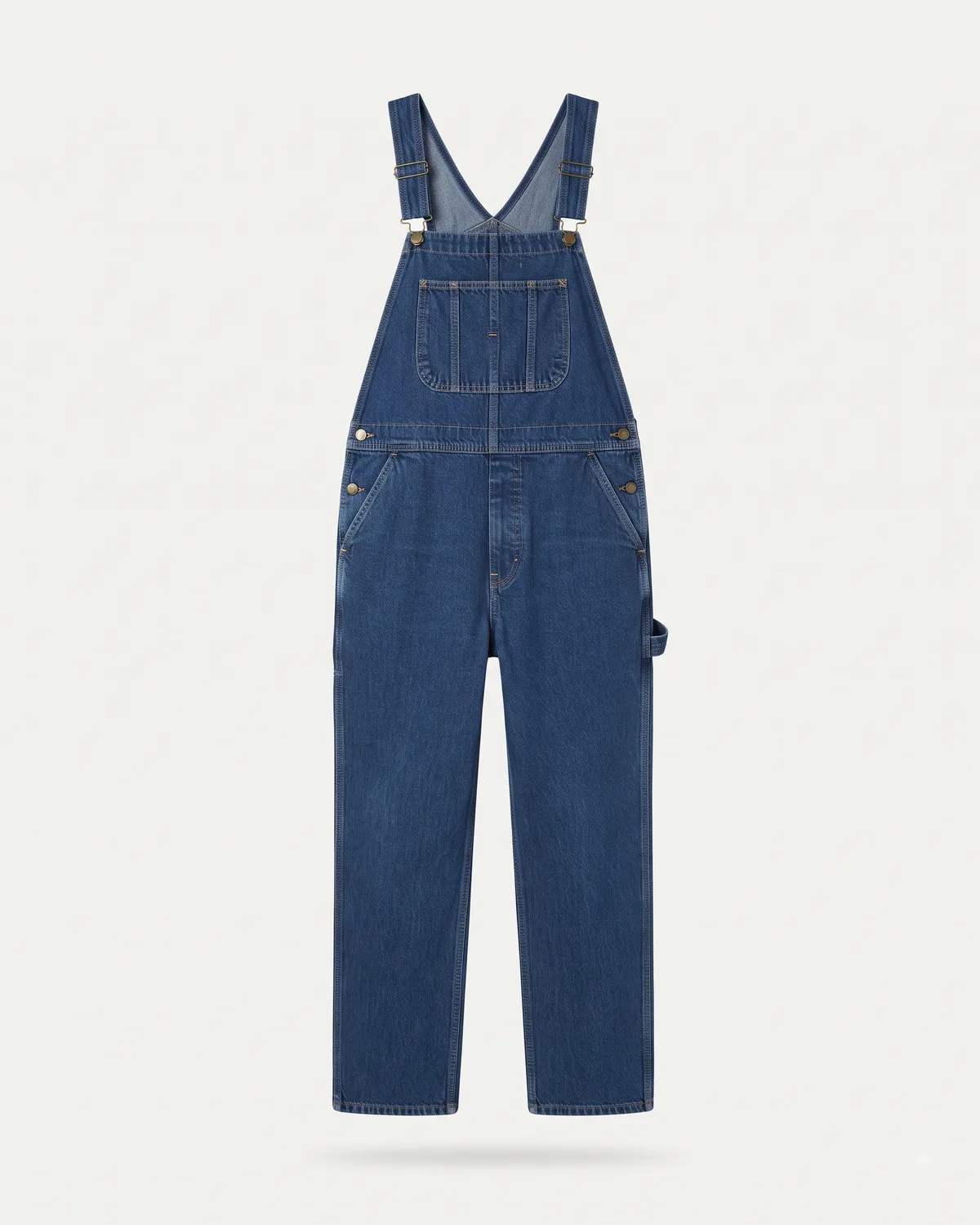
- Bib overall (dungaree)
- Bib front with braces, hammer loop and rule pocket. Cooler than a coverall for workshop jobs.
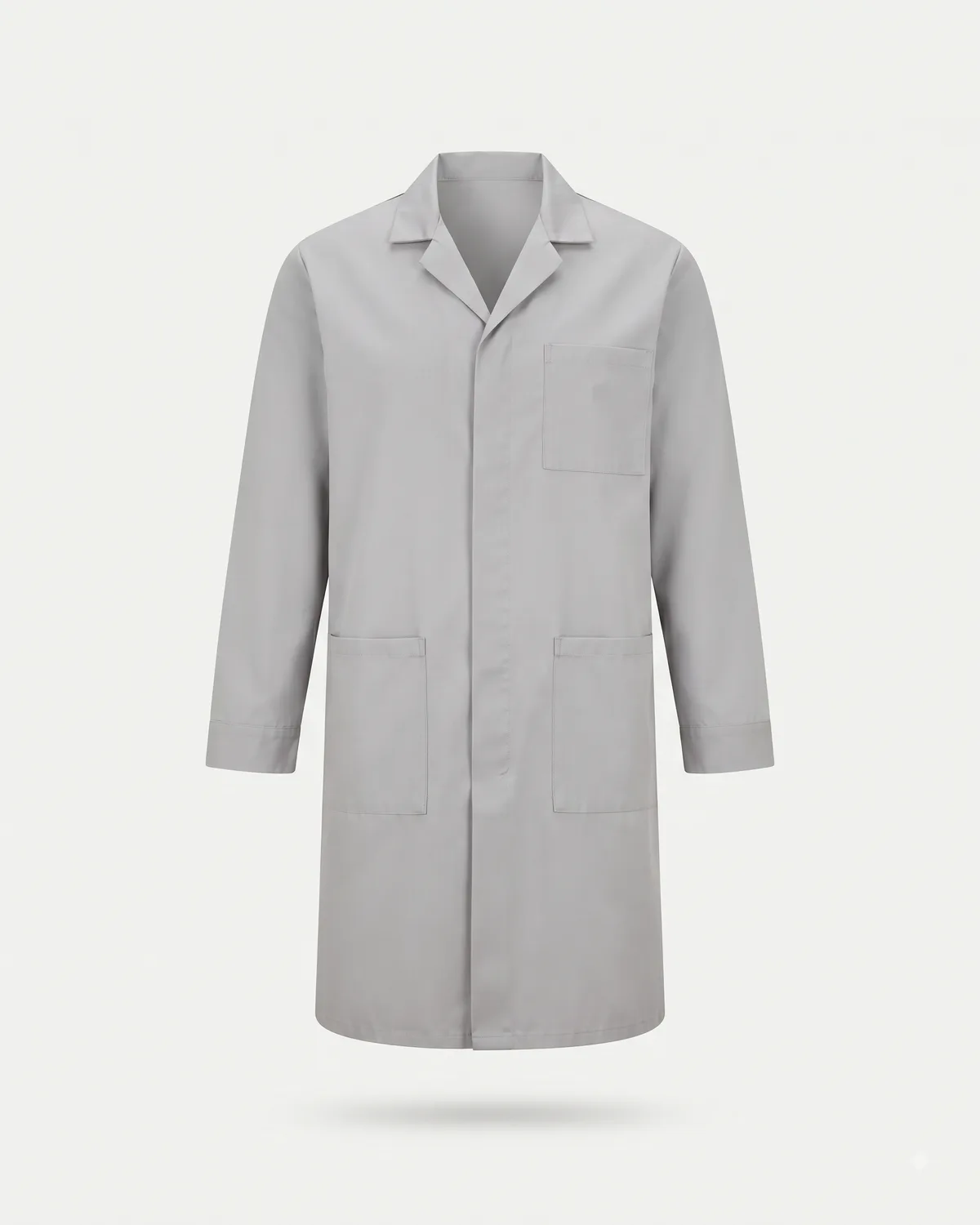
- Dust coat (apron coat)
- Knee-length coat over personal clothing for supervisors, QC, stores and inspection staff.
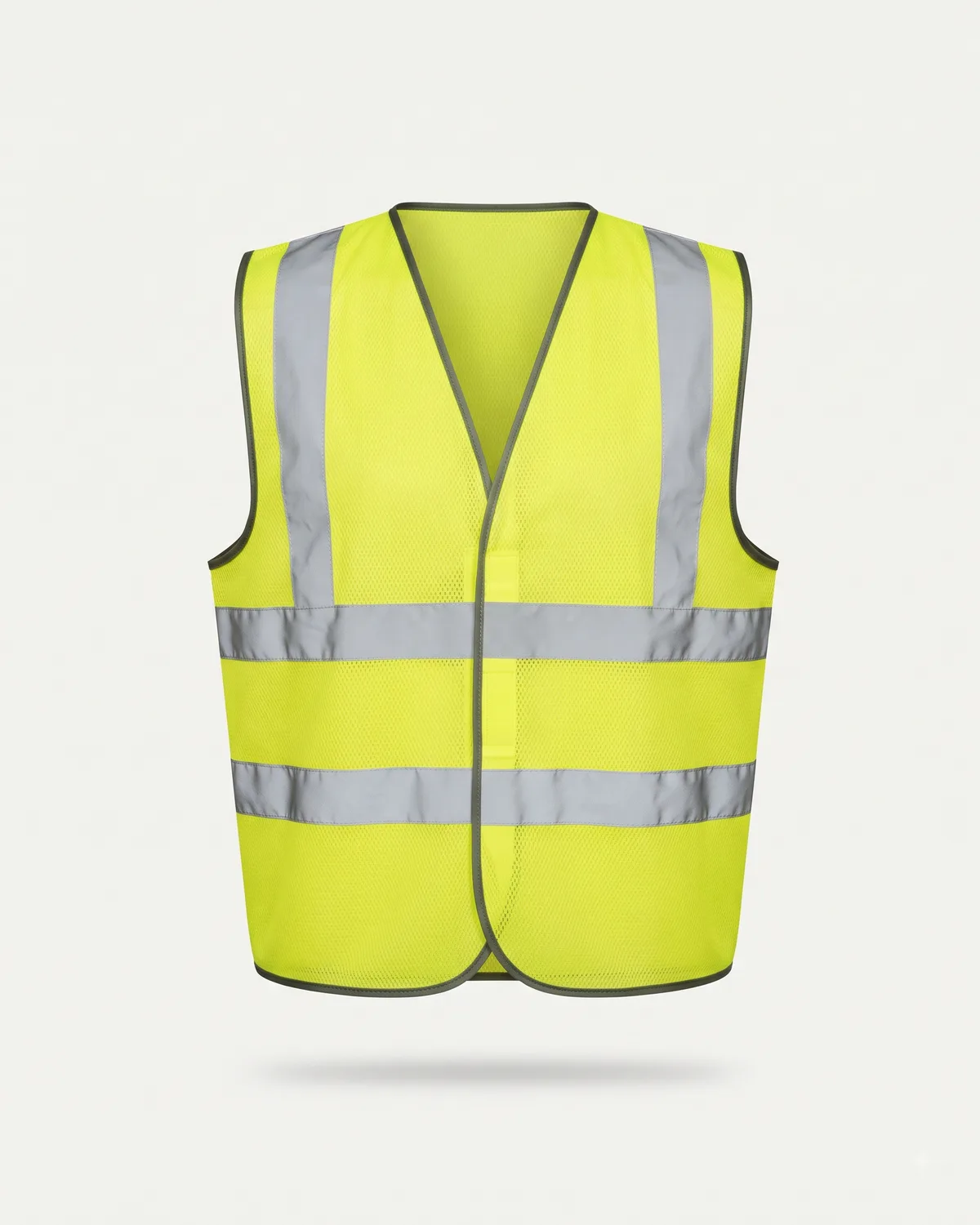
- Reflective safety jacket
- Fluorescent vest with retroreflective bands, worn over the uniform for yard, night shift and forklift traffic.
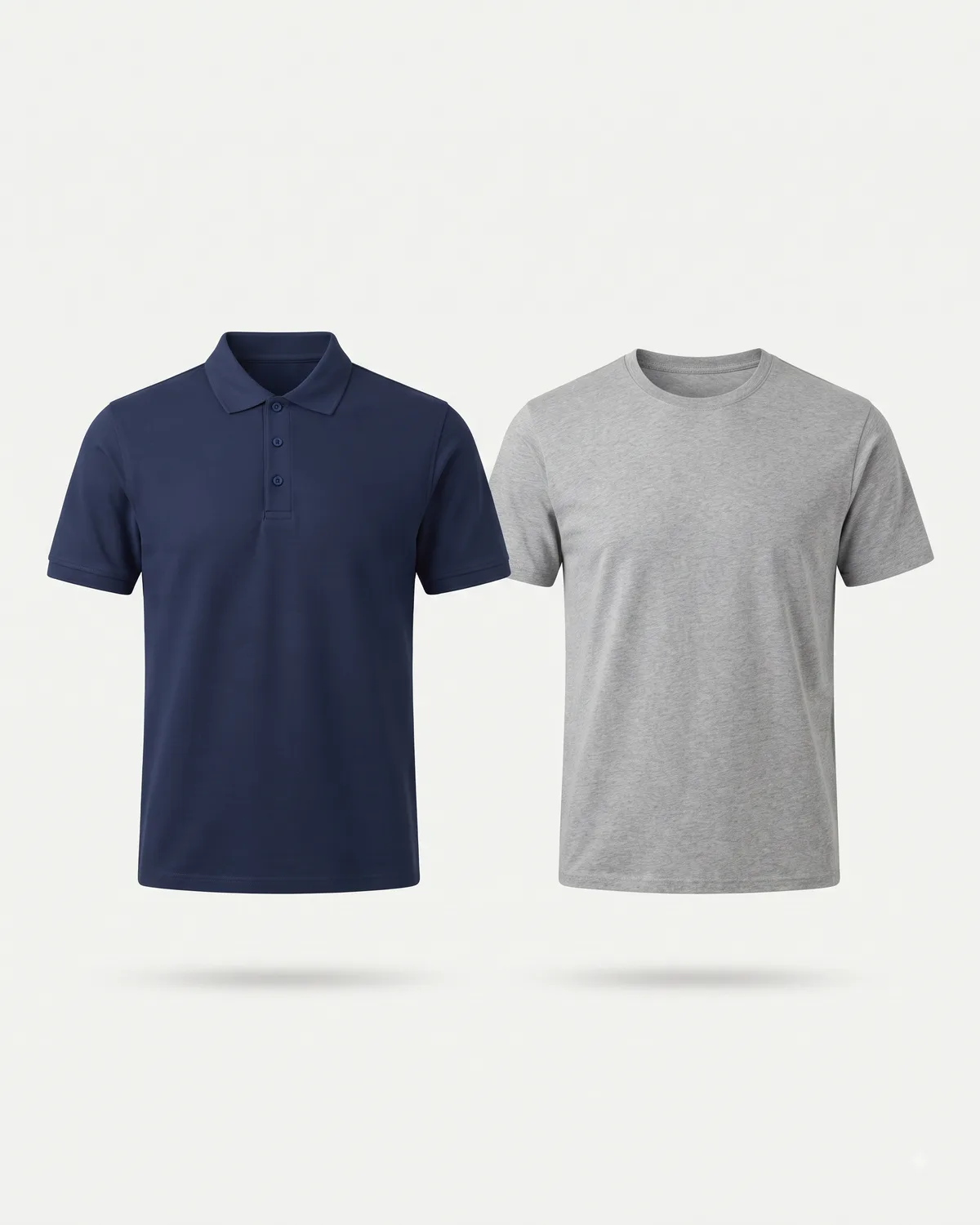
- Collar and round-neck t-shirts
- Knitted issue for assembly, packing and safety-week events, DTF printed where the artwork is full colour. Sits outside the woven guarantee.[*]
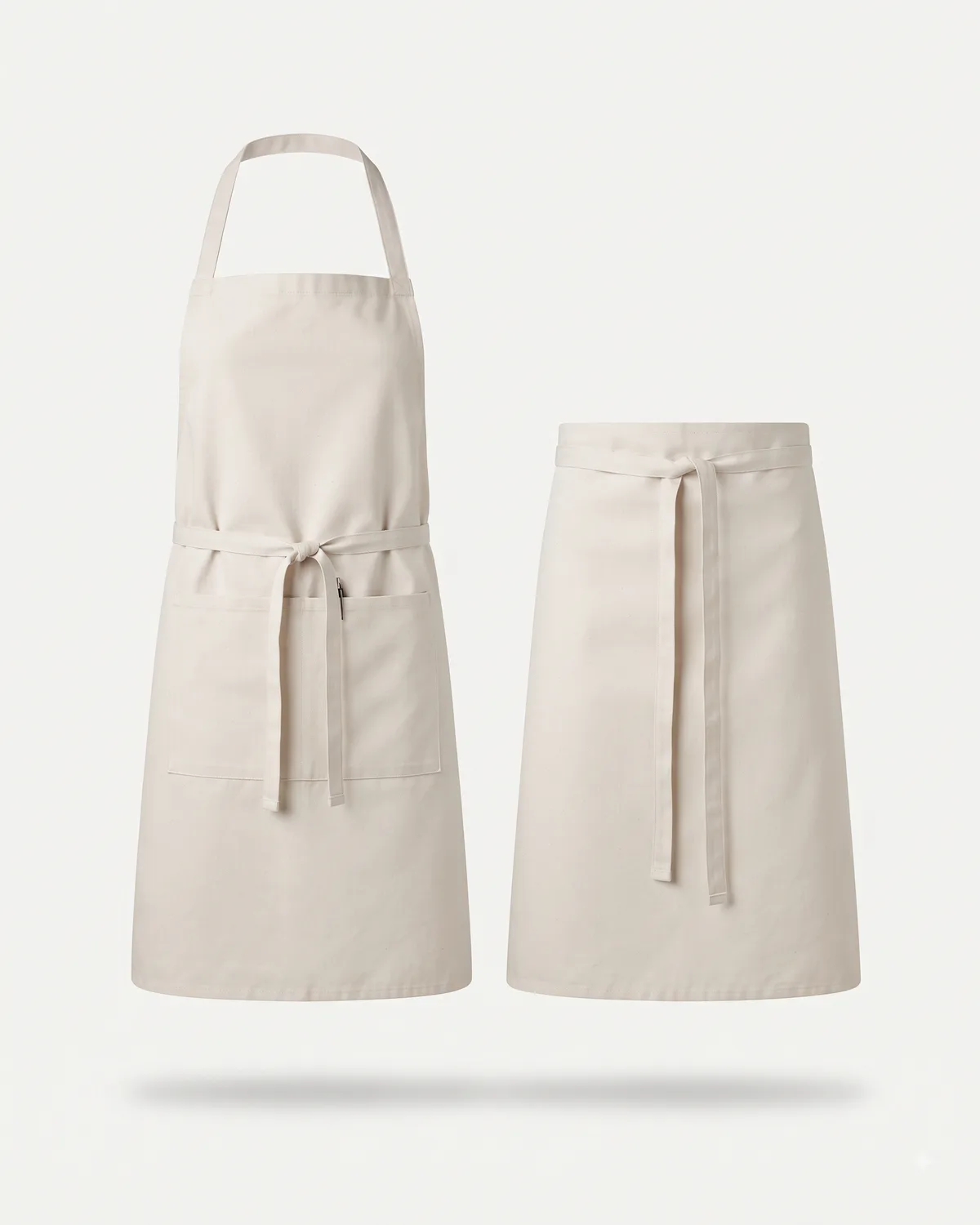
- Waist and bib aprons
- Cotton canvas or drill for bench work; coated aprons for wet and chemical handling.
Materials & craftsmanship
Fabric by the job
Shirting and finer supervisor grades come from branded mills including Raymond, Siyaram’s, Santosh and Qmax, and clients may nominate a mill of their own. Workwear-weight drill and canvas are bought to the quality your specification names, against an approved sample. Knitted t-shirts are quoted on their own terms, separate from the woven issue.
| Fabric | Working spec | Why it suits |
|---|---|---|
| Cotton drill | 100% cotton, 240 to 280 GSM | Will not melt near sparks and hot work. Breathes in summer heat and softens with wear. |
| Poly-cotton drill | 65/35 polyester cotton, 210 to 260 GSM | The general-floor workhorse. Dries overnight, holds shade and shape. Wrong anywhere near sparks or flame. |
| Poly-cotton shirting | 65/35 polyester cotton, 140 to 180 GSM | For the shirt half of a two-piece set, where the trouser carries the abrasion. |
| Cotton canvas | 100% cotton, 300 to 420 GSM | Aprons, knee and seat panels, and tool-facing pockets that must survive dragged metal. |
| Fluorescent hi-vis | Polyester or poly-cotton, 120 to 220 GSM | Vests and hi-vis wear for yard and night work. Shade retention matters more than weight. |
Questions buyers ask
Asked before ordering
What GSM should we specify for a general factory boiler suit?
For general engineering and assembly, 210 to 260 GSM is the working band. Below about 200 GSM the fabric thins at seat and knee within months. Above 280 GSM you are buying heat stress unless the job genuinely needs the weight, as foundry and heavy abrasion work does. Specify GSM together with weave and blend, never alone, and confirm it against a sample garment.
Should we choose 100% cotton or poly-cotton for the shop floor?
Poly-cotton for the general floor, pure cotton wherever there are sparks, molten metal or hot surfaces. A 65/35 blend dries faster, holds colour and costs less over a year, which suits assembly, machining and packing. But polyester melts and can adhere to skin, so it is wrong in welding and furnace areas regardless of weight. Many plants run both, one specification per department.
Can we nominate our own mill and match our corporate shade?
Yes, nominating a mill is normal in bulk industrial orders. Shirting and supervisor grades come from branded mills including Raymond, Siyaram’s, Santosh and Qmax, and heavier drill or canvas is bought to the quality your specification names. Shade matching works best against a physical swatch rather than a colour code, because mill lots of workwear fabric vary slightly. If consistency matters, book the year’s fabric in one lot.
How do you take sizes for several hundred workers?
On site, through a measurement camp over one or two days. Every worker is measured, department by department, with sizes recorded against employee number. Standard size sets alone misfit a large Indian workforce, particularly on seat, thigh and sleeve length. Inlay left in side seams, crotch and sleeves means a garment can be altered later instead of scrapped.
What does the one-year guarantee cover on industrial orders?
The stitching on woven garments, for one year: seams, bartacks, buttons and workmanship. Fabric is approved against sample and swatch before cutting rather than guaranteed after delivery. Hosiery and t-shirts are excluded. Real service life depends on the job: a two-shift welder wears out a boiler suit faster than a store keeper does, so plan issue cycles by department rather than by a single plant-wide date.
We need a different colour for contract labour. Does that double the cost?
No. Standard practice is the same pattern and size set cut in a second fabric shade, sometimes with a contrast yoke. The second colour adds fabric and handling cost, not pattern cost. Fix the colour code before cutting begins, because a mid-year change means a fresh fabric lot and a visible shade break between the first and second batch of workers.
Is a boiler suit with two-inch reflective tape a high-visibility garment?
Not automatically. IS 15809:2017 defines high-visibility classes by the minimum area of fluorescent background and retroreflective material together, and certified high-visibility clothing falls under the Protective Textiles (Quality Control) Order, 2022, which requires the ISI mark. Stitched tape makes a worker more visible, and tape has a stated wash life, but if your site audit demands a class, specify the class.
Related identities
Next step
Tell us about the people who will wear it.
Roles, rough staff strength, and anything already decided about fabric or colour. That is enough for a written quotation for industrial uniforms.