Identities / Healthcare
Hospital Uniform & Linen Manufacturer in Gujarat
Uniforms that survive the hospital laundry
Scrub suits, doctor aprons, patient wear and ward linen for Indian hospitals, measured and stitched under one roof by a maker at work since 2001.
- Minimum order
- 50 pieces per style
- Guarantee
- One year on stitching, woven garments* terms
- Made
- One building, measured across Gujarat, delivered anywhere in India
- Fabric
- Branded mills, approved on swatch before it is bought
Understanding the industry
How hospitals buy uniforms
Healthcare is India’s most fragmented uniform buyer. Corporate hospital chains buy centrally against a brand manual, with department colour coding and staff counts in the thousands. Standalone hospitals of 50 to 300 beds buy through an administrator or nursing superintendent, usually one annual refresh plus joining kits through the year. Government hospitals and medical colleges buy by tender or through GeM against a written fabric specification that can be lab-tested on delivery. Below that sits a long tail of nursing homes, labs and clinics ordering 20 to 200 pieces at a time. Buying is by role, not by garment: a 150-bed hospital typically specifies six to nine distinct uniforms. Linen and patient wear are usually settled in the same meeting, because bedsheets, draw sheets, OT drapes, curtains and patient kurta-pyjama go to the same laundry as the uniforms and are judged by the same wash count.
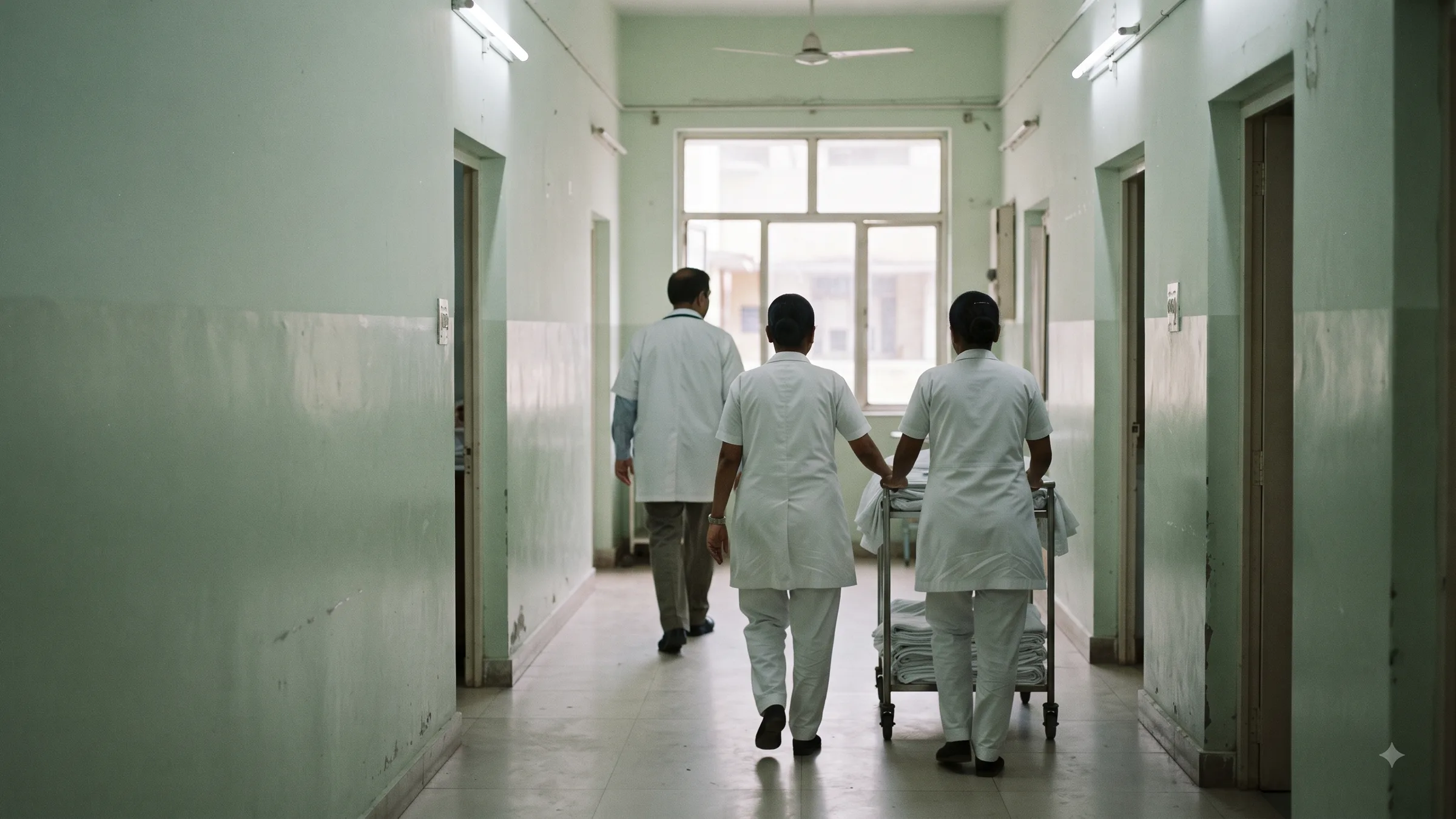
The working environment is hard on fabric. Ward and OPD floors in Gujarat and central India run 30 to 40 degrees for much of the year, often fan-cooled, while operation theatres run cold under laminar flow. Shifts are 8 to 12 hours, largely standing, with bending and patient lifting. Garments meet blood, betadine, chlorhexidine, alcohol rub and hypochlorite mopping splash daily, then go either to a mechanised laundry with chlorine bleach or, in smaller hospitals, to a bucket at home. Those are two different durability problems, and the fabric must be specified for the one that actually applies.
Price matters less than three questions. Will the fabric survive the hospital’s own laundry. Will the shade match on the repeat order six months later. Can one supplier take several hundred staff from measurement to delivery across three shifts. NABH accreditation has pushed linen and laundry policy into writing at more hospitals, and the uniform specifications hospitals derive from those policies are increasingly explicit and checkable.
Why uniforms matter
Why uniforms matter in a hospital
In a hospital the uniform is a working instrument, not decoration. It sits inside the infection control chain, it tells a crowded OPD who is who at a glance, and it carries the institution’s claim of consistency from ward to ward and city to city. It is also one of the few line items where durability quietly decides the annual spend: a garment that outlasts a cheaper one cuts replacement cost without any change in unit price.
- 01Infection controlUniforms come off at the end of a shift, go to a controlled wash and come back without carrying organisms into the next shift. NABH assessors look for a written linen and laundry policy with evidence it is followed, and hospitals derive their uniform specifications from it.
- 02Role recognitionIndian OPDs and casualty areas fill with patient attendants. A family needs to know at a glance who is a nurse, who is a technician, who is housekeeping and who is security. Colour coding does that faster than a name badge in a corridor of 200 people.
- 03Dignity and retentionNursing turnover in Indian private hospitals is high. A uniform that is opaque, that fits, and that still looks respectable after months of daily washing is a small but real part of why staff stay.
- 04Brand consistencyFor a chain, the same shade of teal across eight cities is a visible claim about consistency of care. That claim fails the day fabric from two different mill lots stands side by side in one corridor.
- 05Durability economicsPatient wear and ward uniforms are bought on cost per wash, not on hand feel. Fabric, how the mill dyed it, and seam construction decide how many laundry cycles a garment survives, and that number, not the unit price, sets the real annual spend.
Our approach
From measurement to finished garment
Uniform Corner has made uniforms since 2001 and grew out of Asopalav, a generational cloth shop in Satlasana that still trades. The retail counter and the manufacturing unit share one building, so a hospital order moves from measurement to finished garment on the premises. Cutting, stitching and finishing all happen here, and that is what keeps a multi-role hospital order consistent across sizes, shifts and departments.
- 01Measurement on siteMeasurement happens at the hospital, across shifts, planned around the duty roster. A written size register is kept against employee ID, so joining kits and top-ups start from the file.
- 02Size sets for high-churn rolesWard staff, housekeeping and junior nursing go on a graded size chart agreed at first order, with generous seam allowance at side seams and hems so a joining kit can be altered locally.
- 03Shade held for reordersThe mill article, the lot number and a physical retained swatch are recorded together, never a colour name on its own. Fabric can be reserved at first order for the year’s expected joiners, so a small top-up is cut from the same lot as the original issue.
- 04Built for the laundryPolyester sewing thread rather than cotton, bartacks at pocket mouths and vents, flat-felled seams at stress points, melt-resistant polyester buttons. Cotton thread and painted metal fail before the fabric does.
- 05Mill nominationFabric comes from branded mills, and a hospital may nominate its own mill and quality. The specification is fixed against the approved swatch and goes into the quotation in writing.
Uniform collection
What a healthcare order includes
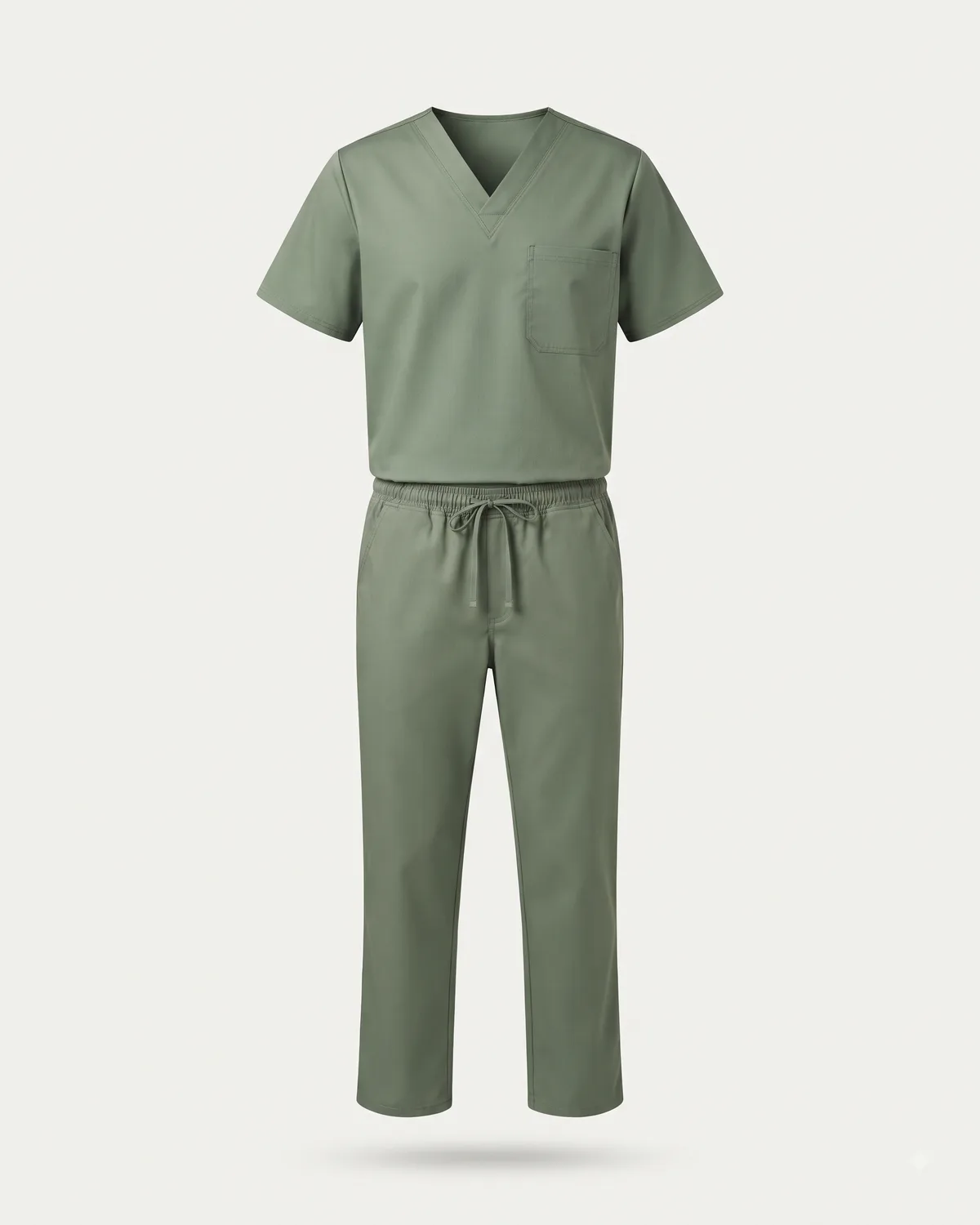
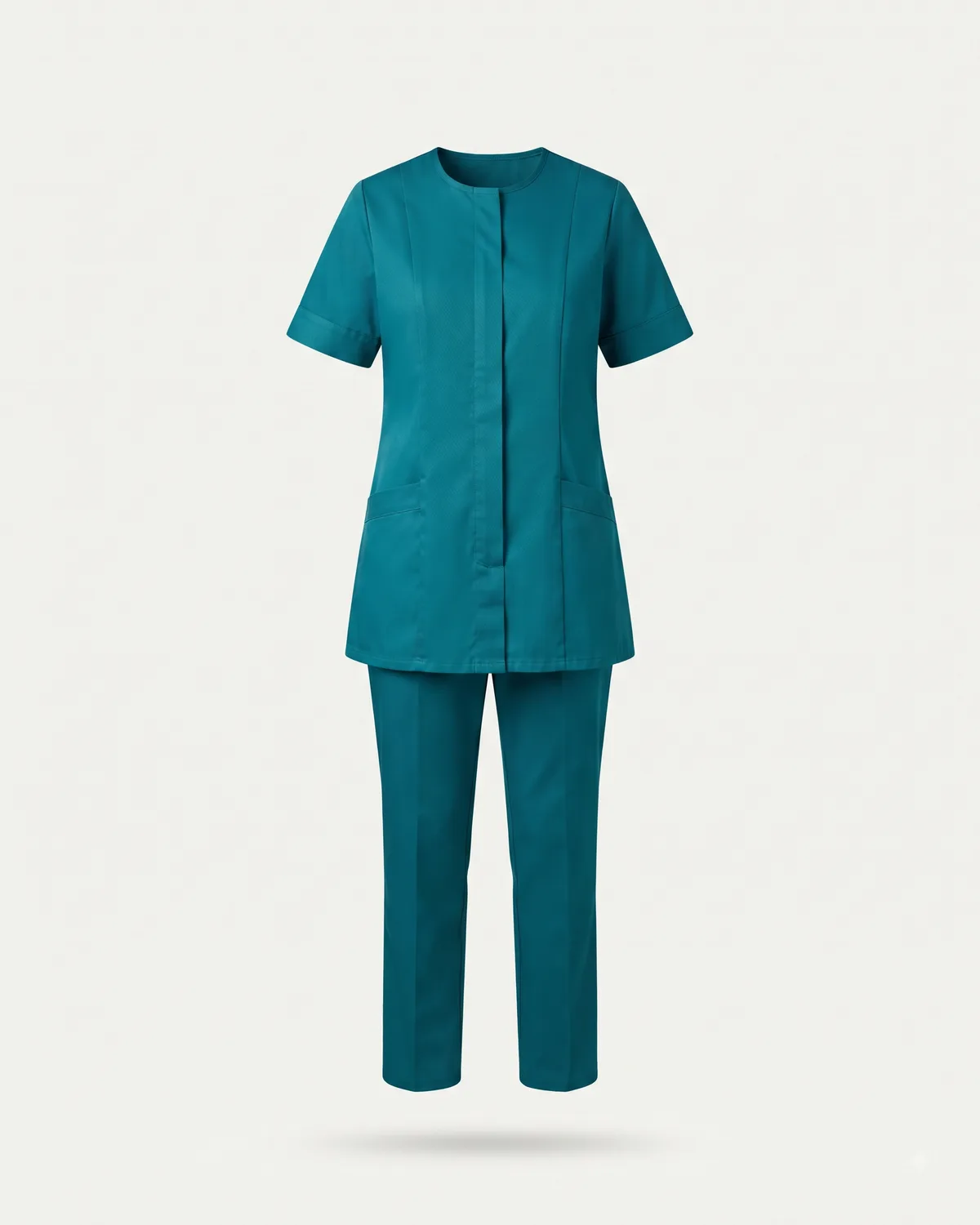
- Scrub suit (OT dress)
- Two-piece top and trouser in OT green, teal or ceil blue, elastic plus drawcord waist.
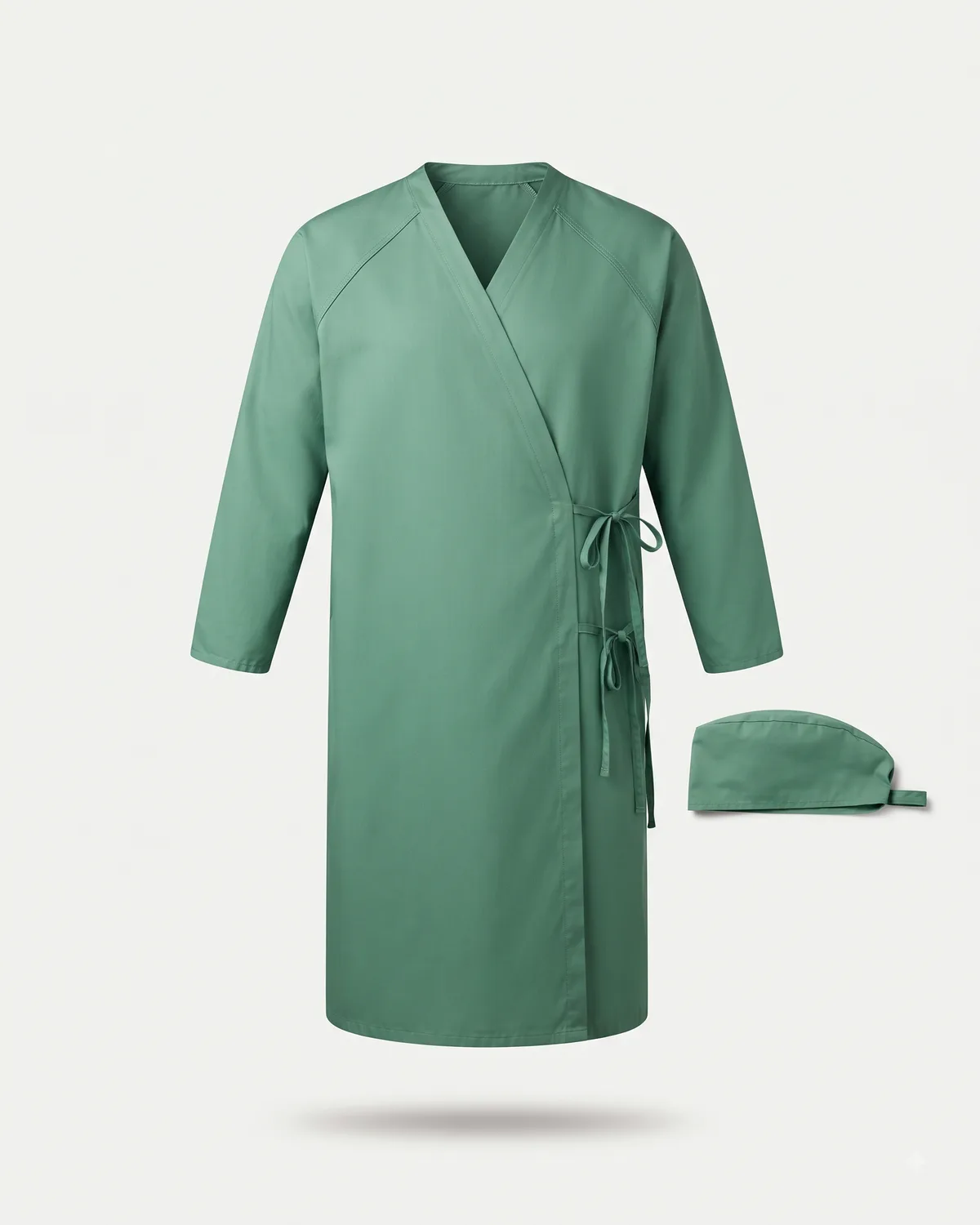
- OT gown and cap set
- Wrap-around gown in autoclavable cotton-rich fabric, cotton tape ties, caps cut from the same piece.
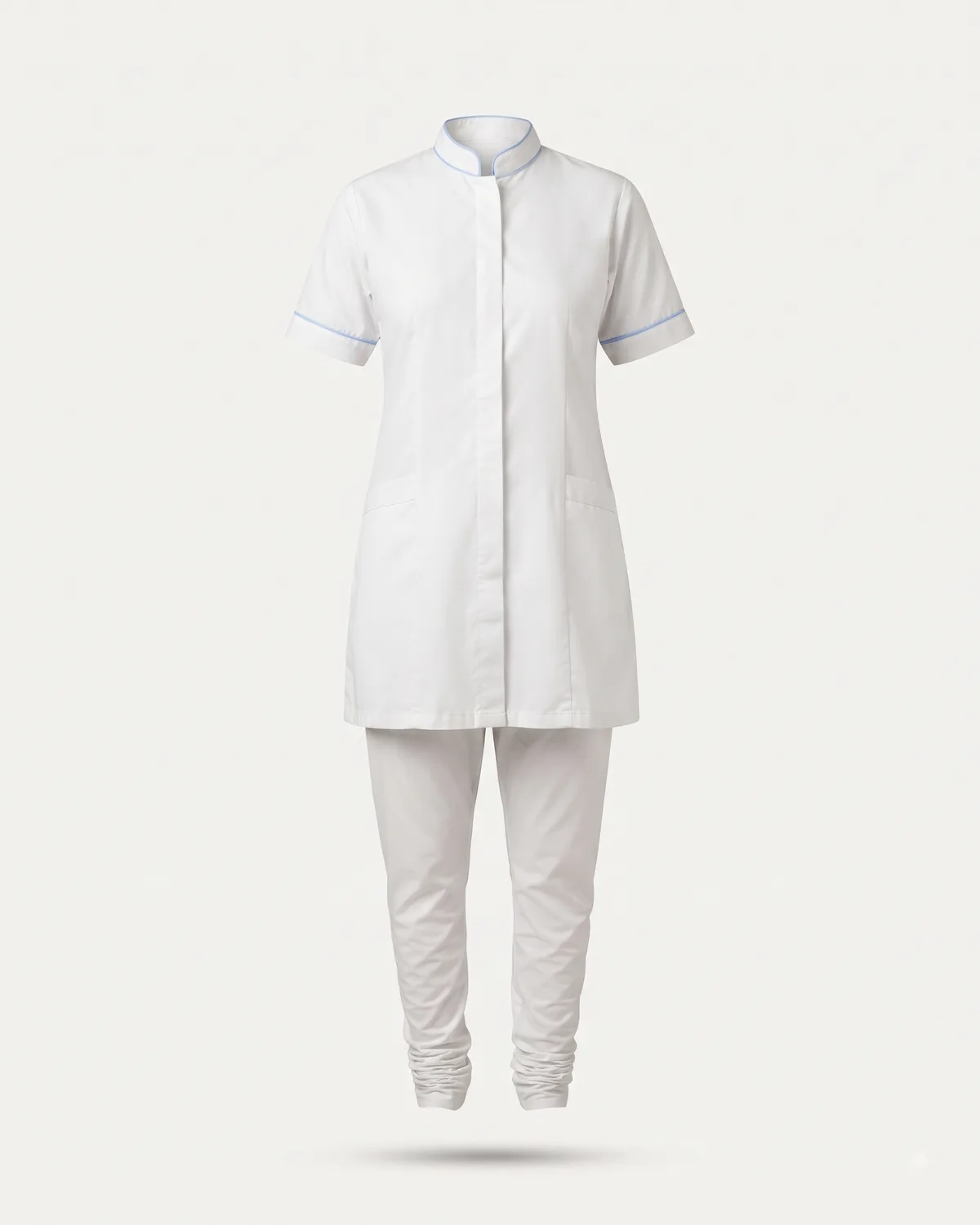
- Nurse kameez set
- Closed-neck kameez with salwar or churidar; dupatta policy settled in writing before cutting.
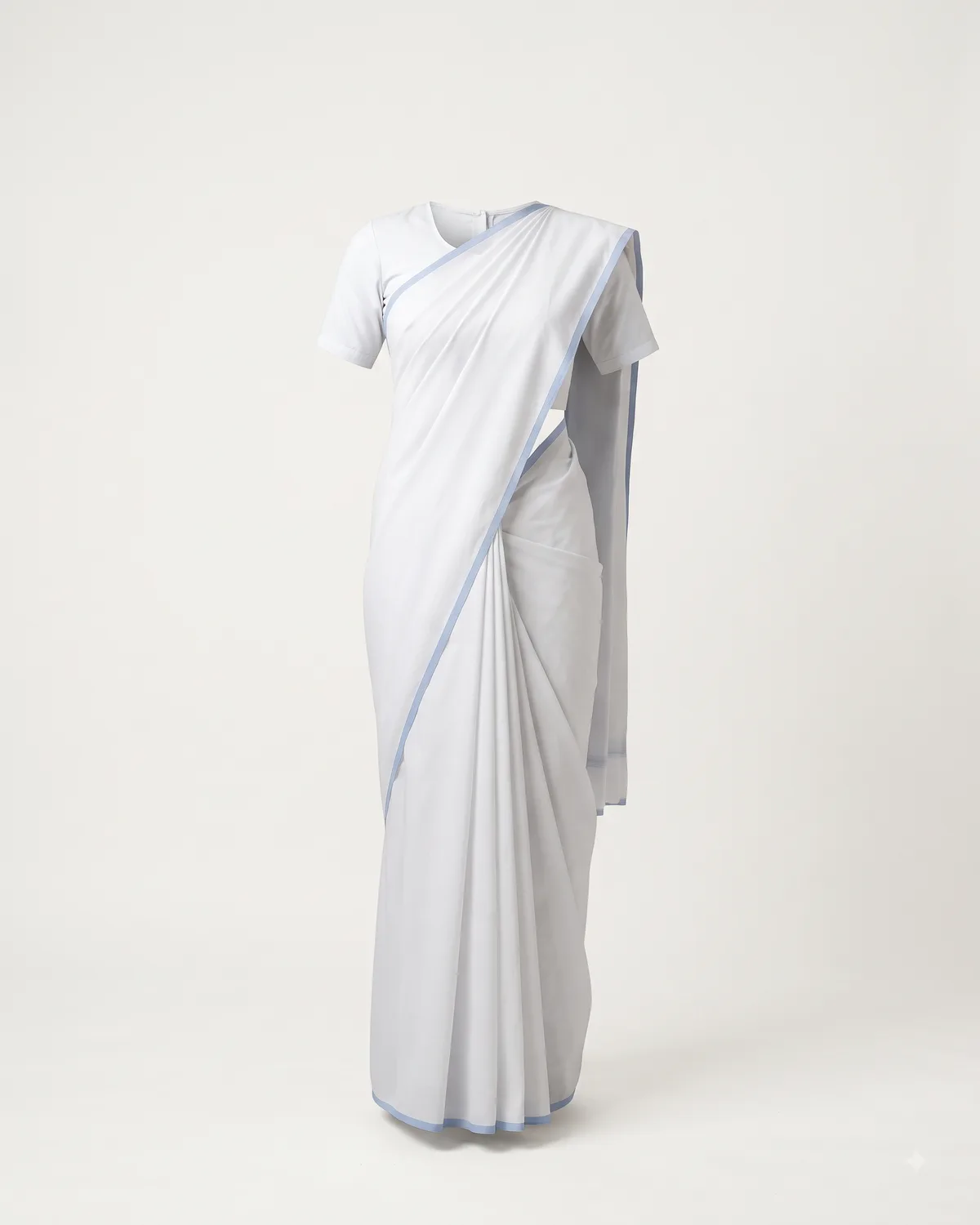
- Nurse uniform saree
- Plain or bordered saree with blouse; retained for senior nursing grades in some institutions.
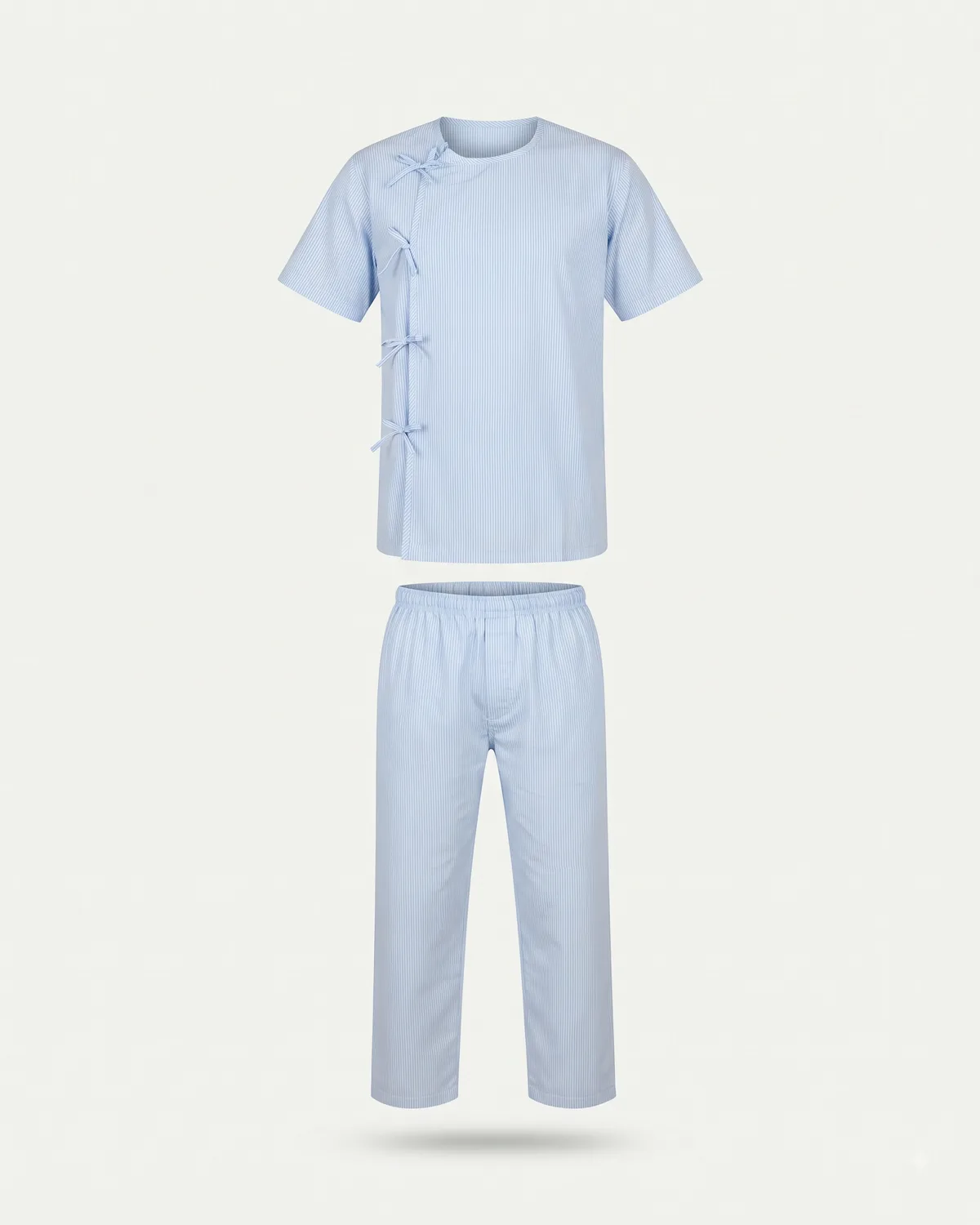
- Patient kurta-pyjama
- Side-opening sets preferred over open-back gowns on modesty grounds; bought on cost per wash.
- Ward boy and GDA set
- Heavier fabric for lifting and soiled-linen handling, in a colour distinct from nursing at a distance.
- Housekeeping set
- Durable twill in a saturated shade that stands up to hypochlorite mop water all shift.
- Front office set
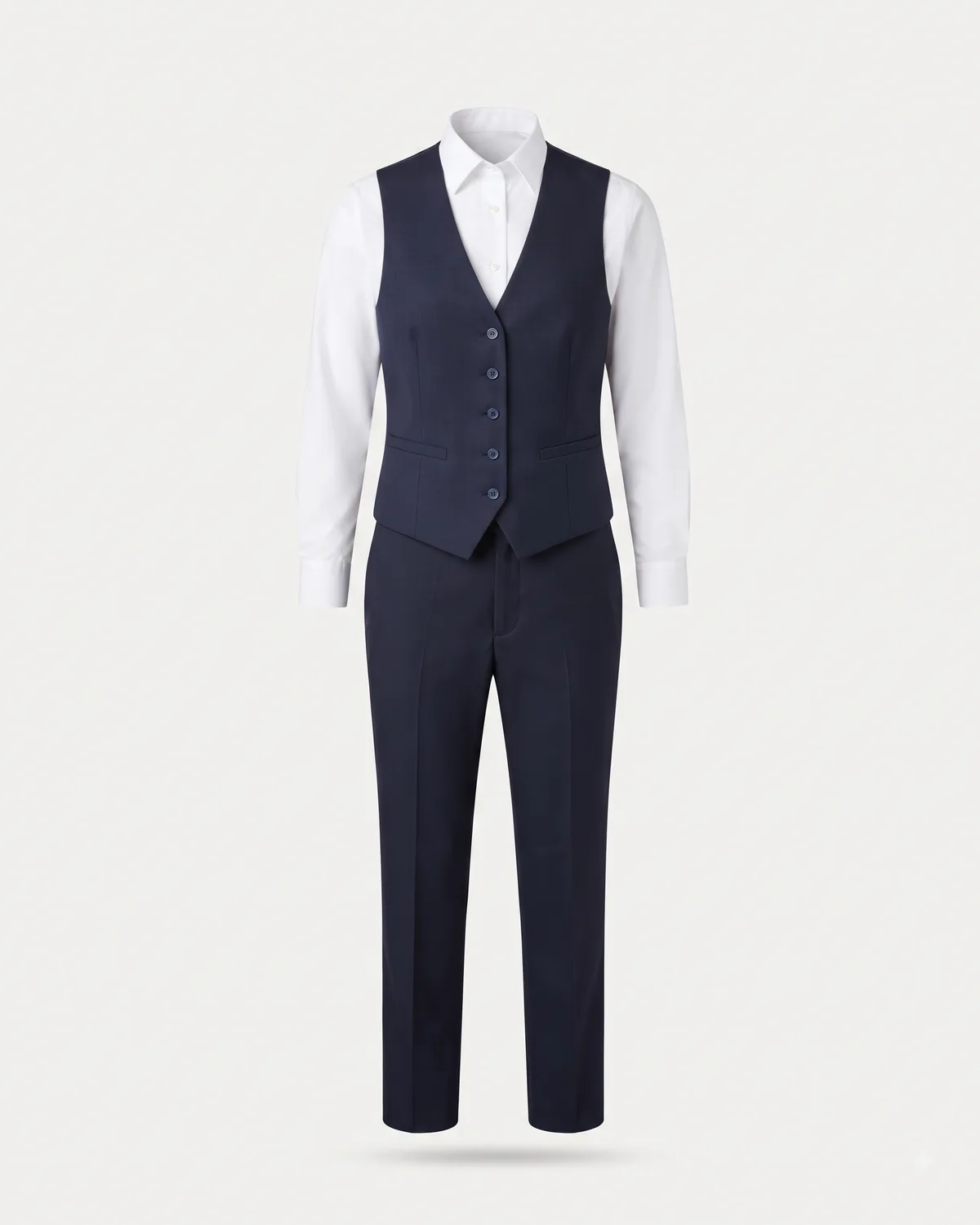
- Formal shirting, saree or waistcoat in the hospital’s brand shade, not a clinical colour.
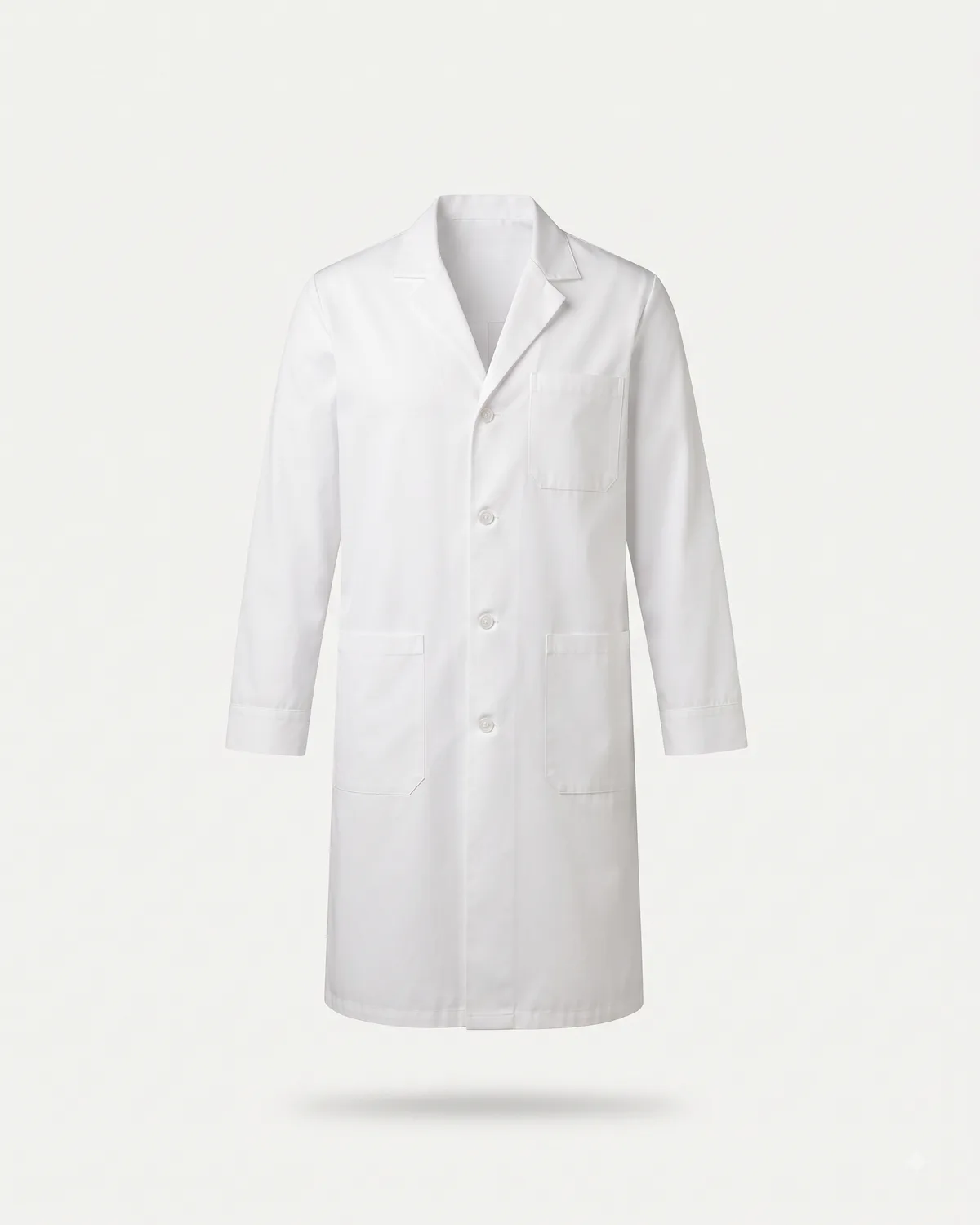
- Doctor apron
- The white coat in Indian trade language; half-sleeve for wards, knee-length for consultants.
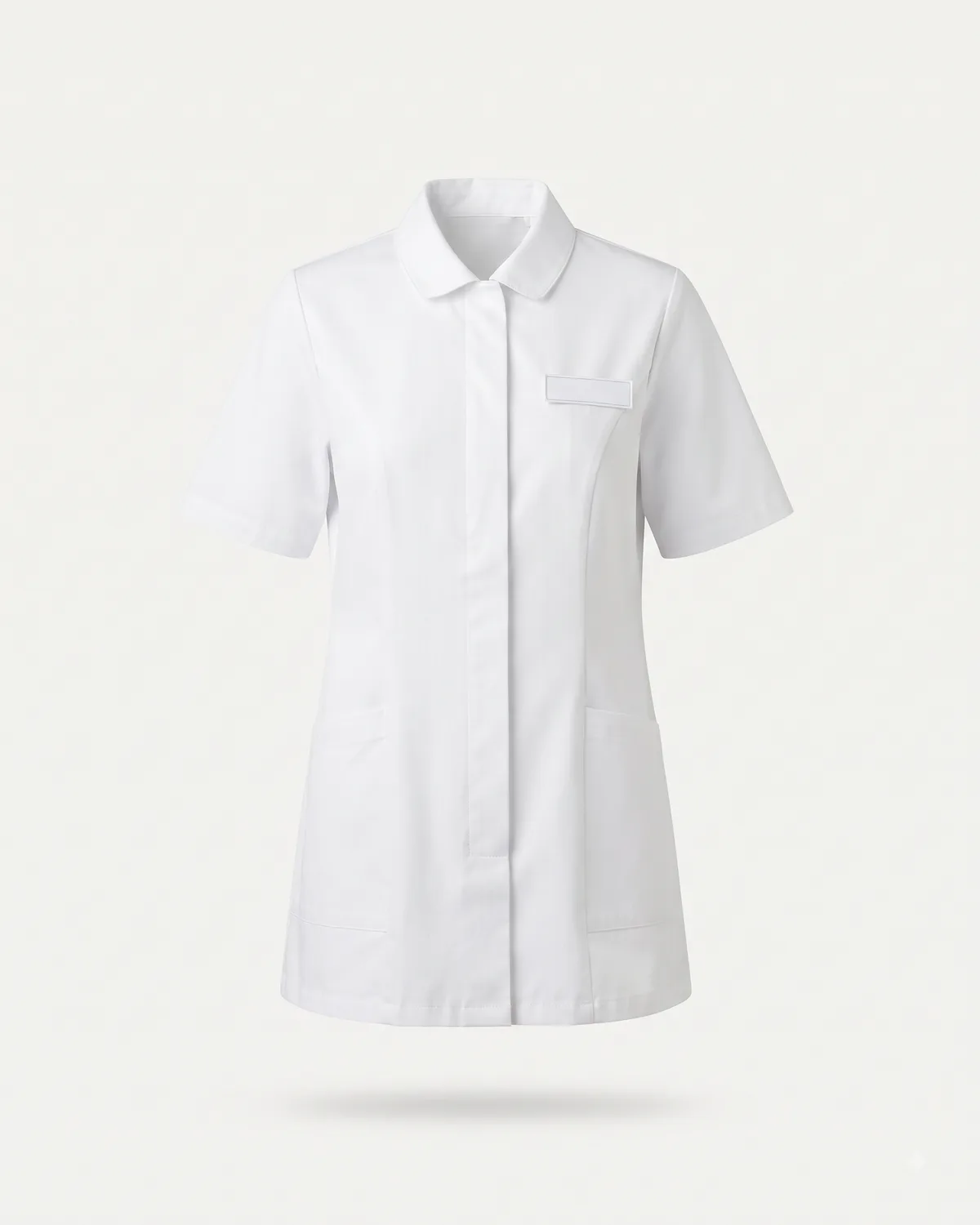
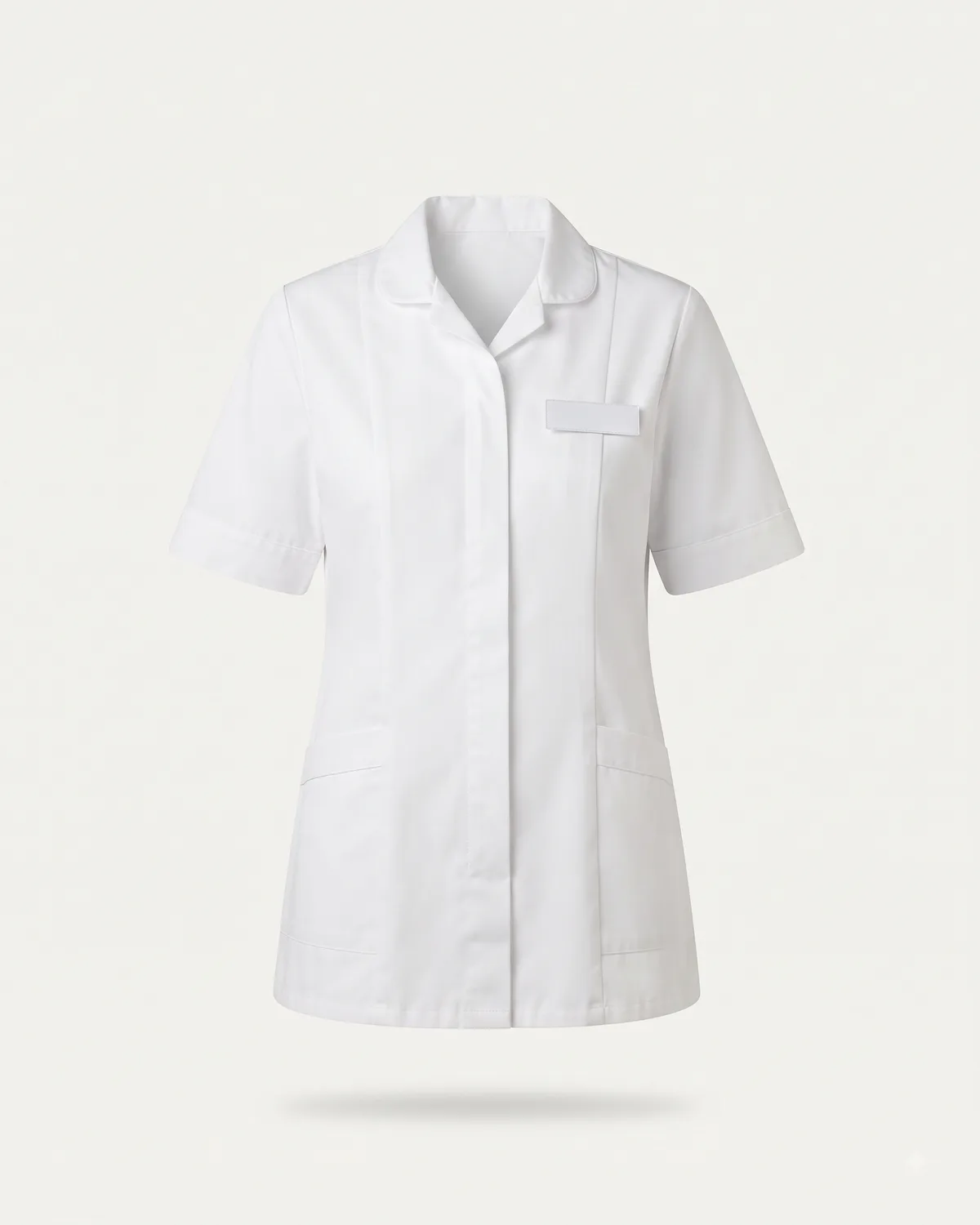
- Nurse apron (short coat)
- The short white coat that carries the name plate; takes the most staining in the order.
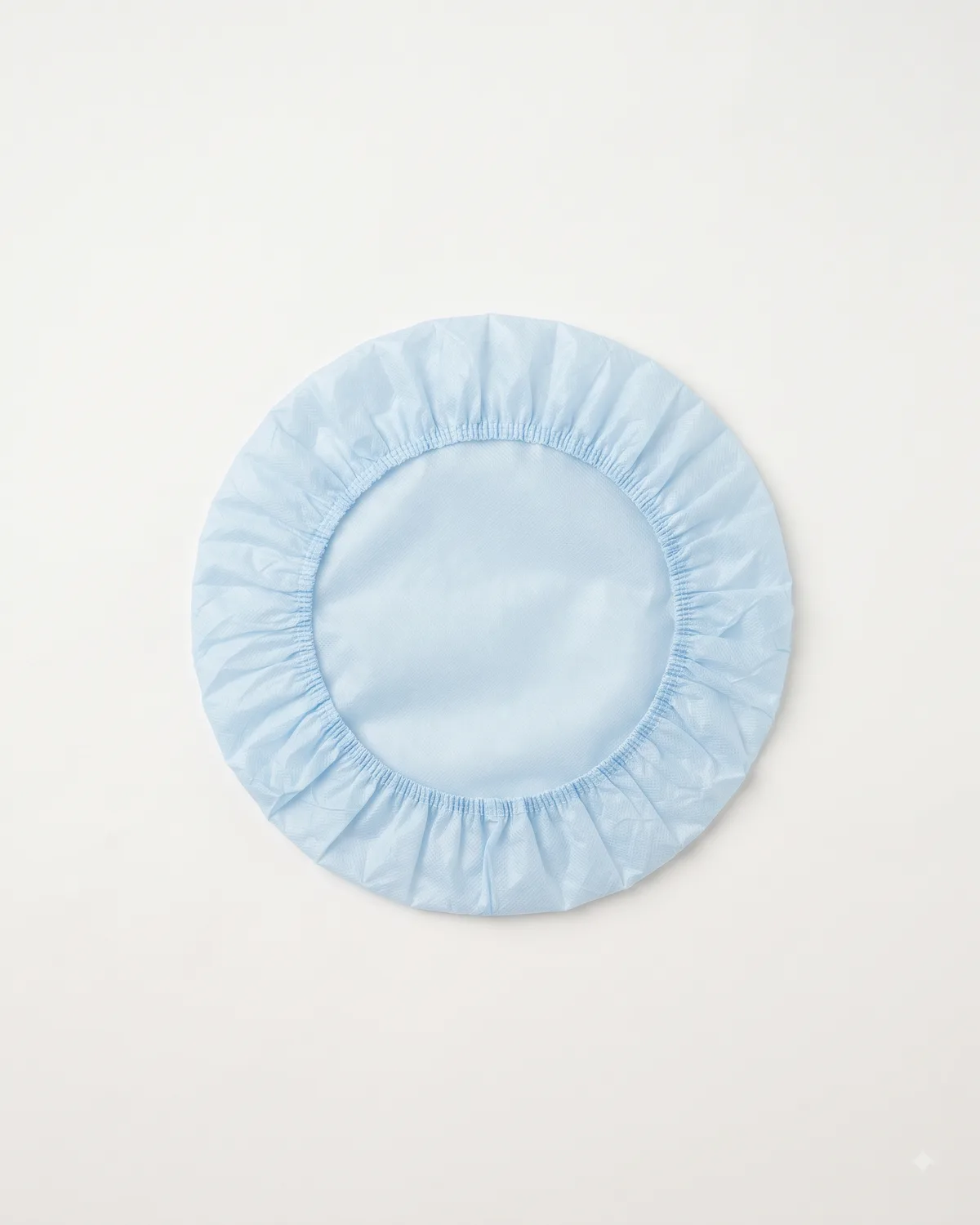
- Surgical Cap
- Disposable-style bouffant cap in pale blue non-woven fabric, ordered by the carton alongside OT linen.
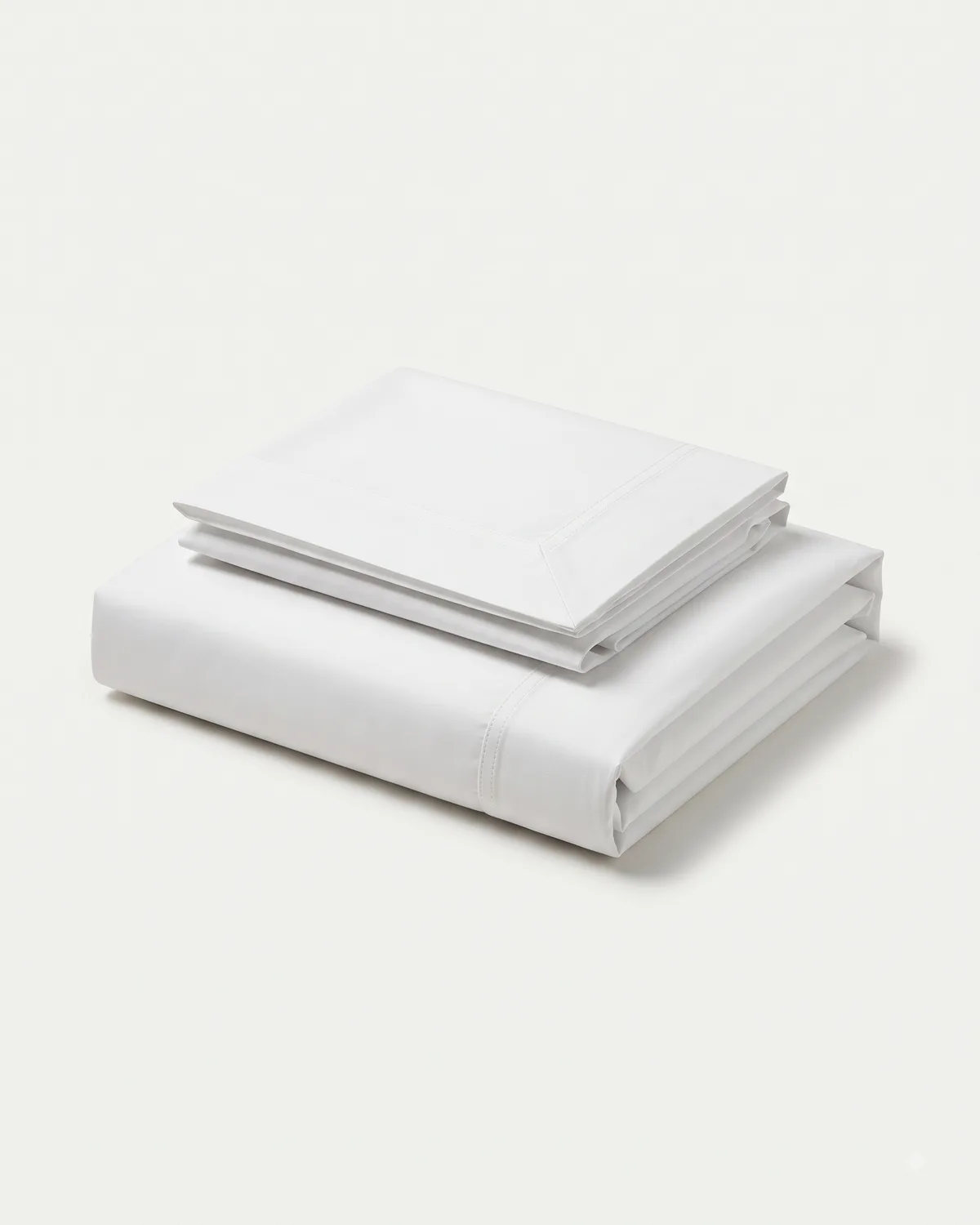
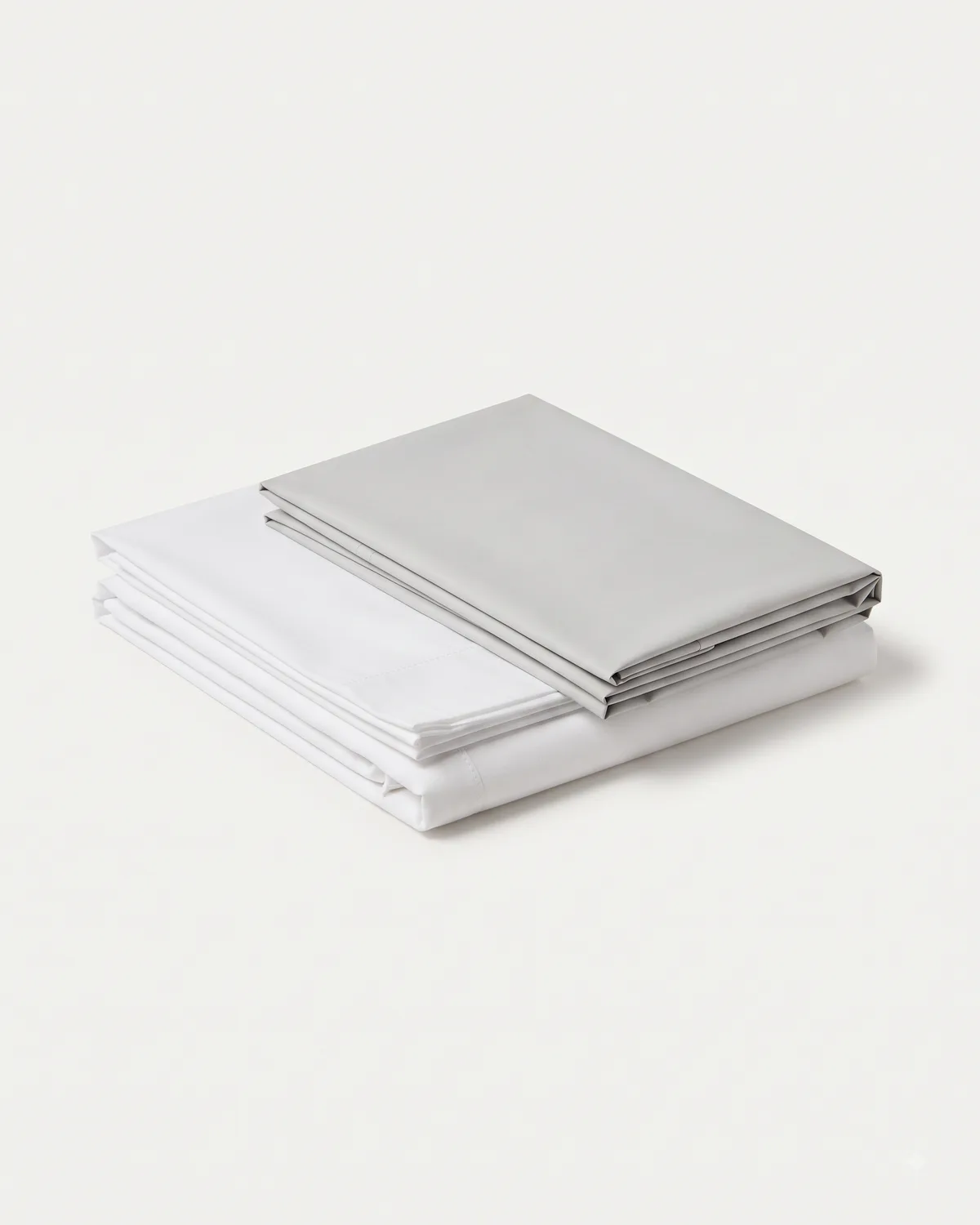
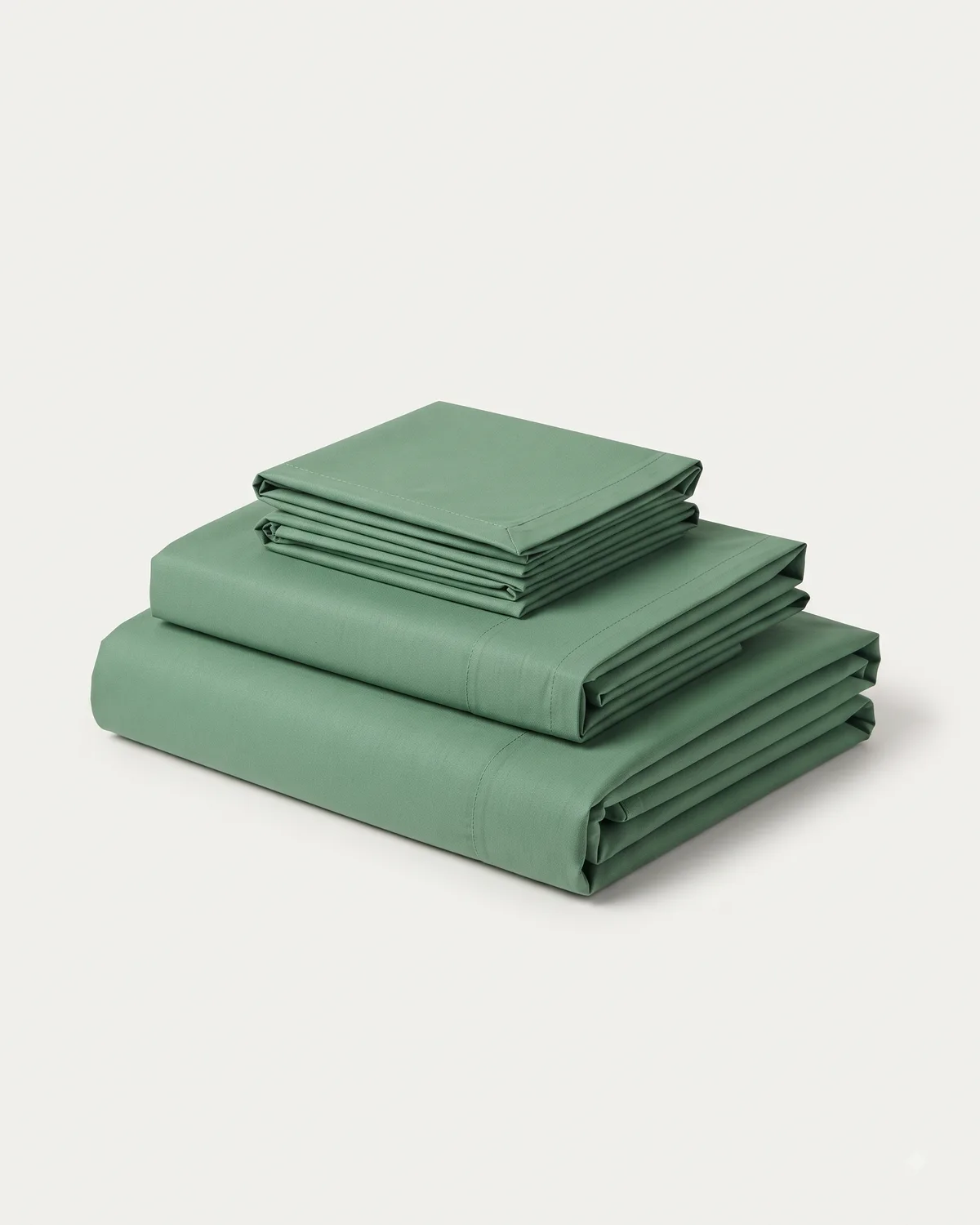
- Bedsheet and pillow cover
- Cut to the bed size actually in use, double-stitched hems, plain white or ward colour coding. Bought on wash count, like everything else in the linen room.
- Draw sheet and mackintosh cover
- The layer under the patient, changed most often and washed hardest. Sized to tuck deep on both sides so it stays put through a shift.
- OT linen set
- Drapes, table covers and trolley covers in autoclavable cotton, cut from the same fabric as the OT gowns so the whole set behaves alike under steam.
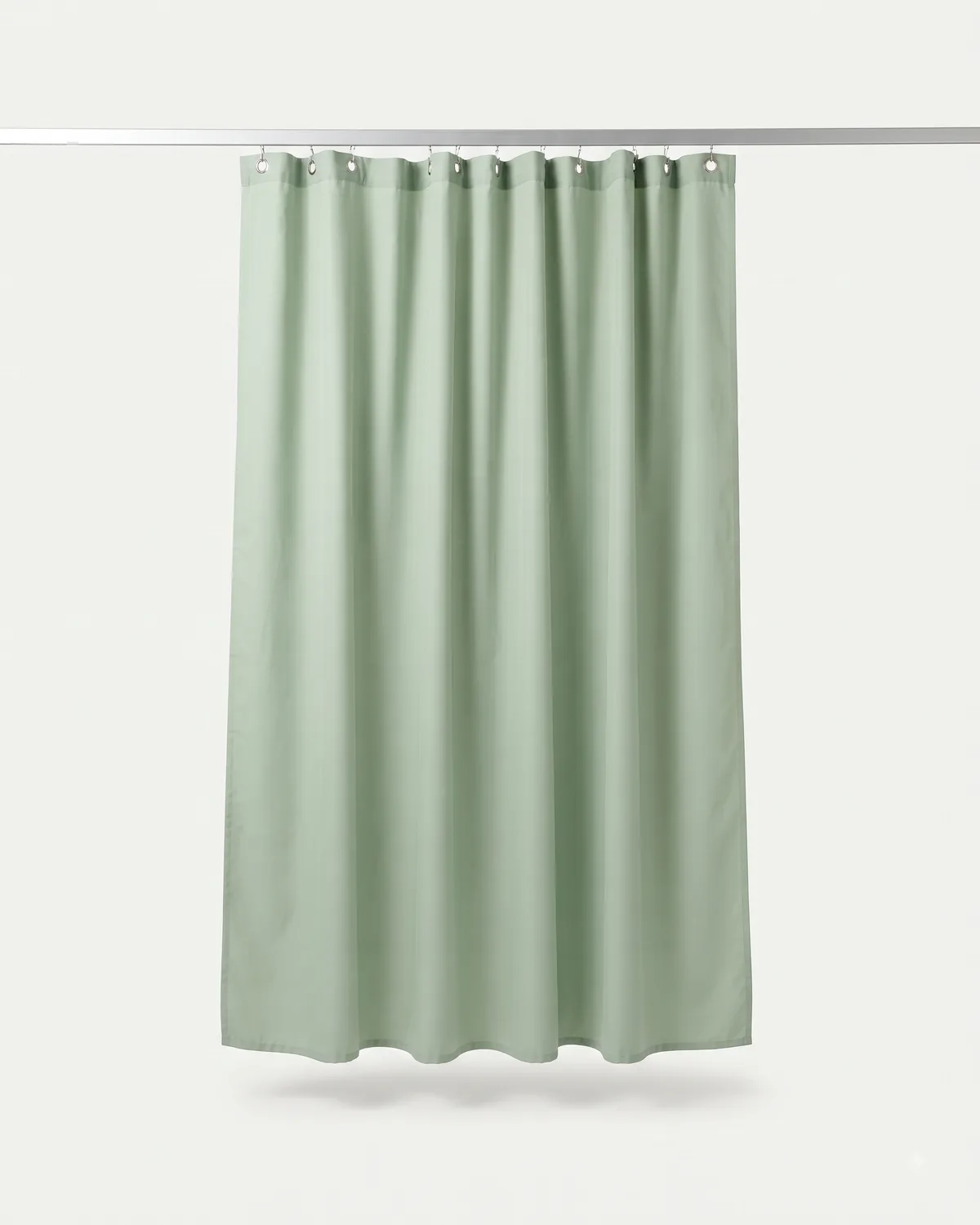
- Cubicle and window curtain
- Ward and cubicle curtains with eyelets or hooks to the rail already fitted, in a quality that takes hospital laundering rather than domestic curtain fabric.
Materials & craftsmanship
Fabric and the mills
Fabric comes from branded mills, including Raymond, Siyaram’s, Santosh and Qmax, and a hospital may nominate a mill of its own. The bands below are working bands; the exact quality for an order is stated in writing at quotation.
| Fabric | Working spec | Why it suits |
|---|---|---|
| Poly-viscose suiting | 65/35 polyester viscose, 150 to 190 GSM | The default apron and kameez fabric. Whites run at the upper end, or in twill, for opacity. |
| Poly-cotton shirting and fine twill | 65/35 polyester cotton, 160 to 200 GSM | The scrub and patient wear workhorse. Cotton breathes on fan-cooled wards; polyester carries the wash life. |
| Cotton casement | 100% cotton, 180 to 220 GSM | For anything autoclaved. High-polyester fabric yellows and stiffens under repeated steam. |
| Poly-cotton drill | 65/35 polyester cotton, 200 to 240 GSM | For GDA, housekeeping and maintenance. Twill construction resists tearing and hides soiling between washes. |
| Bi-stretch scrub fabric | Polyester viscose with elastane, 195 to 230 GSM | For OT and ICU teams who squat and reach all shift. Wrong choice under aggressive chlorine laundry. |
Questions buyers ask
Asked before ordering
Do you supply hospital linen and patient clothing as well as staff uniforms?
Yes. Bedsheets, pillow covers, draw sheets, OT drapes and table covers, cubicle curtains and patient kurta-pyjama sets are cut and stitched in the same building as the uniforms, from the same mill fabric, and quoted on the same order. It is one measurement visit, one delivery and one accountable maker for both. Linen is stitched to the same standard as the uniforms.
What is your minimum order quantity for hospital uniforms?
Fifty pieces per style, in standard mill shades. A style counts all sizes and colours together, and the men’s and women’s cuts of the same garment count as one. Above that, top-ups are part of how hospitals actually buy and are welcome. Fabric is bought ready from the mill, chosen off the mill’s own swatch and approved before it is procured, so fifty is the working figure for almost every order. Dyeing a shade to order is the rare exception, taken only when no mill carries what the hospital wants, and it brings a mill minimum of its own that is higher. In that case the quotation states the quantity in writing, and fabric can be reserved so later joiners come from the same lot.
Will the fabric survive our laundry at high temperature with chlorine bleach?
That is decided before buying, by choosing the right mill quality. Fabric is bought ready from the mill, so it is a selection decision rather than a process we run: for chlorine exposure we quote vat-dyed cotton-rich fabric, or a higher polyester share that is disperse dyed or dope dyed, with dope dyeing locking the pigment inside the filament itself. Reactive-dyed fabric washes well but is not chlorine-fast, so we do not put it against hypochlorite. The chosen quality and its mill specification are recorded in the quotation.
Will the colour match if we reorder in six months?
Not automatically. Fabric is bought ready from the mill, and two lots of the same shade can differ slightly, which staff notice standing side by side. Three fixes work: reserve fabric at first order for the year’s expected joiners, issue joining kits from that reserved stock, or move a whole department to the new lot together. We record the mill article, the lot number and a physical retained swatch, never a colour name on its own.
Can OT gowns and caps be autoclaved, and in what fabric?
Yes. Reusable OT gowns, caps and drapes should be 100 percent cotton casement or a cotton-rich fabric, typically 180 to 220 GSM, because high-polyester blends yellow and stiffen under repeated 121 degree steam. Ties are cotton tape, not elastic. A barrier-rated surgical gown is a different product, governed by IS 17334:2019, which defines graded barrier performance levels and critical zones. That distinction is settled in writing at enquiry.
How do you measure 300 staff working across three shifts?
On site, across shifts, in a window planned around the duty roster. High-churn roles go on a graded size set agreed at first order, with extra seam allowance for local alteration. Consultants, senior nursing and front office are measured individually. A written size register is kept against employee ID, so top-ups and joining kits start from the register rather than a fresh measurement.
What GST rate and HSN codes apply to hospital uniforms?
Readymade garments are taxed at 5 percent up to Rs 2,500 per piece and 18 percent above, under the structure effective 22 September 2025. Aprons, scrub suits and patient gowns are commonly declared under HSN 6211, trousers and dresses under 6203 and 6204, shirts under 6205 and 6206, and knitted t-shirts under 6109. Most hospital garments fall in the 5 percent band; confirm the exact code with your own tax advisor.
What does the one-year guarantee cover?
It covers the stitching on woven garments for one year: seam failure, buttons, bartacks and workmanship, the work done in this building. The fabric itself is not guaranteed, because it is bought ready from the mill; it is approved by the hospital on the physical swatch before it is bought, and reorders are judged against the retained swatch. Hosiery and t-shirts are excluded. Damage from over-strength hypochlorite, overloaded machines or excessive drying heat also sits outside it, so the laundry regime is agreed in writing at order stage and the fabric is chosen against it.
Related identities
Next step
Tell us about the people who will wear it.
Roles, rough staff strength, and anything already decided about fabric or colour. That is enough for a written quotation for healthcare uniforms.