Identities / Security
Security Guard Uniform Manufacturer in Gujarat
Crisp at the gate, hour twelve
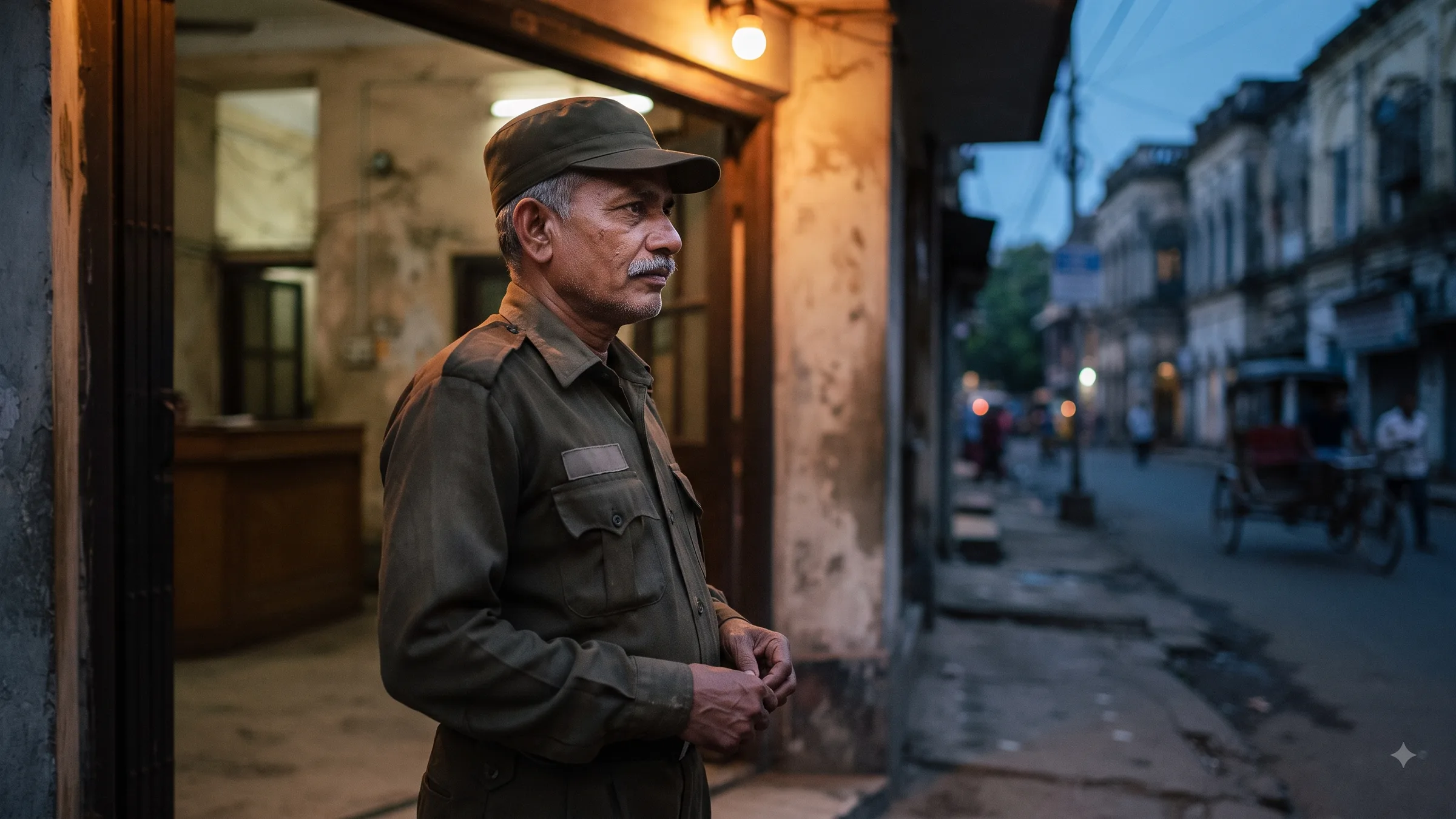
Guard uniforms cut for Gujarat duty: PSARA-aware design, hard-wash fabrics, and reorders that match the shirts already on post.
- Minimum order
- 50 pieces per style
- Guarantee
- One year on stitching, woven garments* terms
- Made
- One building, measured across Gujarat, delivered anywhere in India
- Fabric
- Branded mills, approved on swatch before it is bought
Understanding the industry
Understanding Security Work
The buyer of a security uniform is usually not the site being guarded. It is the PSARA-licensed agency that supplies the guards: the agency buys the uniform, issues it, and recovers or replaces it, so the cost sits inside the per-guard bill rate. The specification often comes from the end client’s tender. The usual pattern is sample approval, then a rate contract, then call-offs as guards join. Attrition is high, so the reorder matters more than the first order: small quantities, odd sizes, the same shade months later. In-house departments at factories, hospitals and housing societies buy the same way, with the same problem.
The guard’s day is twelve hours of static duty: main gate, boom barrier, reception desk, parking, patrol rounds. Gujarat summers run into the mid 40s Celsius under heavy sun. The monsoon brings sustained rain from June to September, and north Gujarat winter nights are cold enough to need a jersey. Most guards hand-wash their own kit in hard water with local detergent and dry it in full sun, with no pressing available. That is the harshest laundering cycle in the uniform trade. Shade loss shows first on the shoulders, and collars and cuffs wear early.
The uniform is also a legal matter. Gujarat’s Private Security Agencies (Regulations) Rules, 2024 make an agency arm badge, a position badge, a whistle on a cord in the left pocket, laced eyeleted shoes and headgear obligatory, and the photo identity card must hang above waist level on the outermost garment. Section 21 of PSARA penalises dress resembling the Army, Navy, Air Force or Police, on the guard and the proprietor alike. The licence application itself asks for particulars of the uniform with colour photographs, so the design goes on file with the Controlling Authority.
Why uniforms matter
Why the Uniform Matters
For a security agency the uniform is a licence condition before it is a brand choice. The obligatory items are fixed by rule, the prohibited look carries criminal penalty, and the client audits turnout at every renewal. The agency pays for the garment, the guard wears it, and the gap between a shirt that lasts eight months and one that lasts two years is a margin question on every contract.
- 01A licence condition firstGujarat’s 2024 rules make the arm badge, the shoulder or chest position badge, the whistle and cord, laced eyeleted shoes and headgear obligatory, with the photo identity card displayed above waist level on the outermost garment.
- 02Criminal exposure in the designSection 21 of PSARA penalises dress resembling the Army, Navy, Air Force or Police, with liability on both the guard and the agency proprietor. Rule 21(6) separately bars adopting service or police ranks, so insignia must be agency-specific.
- 03Turnout decides renewalsThe guard is the first person a client’s visitor, patient or parent meets, and client audits routinely inspect turnout. Agencies lose contract renewals on shabby kit long before they lose them on incidents.
- 04Rank must read at the gateGujarat Rule 13 fixes one supervisor per fifteen guards, or one per six where deployment is dispersed. A visitor has to tell supervisor from guard at a glance, so the insignia hierarchy is planned in those proportions.
- 05Durability is marginThe agency buys and the guard wears. A shirt that survives two years of hand washing in hard water, instead of eight months, materially changes the per-guard cost of a contract.
Our approach
How We Make Security Uniforms
Uniform Corner has cut uniforms since 2001, growing out of Asopalav, a generational cloth shop in Satlasana that still trades. Retail counter and manufacturing unit share one building, and everything from measurement to finished garment happens on those premises. For security work that closeness matters: the badge position, the pocket flap and the reorder shade are decided by the people who will stitch them, not passed down a chain.
- 01Cut for the reorderGuard grades run on a fixed graded size chart, not individual measurement, so a top-up of odd sizes months later still matches the men on post. A sealed approved sample is kept for every client shade.
- 02Badge geometry built inEpaulette loops stitched into the yoke, a fixed arm badge position on the sleeve, a left chest pocket whose flap still closes over a whistle cord, and a shirt front that lets the identity card hang clear of the placket.
- 03Nothing that reads as police or armyBases in navy, charcoal, grey and black. Agency-specific badge shapes, embroidered shoulder titles, DTF printed titles on knitwear, or plain bars instead of stars. Camouflage prints are avoided as a Section 21 risk.
- 04Identity on replaceable partsOne base garment carries slide-on epaulettes, hook-and-loop chest patches and a changeable cap badge, so a shirt is re-badged rather than rebought when a guard moves to a new site.
- 05Women guards on their own blockA separate pattern and size chart, not a scaled men’s cut. Gujarat’s rules set different minimum heights for men and women, so the chart genuinely differs. A kurta-style top is available where the client prefers it.
Uniform collection
What a security order includes
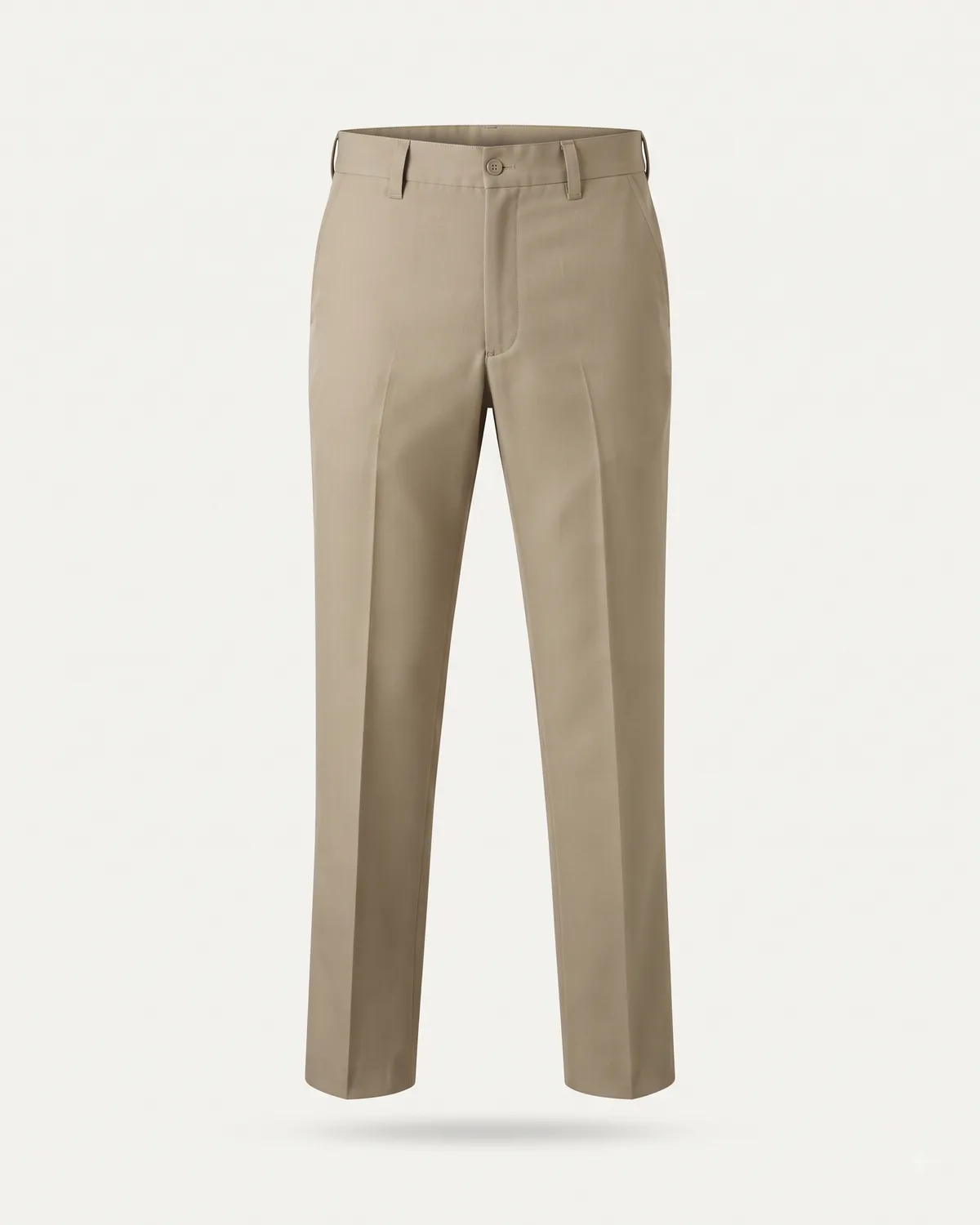
- Uniform pant
- PV suiting that holds a crease unpressed; reinforced seat, loops cut for a 38 or 50 mm belt.
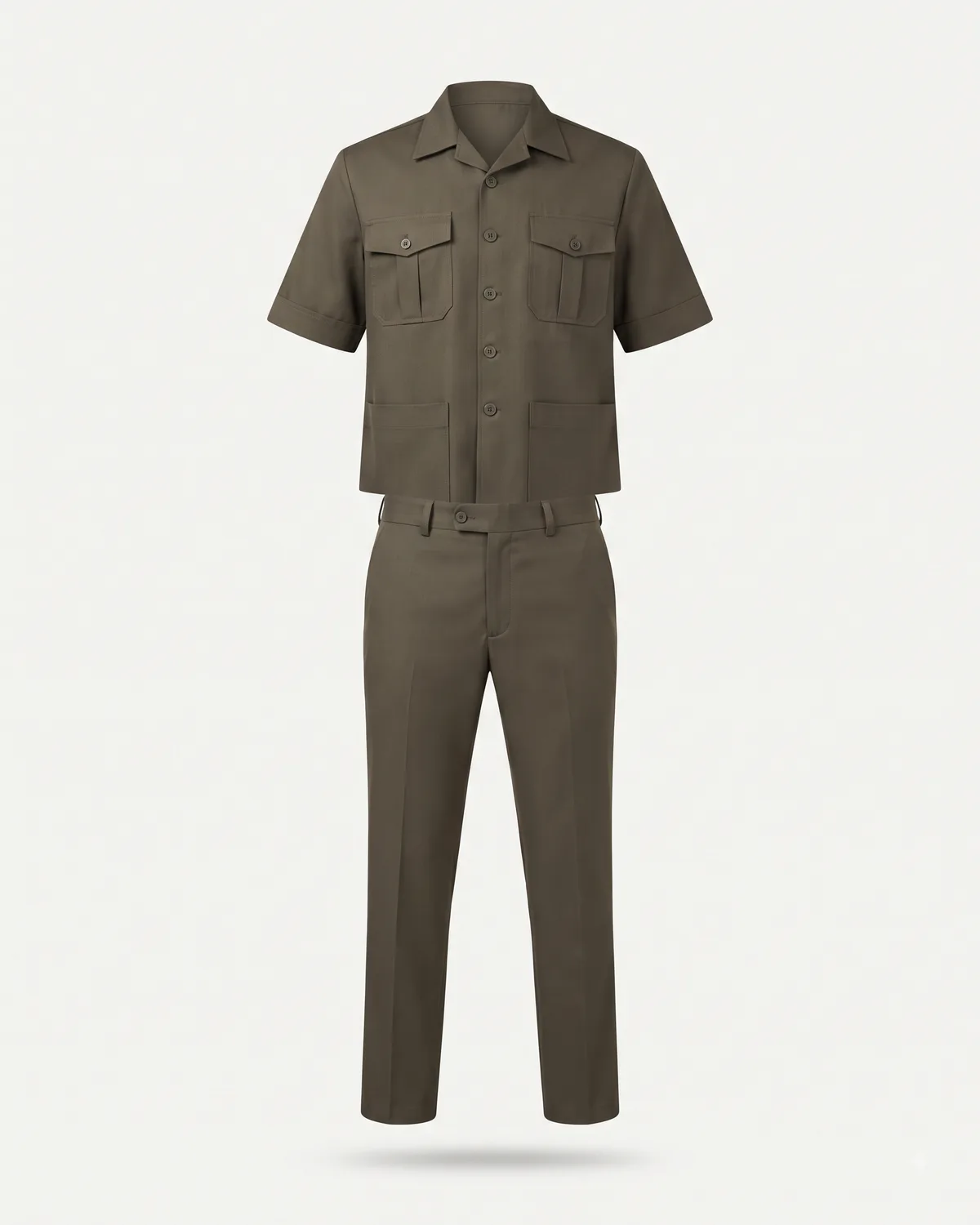
- Safari suit
- Half-sleeve patch-pocket jacket with matching trouser; the standard dress for supervisors and security officers.
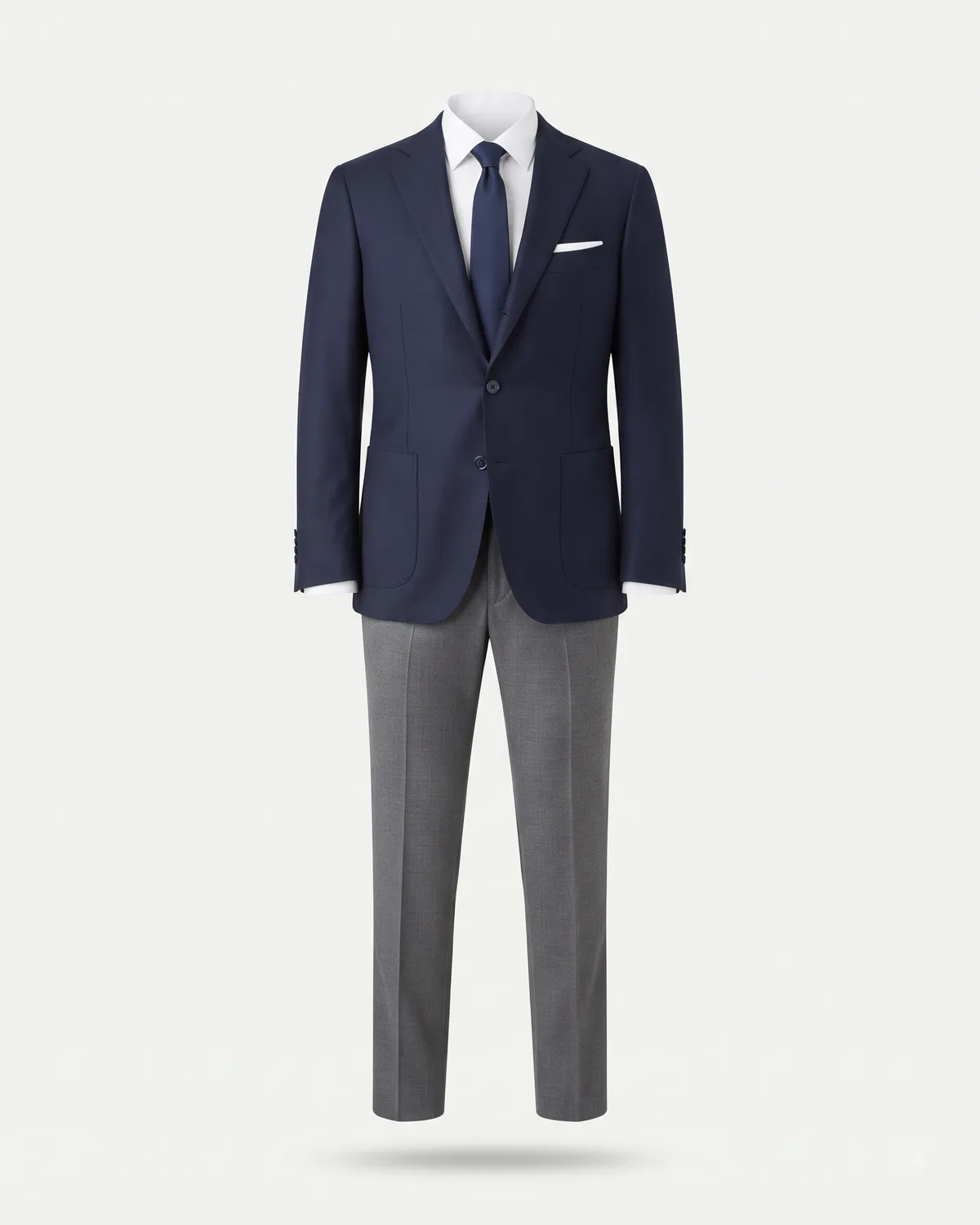
- Blazer, trouser and tie
- Corporate officer dress for lobbies and branches, with a small tailored arm badge on the sleeve.
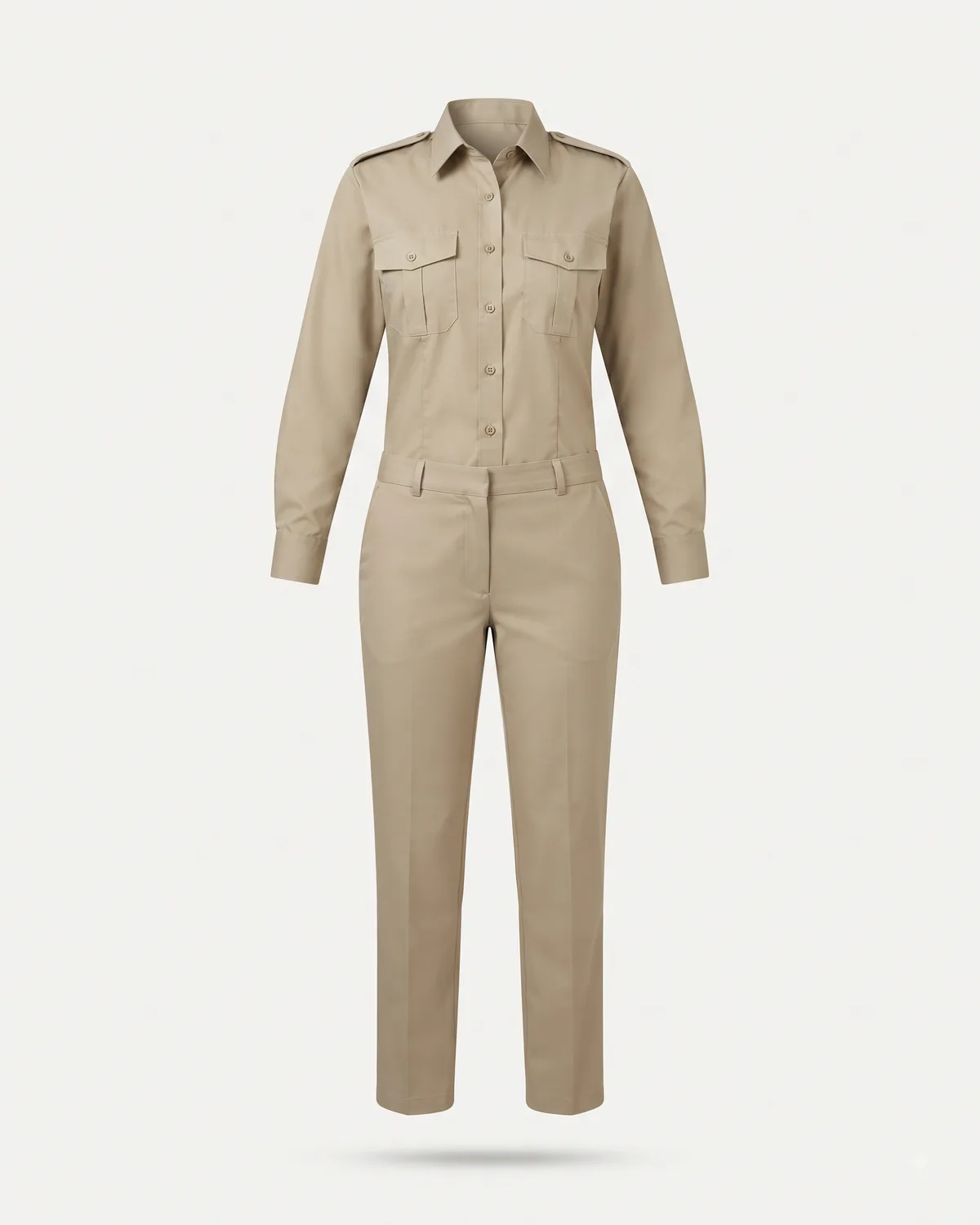
- Lady guard set
- Shirt and trouser on a separate women’s block; kurta-style option where the client prefers.
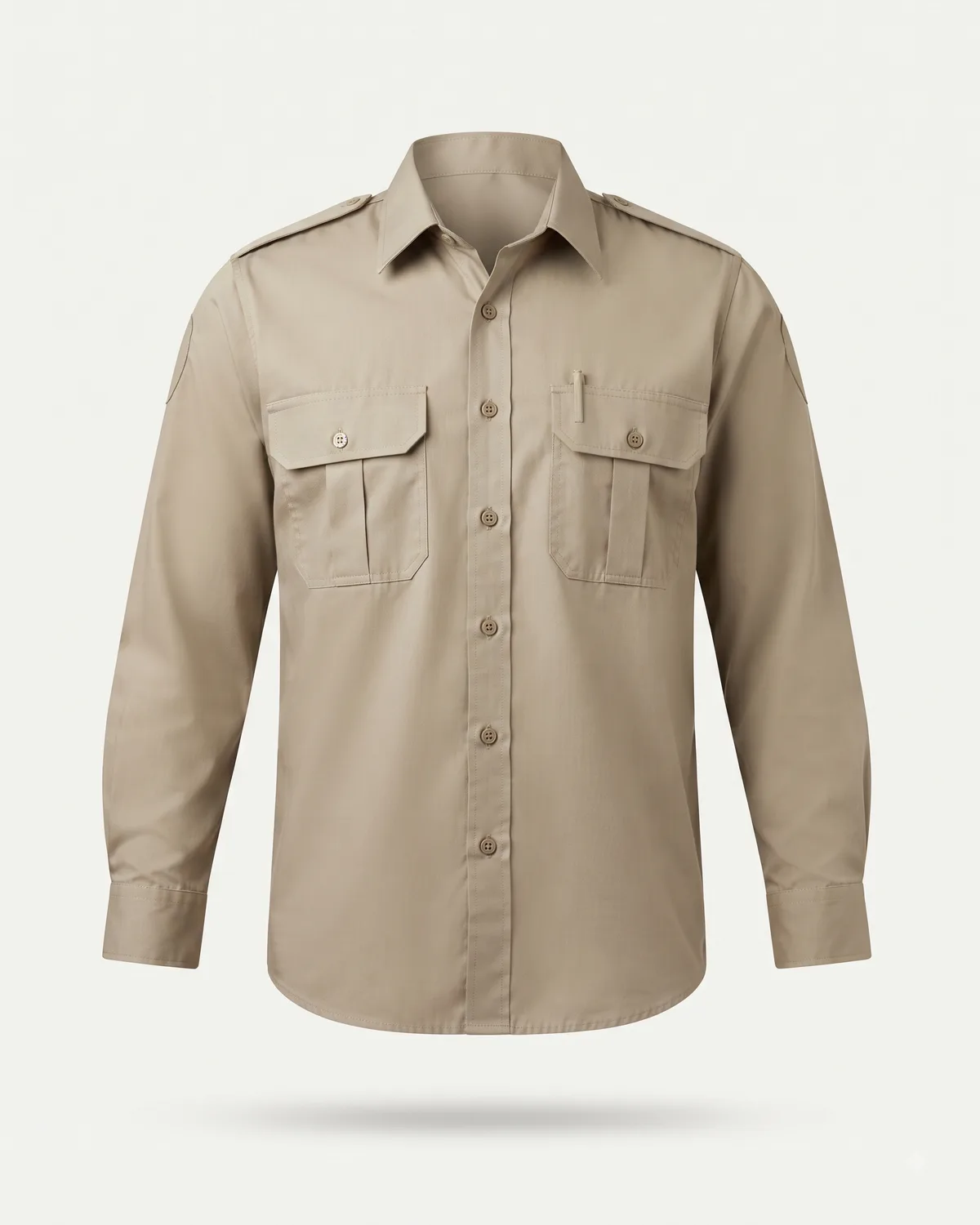
- Bush shirt (full sleeve)
- Button-through with epaulette loops, two flap pockets, pen loop and a fixed arm badge position.
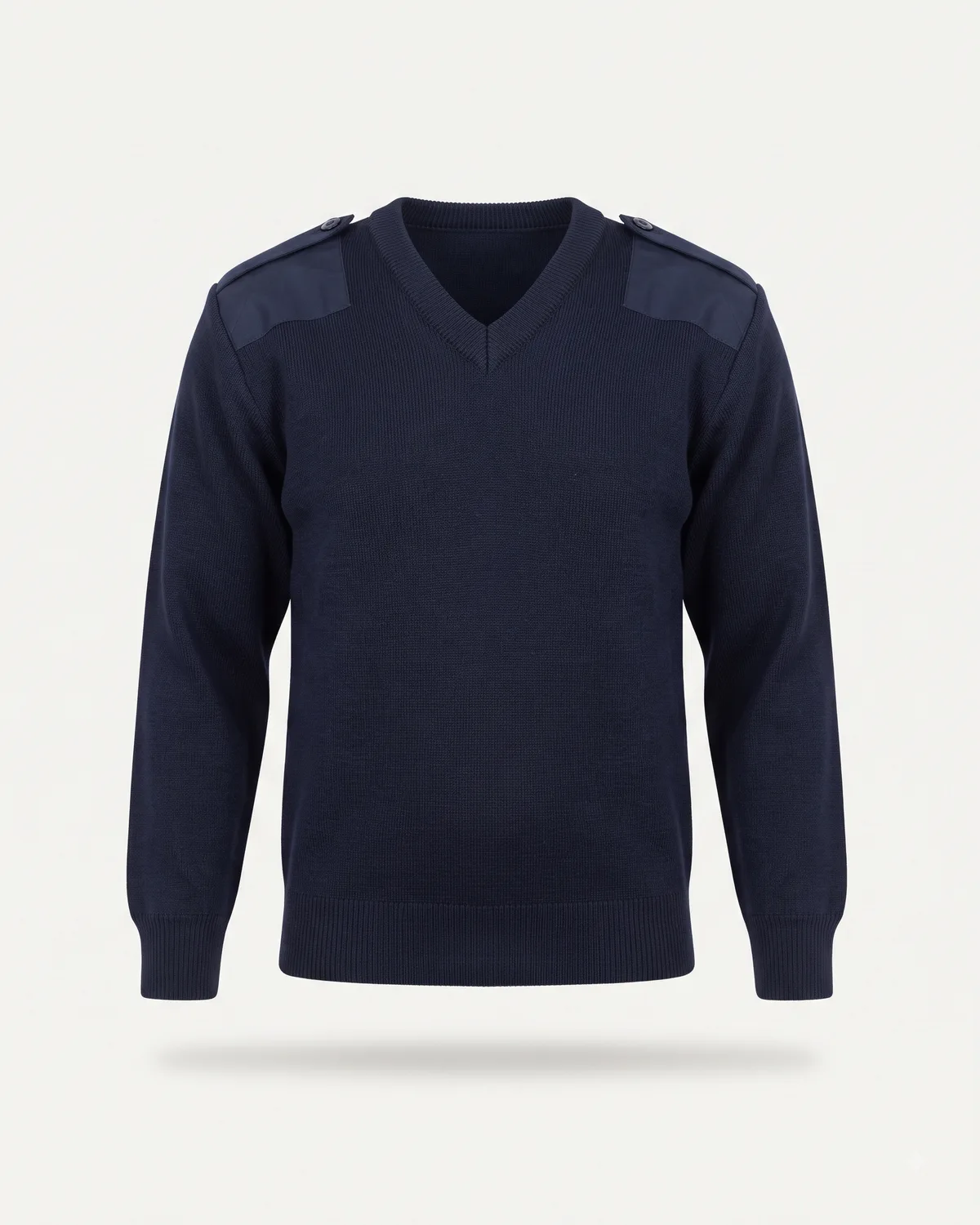
- Jersey
- Acrylic V-neck pullover, full or half sleeve, with epaulette tabs so rank stays visible in winter.
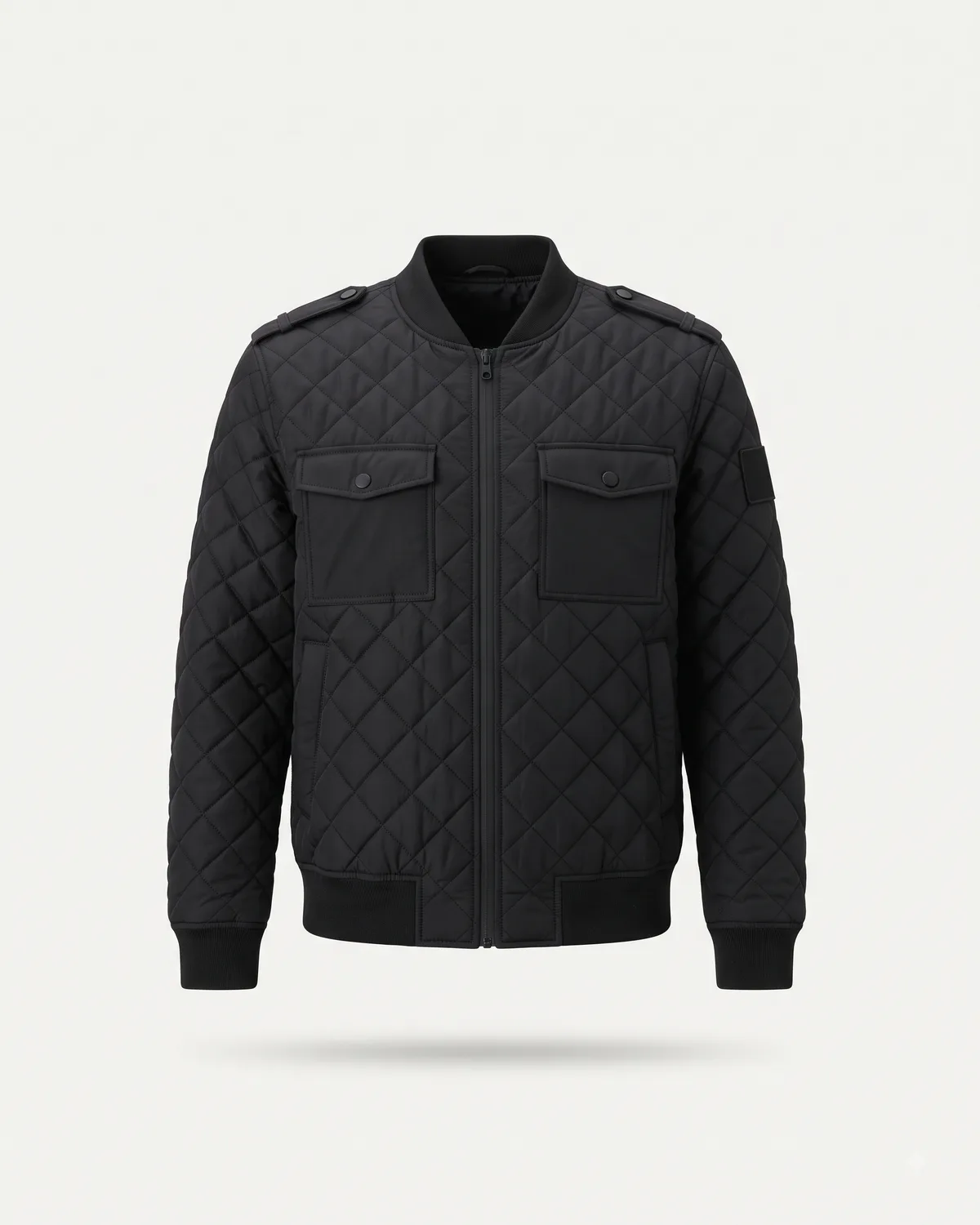
- Security jacket
- Quilted bomber for night duty, with arm and position badges repeated on the outer layer.
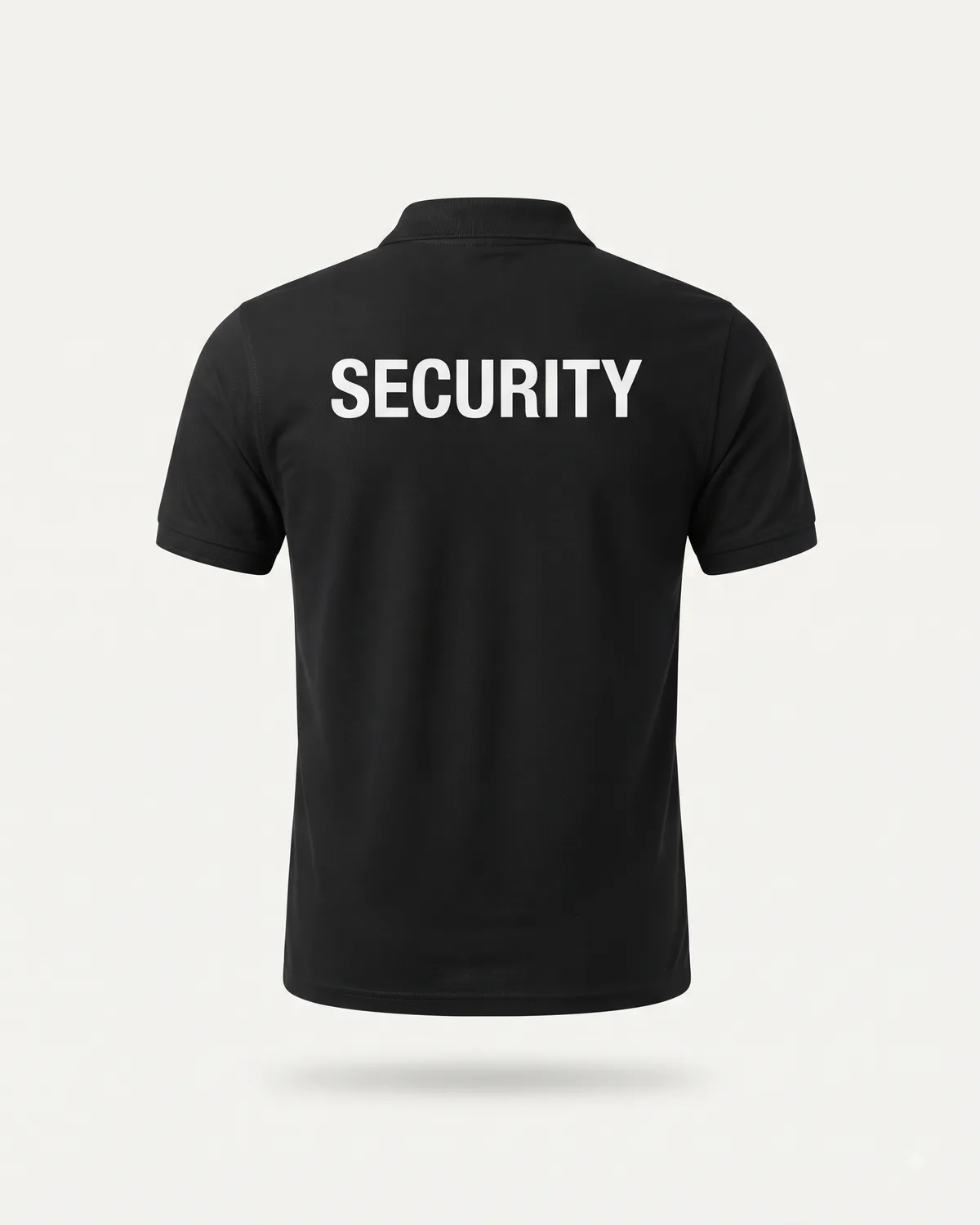
- Polo t-shirt with SECURITY print
- Pique knit for event and society posts, with the wording DTF or screen printed front and back. Hosiery, so outside the woven guarantee.*
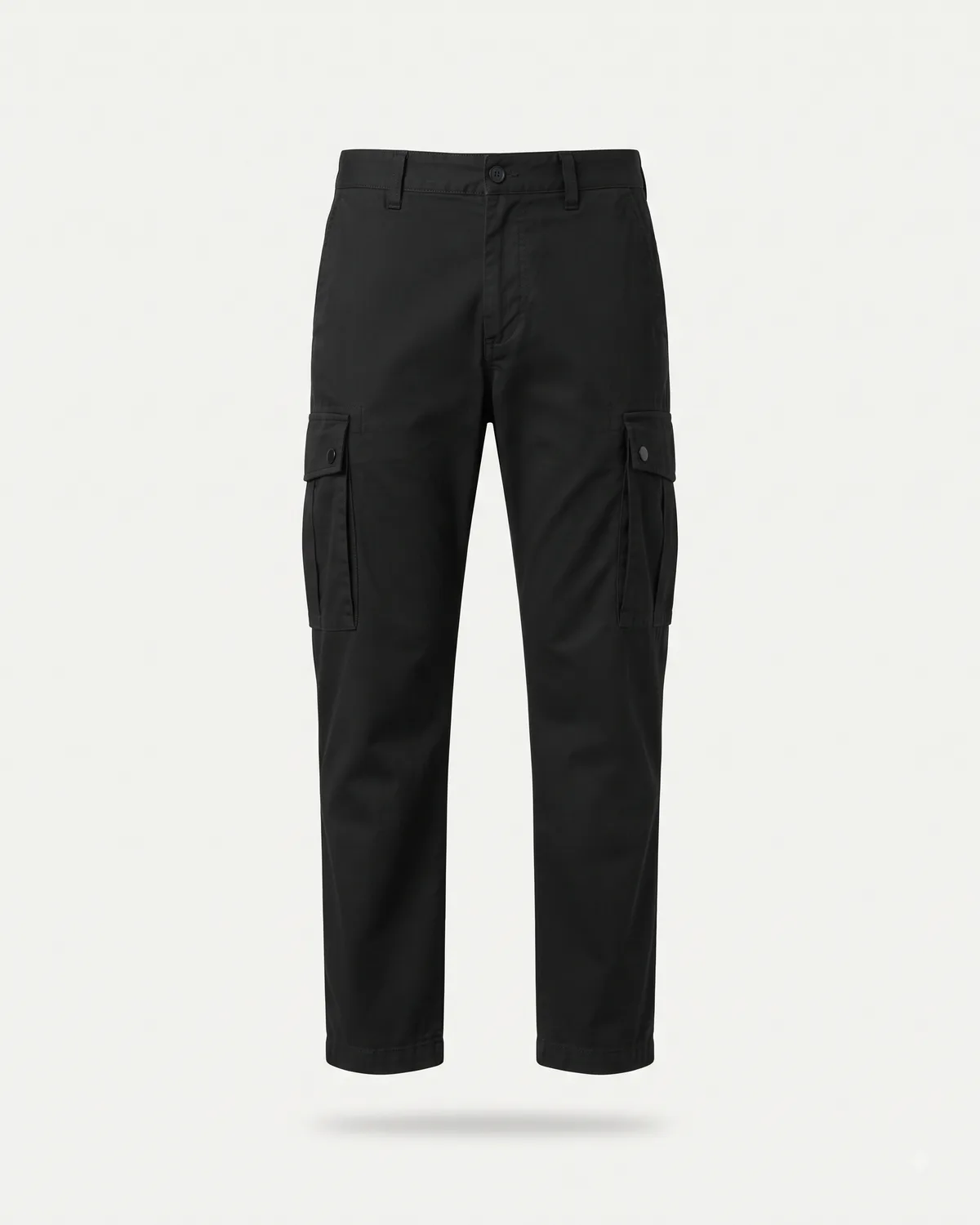
- Cargo pant
- Six-pocket drill for patrol and event duty, in plain khaki, olive or black.
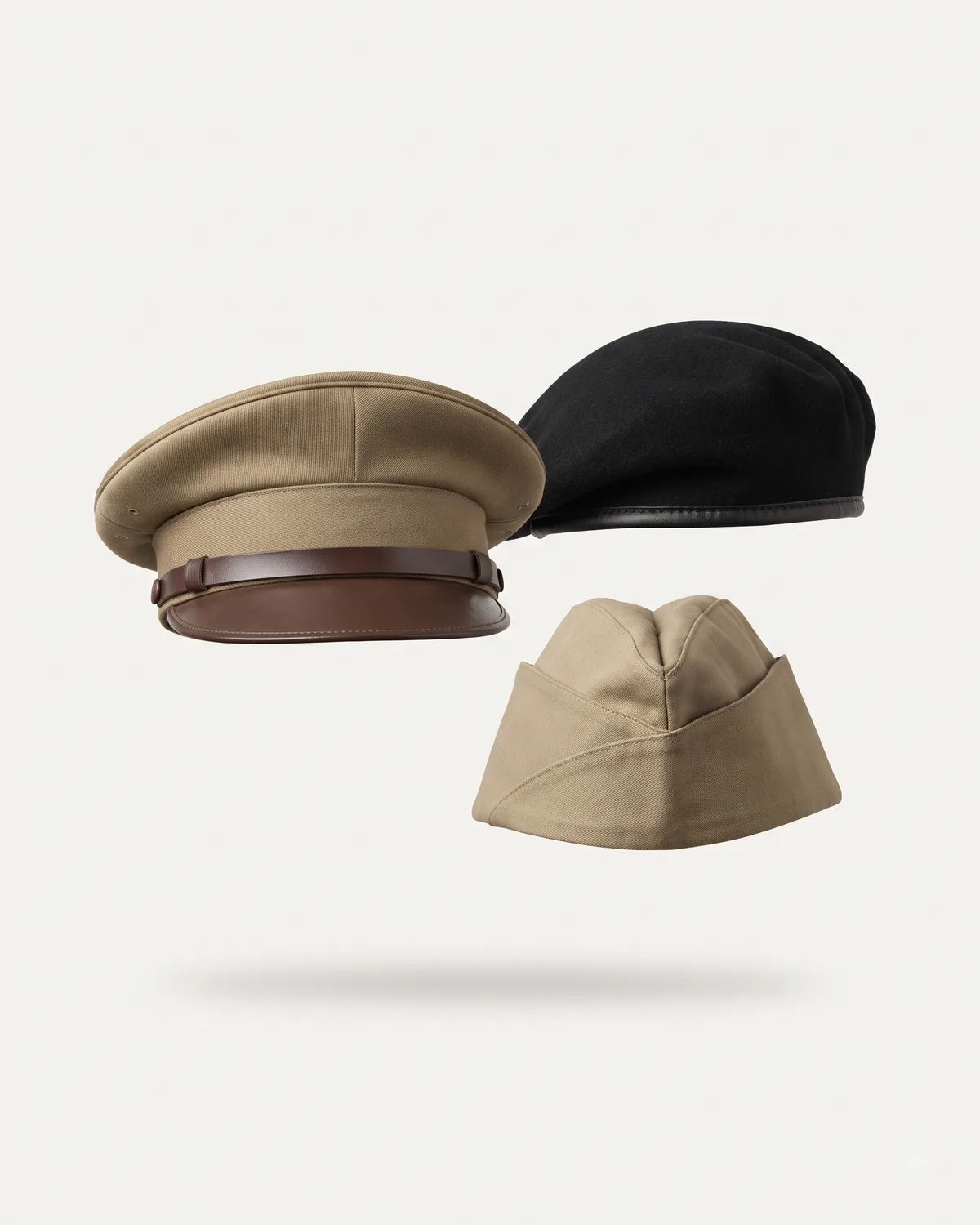
- Peak cap, beret and soft cap
- Headgear is obligatory under Gujarat rules; carries the agency badge, never a police-pattern star.
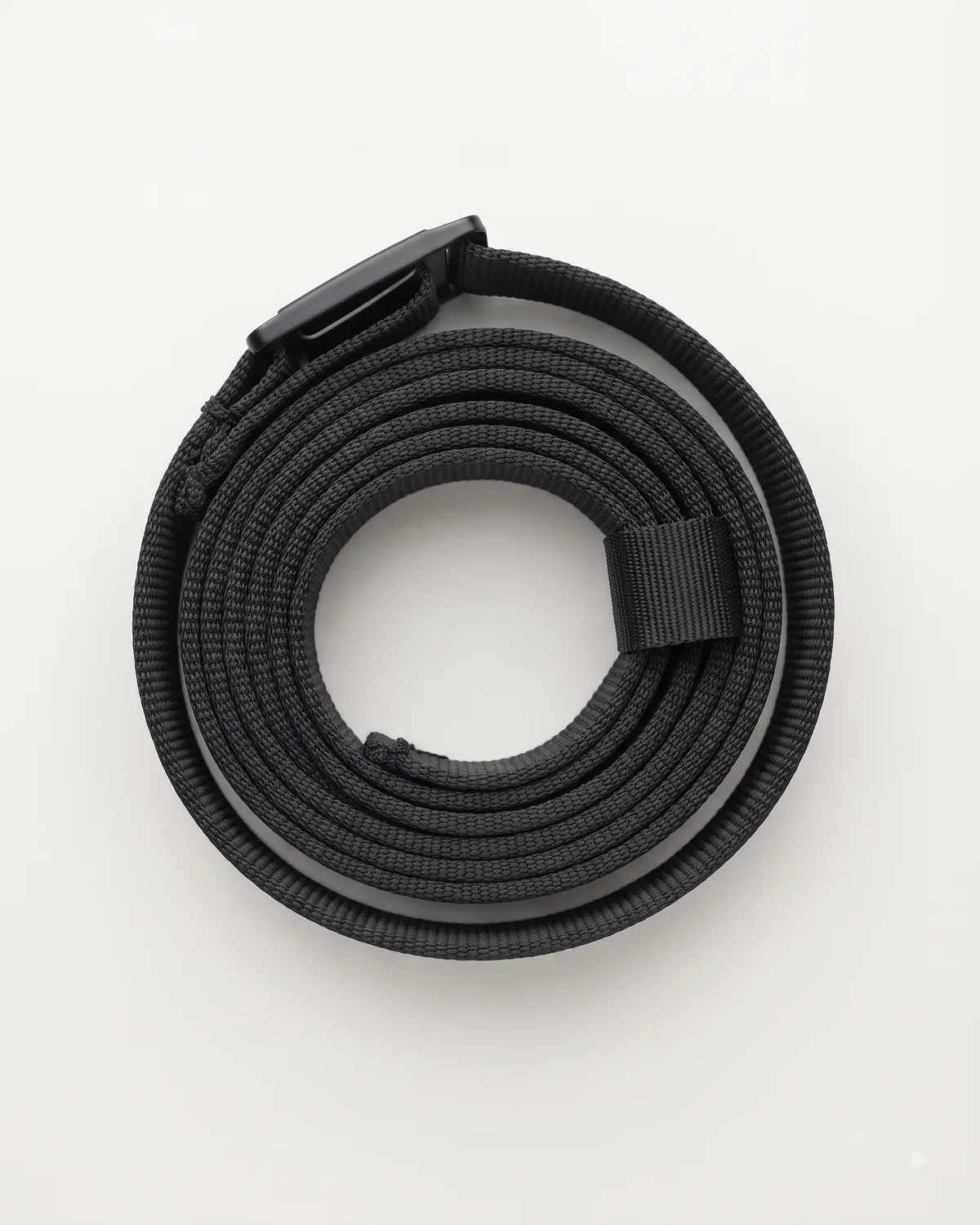
- Duty Belt
- A webbing or leather-look duty belt with a plain buckle and torch loop, no police-pattern fittings.
Materials & craftsmanship
Fabric, Mills and Shade
Shirting, suiting and matty come from branded mills including Raymond, Siyaram’s, Santosh and Qmax, and a client may nominate a mill instead; many security tenders already do. Hosiery and t-shirts, including the SECURITY polo, are quoted on their own terms, separate from the woven issue.
| Fabric | Working spec | Why it suits |
|---|---|---|
| Poly-cotton shirting (TC) | 65/35 polyester cotton, 120 to 160 GSM | Light enough for summer gate duty, crisp enough to hold a collar without pressing. |
| PV suiting | 65/35 polyester viscose, 200 to 260 GSM | Holds a trouser crease between hand washes and takes belt and chair abrasion. |
| PV matty | 65/35 polyester viscose, roughly 200 to 250 GSM | The traditional safari suit fabric; its basket weave hides soil and pressing marks. |
| Poly-cotton pique knit | 65/35 or 50/50 polyester cotton, 180 to 220 GSM | For the SECURITY polo; heavy enough that the print and collar survive washing. |
| Cotton drill | 100% cotton or 65/35 poly-cotton, 240 to 320 GSM | Carries loaded cargo pockets on patrol; cut with a generous shrinkage allowance. |
| Acrylic knit | 100% acrylic, specified by gauge rather than GSM | Jersey fabric that holds colour in sun drying and does not shrink like wool. |
Questions buyers ask
Asked before ordering
What colours can we put our guards in without breaching PSARA?
No colour is prescribed by the Act or by Gujarat’s 2024 rules. What Section 21 of PSARA prohibits is dress resembling the Army, Navy, Air Force or Police, or bearing their distinctive marks, with liability on both the guard and the agency proprietor. In practice that steers agencies toward navy, charcoal, grey and black, and away from police-pattern khaki with a peak cap and stars. Confirm borderline shades with the Controlling Authority before committing a bulk lot.
What does the law require on the garment itself?
Five things under Rule 23 of Gujarat’s 2024 rules: an arm badge distinguishing the agency, a shoulder or chest badge showing position, a whistle on a cord kept in the left pocket, shoes with eyelets and laces, and headgear. The photo identity card must be displayed conspicuously above waist level on the outermost garment, so badges must repeat on jerseys and jackets. Clothing must not be so tight or loose that it obstructs movement.
Can our supervisors wear rank stars and shoulder titles like the police?
No. Rule 21(6) of the Gujarat 2024 rules lets an agency award designations such as guard or supervisor, but bars adopting any rank of the armed forces, paramilitary forces or State Police. Position must still be shown, because Rule 23 requires a shoulder or chest badge. The workable answer is an agency-specific badge shape, embroidered shoulder titles or plain bars, visibly distinct from service insignia.
Which fabric survives a Gujarat summer at the gate?
A split of weights. Shirting stays light, roughly 120 to 160 GSM poly-cotton in a 65/35 blend, so a twelve-hour standing shift is bearable. The trouser holds at suiting weight, roughly 200 to 260 GSM poly-viscose, so it keeps a crease without pressing. Pure cotton looks better on day one but creases and fades faster under hand washing and sun drying, which is how most guards launder their kit.
Will the shade still match when we reorder in six months?
Only if it is planned for. Fabric is bought ready from the mill, piece-dyed goods vary slightly from lot to lot, and a fresh lot reads differently beside shirts already sun-faded on post. The controls are a sealed approved sample per client, the mill quality and lot number recorded against the order, and polyester-rich blends, which hold shade through sun drying better than cotton-rich ones. Small top-ups are checked against the sealed sample, not against memory.
Do you make uniforms for women guards?
Yes, on a separate block, not a scaled-down men’s pattern. Gujarat’s 2024 rules set a lower minimum height for women than for men, so the size chart genuinely differs. The set is shirt and trouser in the same fabric and shade as the men’s issue, or a kurta-style top with trouser where the client prefers it. A dupatta is generally avoided on duty as an entanglement risk. Requirements typically come from hospitals, schools, malls and frisking posts.
Do reflective vests for night duty need certification?
Only if they are sold as high-visibility warning clothing. IS 15809:2017 covers high-visibility warning clothes in India, and garments sold under that claim fall under a quality control order requiring BIS certification and the ISI mark. A plain reflective-taped waistcoat with no performance claim is a different product at a different price. Ask which one you are being quoted, and do not accept a hi-vis class rating on an uncertified vest.
Related identities
Next step
Tell us about the people who will wear it.
Roles, rough staff strength, and anything already decided about fabric or colour. That is enough for a written quotation for security uniforms.