Identities / Housekeeping
Housekeeping Uniform Manufacturer in Gujarat
Uniforms that last the housekeeping round
Housekeeping uniforms built for acid splash, daily washing and long shifts, measured and stitched under one roof by a maker at work since 2001.
- Minimum order
- 50 pieces per style
- Guarantee
- One year on stitching, woven garments* terms
- Made
- One building, measured across Gujarat, delivered anywhere in India
- Fabric
- Branded mills, approved on swatch before it is bought
Understanding the industry
The work as it actually happens
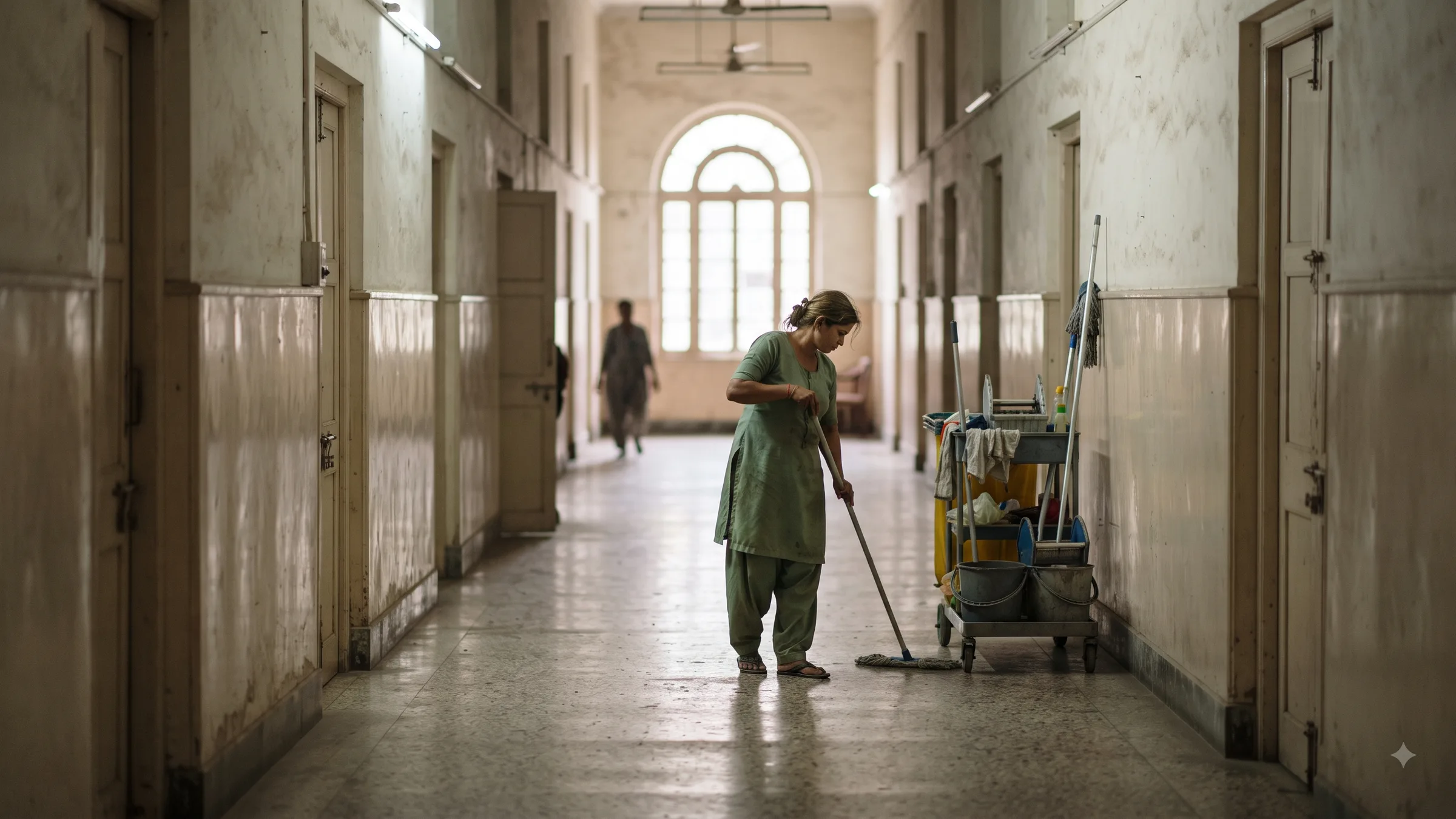
Housekeeping uniforms in India are bought by two different customers, and each specifies the same garment differently. The first is the establishment itself: a hotel’s executive housekeeper, a hospital administrator working with the infection-control team, a school or campus estate manager. The second, larger by headcount, is the facility management contractor, who places staff on a client’s site, buys the uniform to the client’s nominated colour and specification, and prices it into the contract. Government hospitals and municipal bodies buy on tender, where the specification fixes blend, GSM, width and colour, and a third-party test report may be demanded at supply.
The work itself is hard on fabric. Shifts of eight to twelve hours are spent bending, squatting, pushing loaded trolleys and reaching overhead, through summers past 40 degrees and monsoon weeks when nothing dries overnight. Hands stay wet. Acid-based bathroom cleaners and hypochlorite bleach splash through every shift. A hotel laundry washes hot with chlorine, while most facility staff wash at home in a bucket, in hard water, and dry the uniform in direct sun. Attrition in the sector is high, so re-orders and size top-ups matter as much as the first supply, and a fabric lot that cannot be matched six months later shows on the client’s floor.
Why uniforms matter
Why the uniform matters
Housekeeping is the one department that enters a guest’s room, a patient’s bay or a locked office after hours. The uniform is how anyone on the premises tells an authorised worker from a stranger, which is why hotels and hospitals enforce it more firmly for housekeeping than for most other roles. It is also the layer that stands between the worker’s own clothes and a shift of bleach, acid cleaners and waste handling.
- 01Identification and accessThe housekeeping crew works inside private space: guest rooms, patient bays, offices after hours. A clearly recognised uniform is the working proof of authorisation, and the reason it is enforced more strictly here than almost anywhere else in the building.
- 02Infection controlIn hospitals the uniform is a launderable set that comes off before the worker goes home, with a separate protective layer worn for the biomedical waste round. The separation between the waste round and general cleaning has to be visible at a glance.
- 03A line in the contractFor facility management contractors the uniform sits in the client’s service agreement. Staff found on shift out of uniform draw a deduction, so uniform supply is a compliance cost on a monthly bill, not discretionary spend.
- 04Inspection daysStar-classification visits, hospital accreditation assessments and client walkthroughs all take in how the housekeeping crew looks. No inspector reads the fabric specification, but every one of them sees a faded or mismatched floor.
- 05The worker’s own clothesA housekeeping uniform absorbs the bleach spots, acid splash and grime that would otherwise land on the wearer’s own clothing. On a sanitation wage, that protection is real money, and workers know it.
Our approach
How we build for housekeeping
Uniform Corner has stitched workwear since 2001 and grew out of Asopalav, a generational cloth shop in Satlasana that still trades. Retail counter and manufacturing unit share one building, so a housekeeping order goes from measurement to finished garment on the premises. Nothing about this trade is exotic. The craft is knowing where housekeeping uniforms actually fail, and cutting for that before the first piece is stitched.
- 01Split specificationsLobby and guest-contact attendants need drape and crease recovery. Room and deep-clean crews need abrasion resistance and chemical tolerance in fabric nobody minds replacing. One fabric for both means the front looks rough or the back costs too much, so the two are specified separately.
- 02Sacrificial layersThe apron takes the splash so the uniform does not. Bib aprons for bathroom and room work, waist aprons for public areas, cobbler aprons for stores. It is the cheapest way to extend uniform life on an Indian site.
- 03Seams built for the postureBed-making and floor work fail seat and crotch seams long before the fabric wears out. A deeper back rise, double-needle seat seams, bartacked pocket mouths and side vents on the tunic, planned at cutting rather than repaired later.
- 04Lot disciplineA whole site is cut from one mill lot wherever quantities allow, with the expected top-up volume agreed at the start. For bathroom and toilet crews, the fabric is chosen for tested chlorine fastness, not just a dye-class name.
- 05Sizing for churnFacility contracts run on graded size sets, adjustable waistbands and seam allowance that lets a returned garment be let out and reissued. Hotels with stable teams get individual measurement, taken at the site.
- 06Pockets with a jobKeys, room cards, phones and spray triggers travel the whole shift. A divided apron pocket, a chest pocket with pen slot, a reinforced key loop, and no loose drawstrings near trolleys and lift doors.
Uniform collection
What a housekeeping order includes
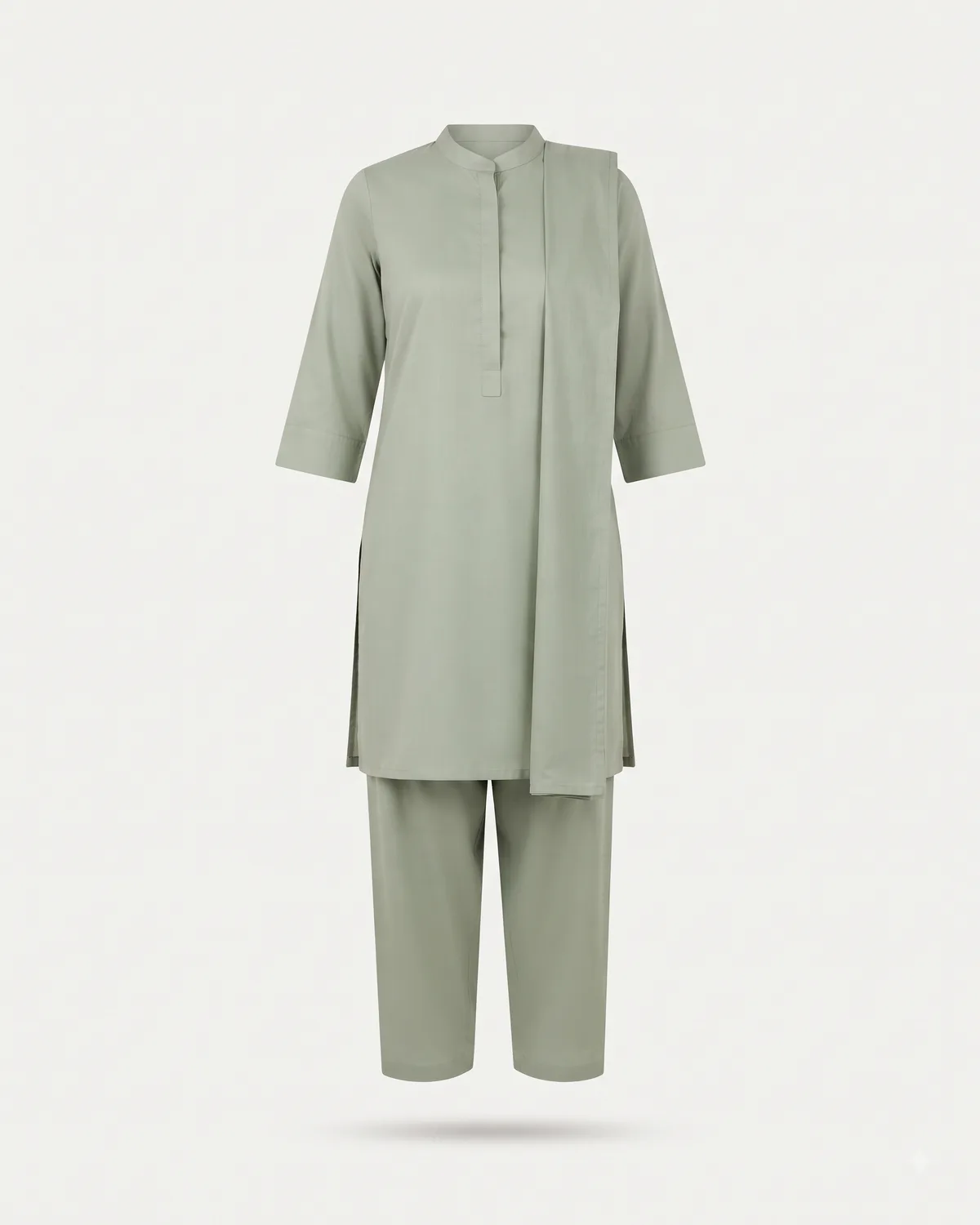
- Kurta-salwar set (ladies)
- The most accepted women’s set in hospitals and campuses. Any dupatta is stitched down at the shoulder.
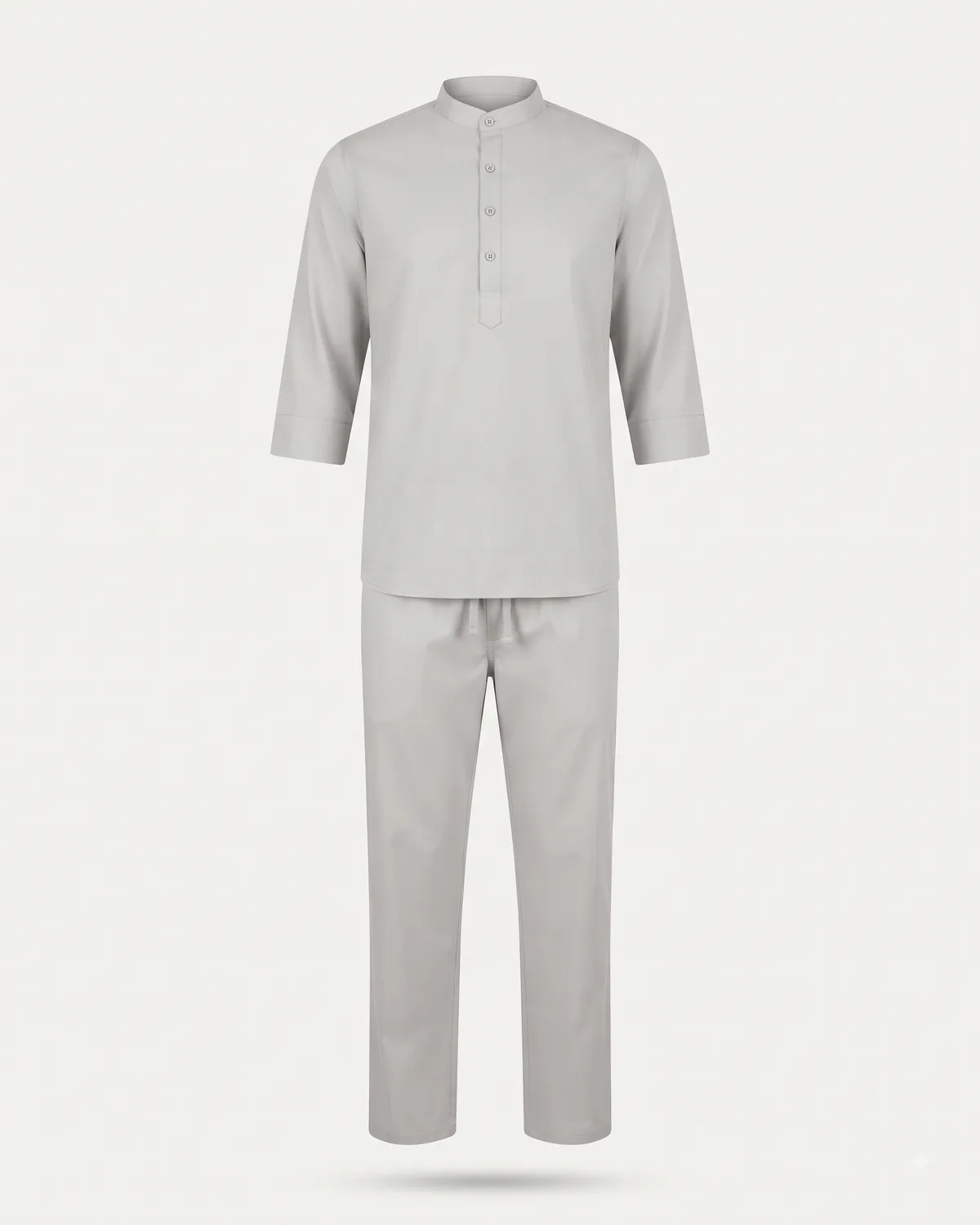
- Kurta-pyjama set (gents)
- Mandarin-collar kurta with drawstring pyjama, common in hospital and safai housekeeping, tolerant of summer heat.
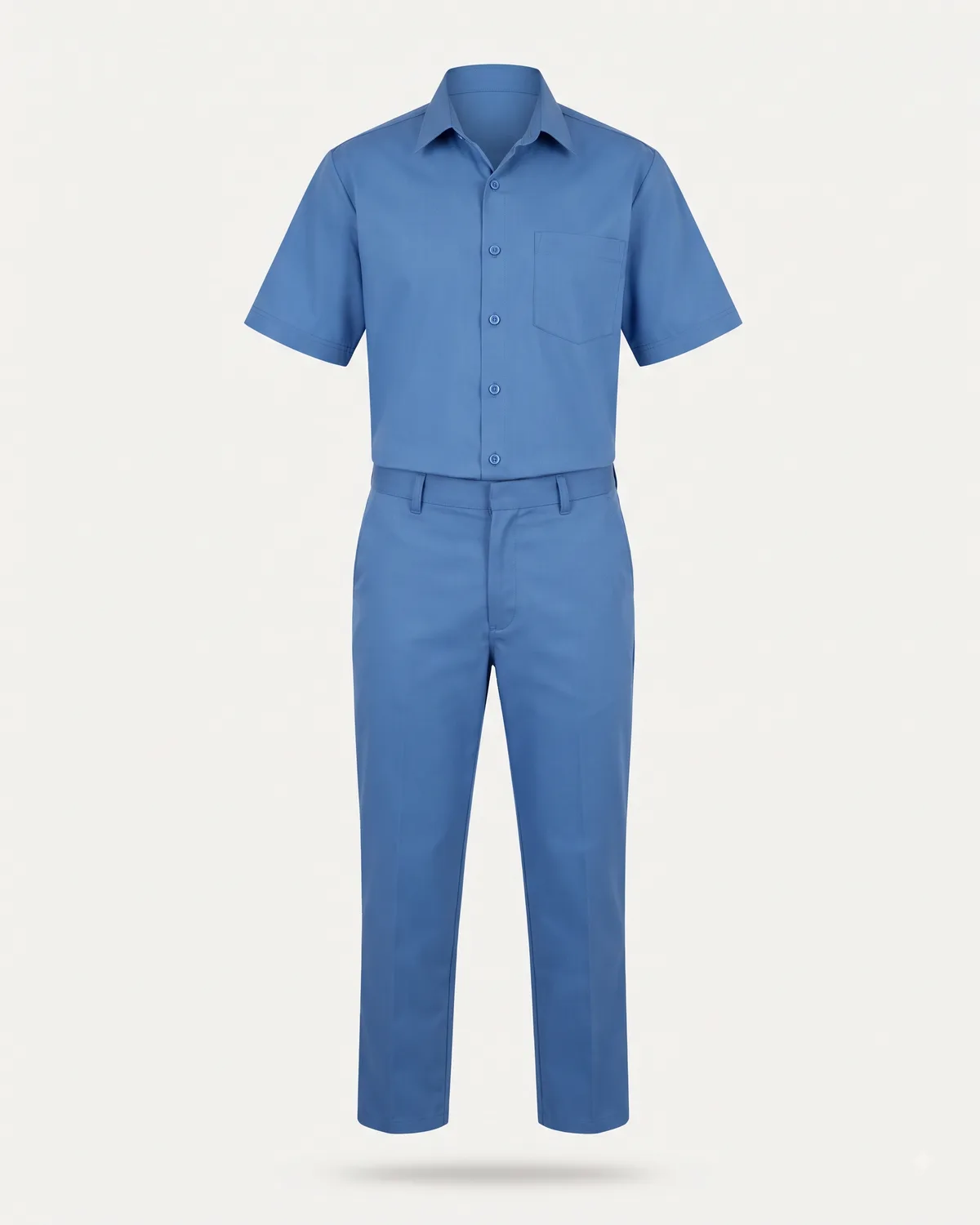
- Shirt and trouser set
- Half-sleeve shirt with badge pocket and matching trouser, the default for mall, airport and corporate sites.
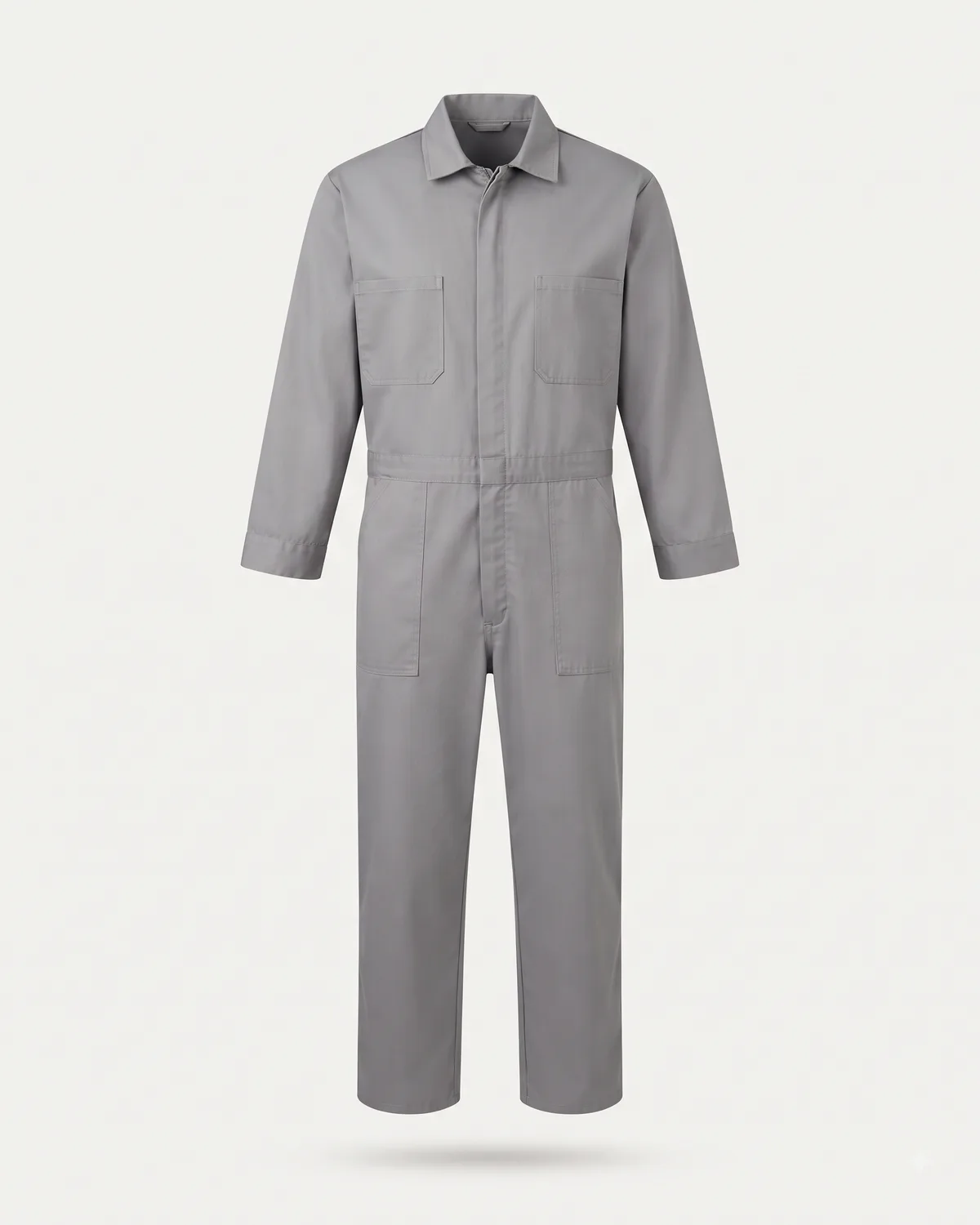
- Coverall / boiler suit
- One-piece with action back for deep cleans, tank and plant work, cut a size over the uniform.
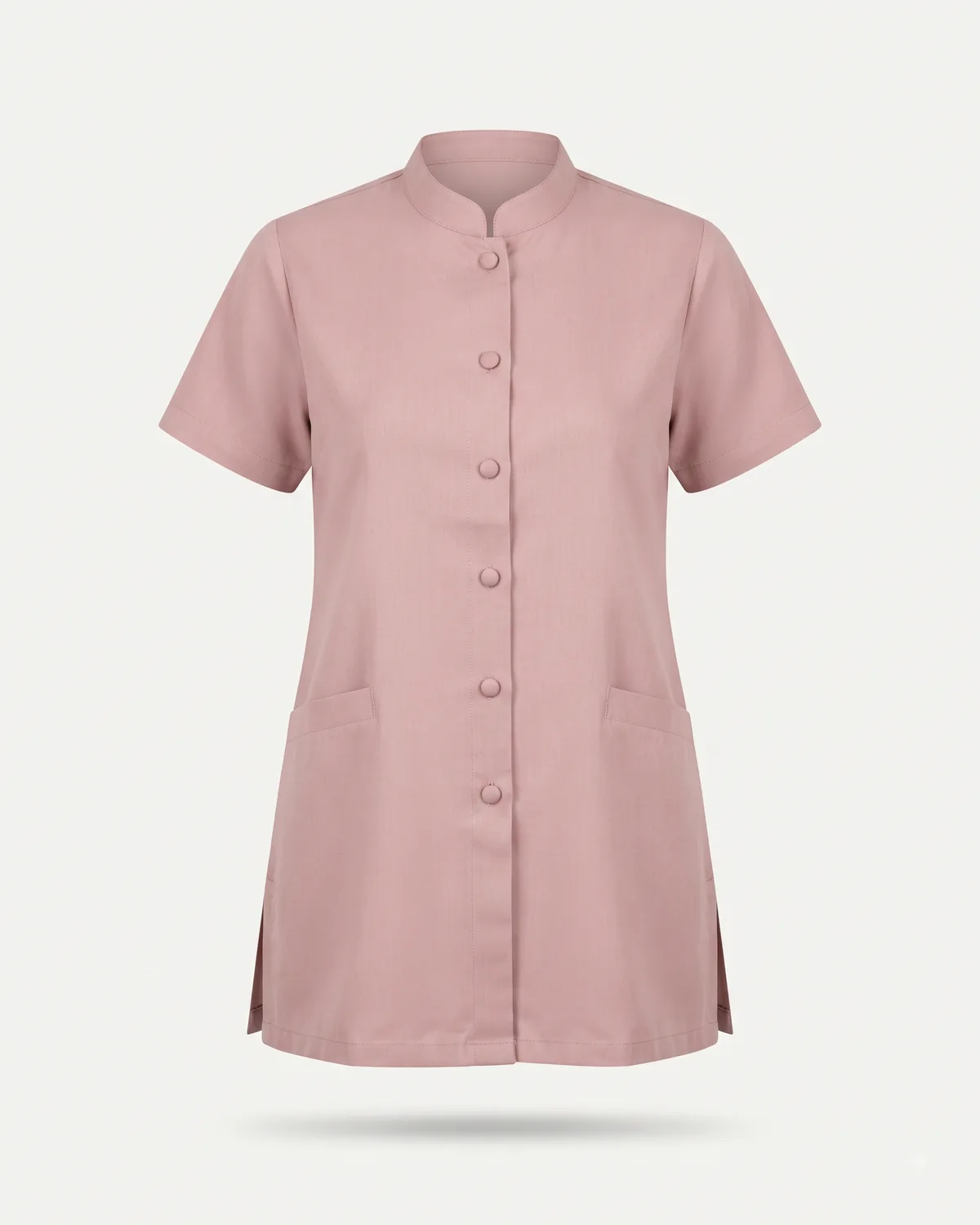
- Housekeeping tunic / kurti
- Mandarin collar, side vents, hip patch pockets. The ladies’ kurti is cut longer, to stay covering when reaching overhead.
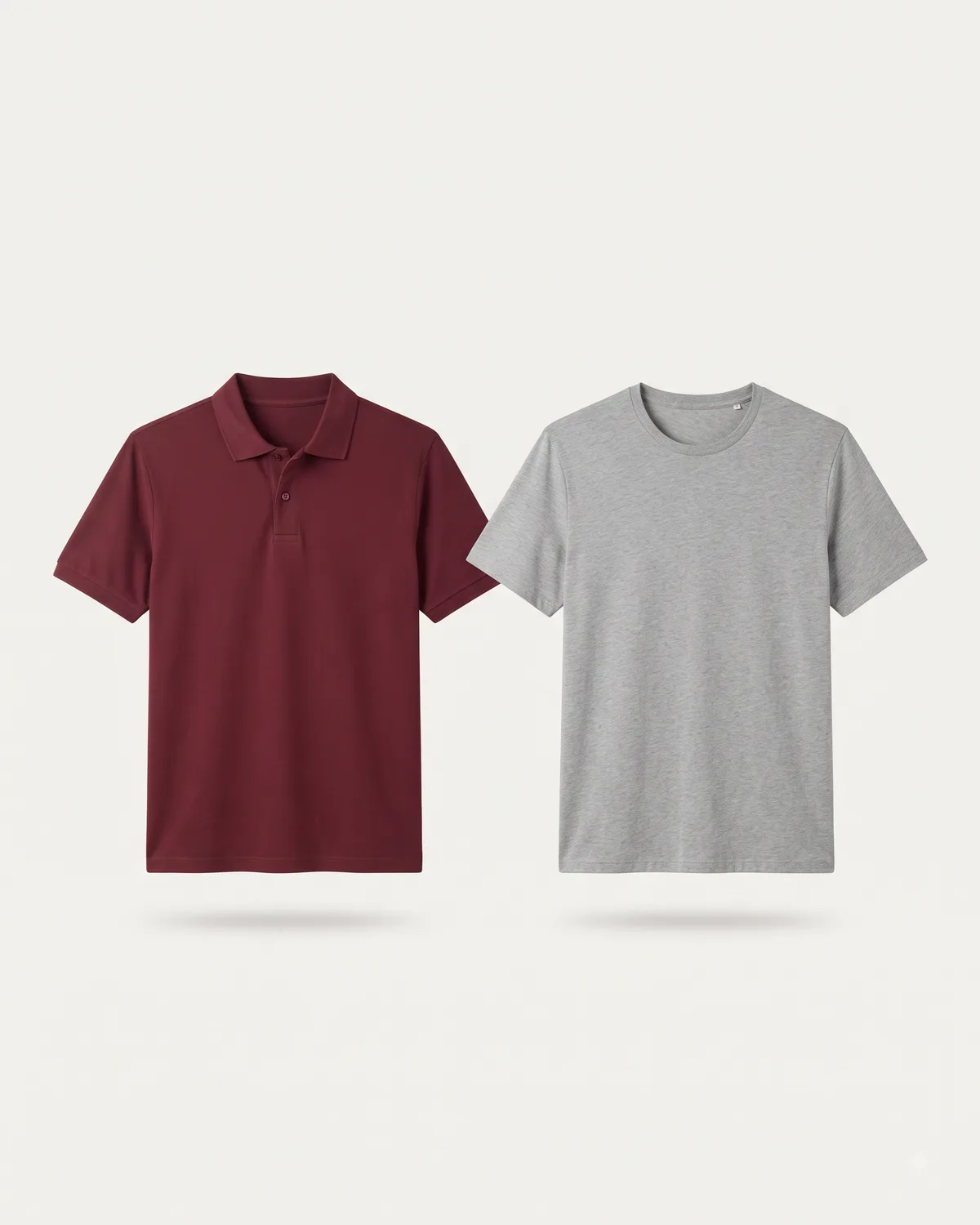
- Polo and round-neck t-shirts
- Knitted pique or jersey for economy and outdoor crews, site name DTF printed so it sits softer on knit than a dense stitch. Hosiery, so outside the one-year woven guarantee.
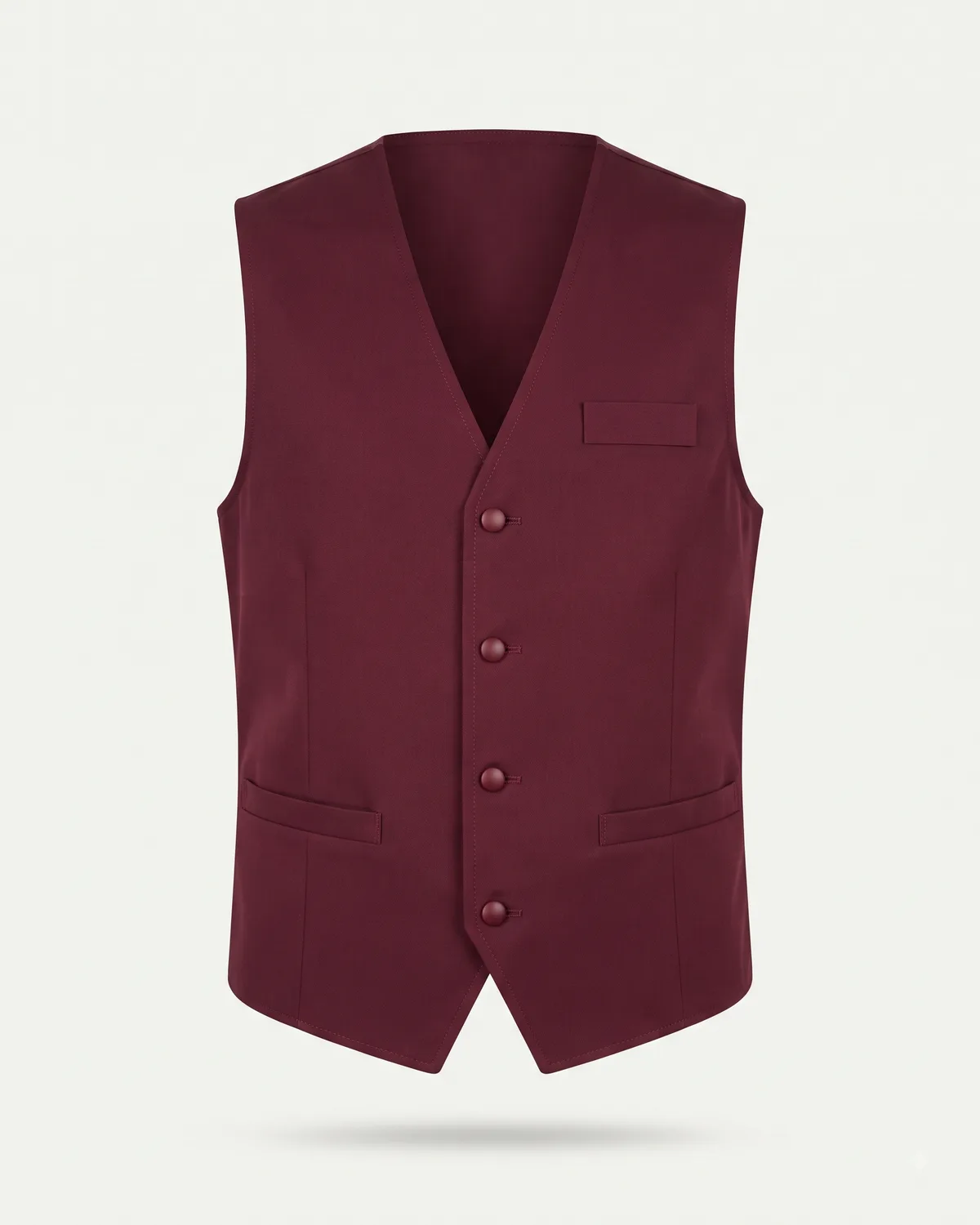
- Waistcoat / half jacket
- Contrast waistcoat for lobby attendants. Carries badge and radio pocket, sparing the shirt beneath.
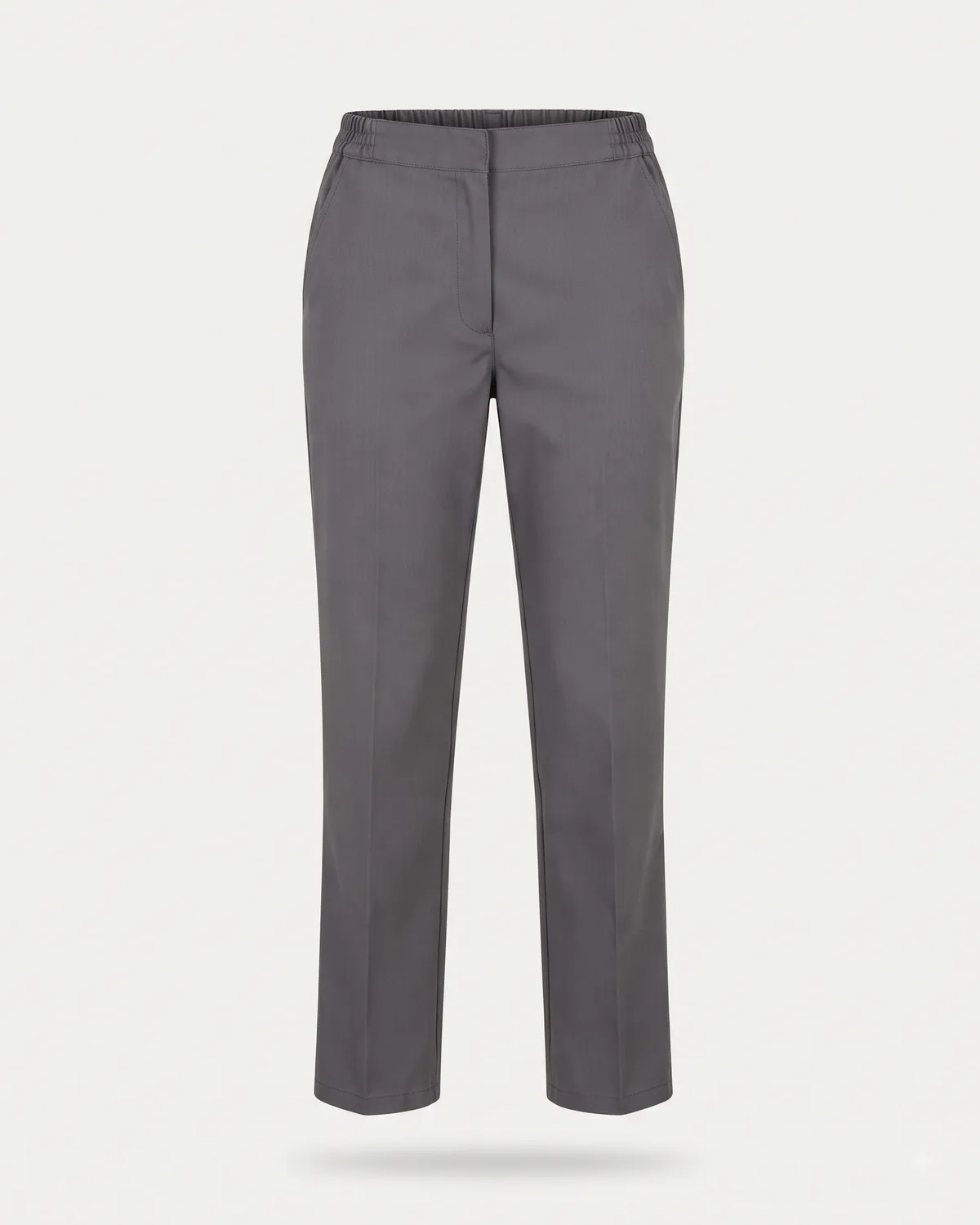
- Housekeeping pant
- Straight leg with full or half elasticated back waist, so one waistband fits successive wearers on facility contracts.
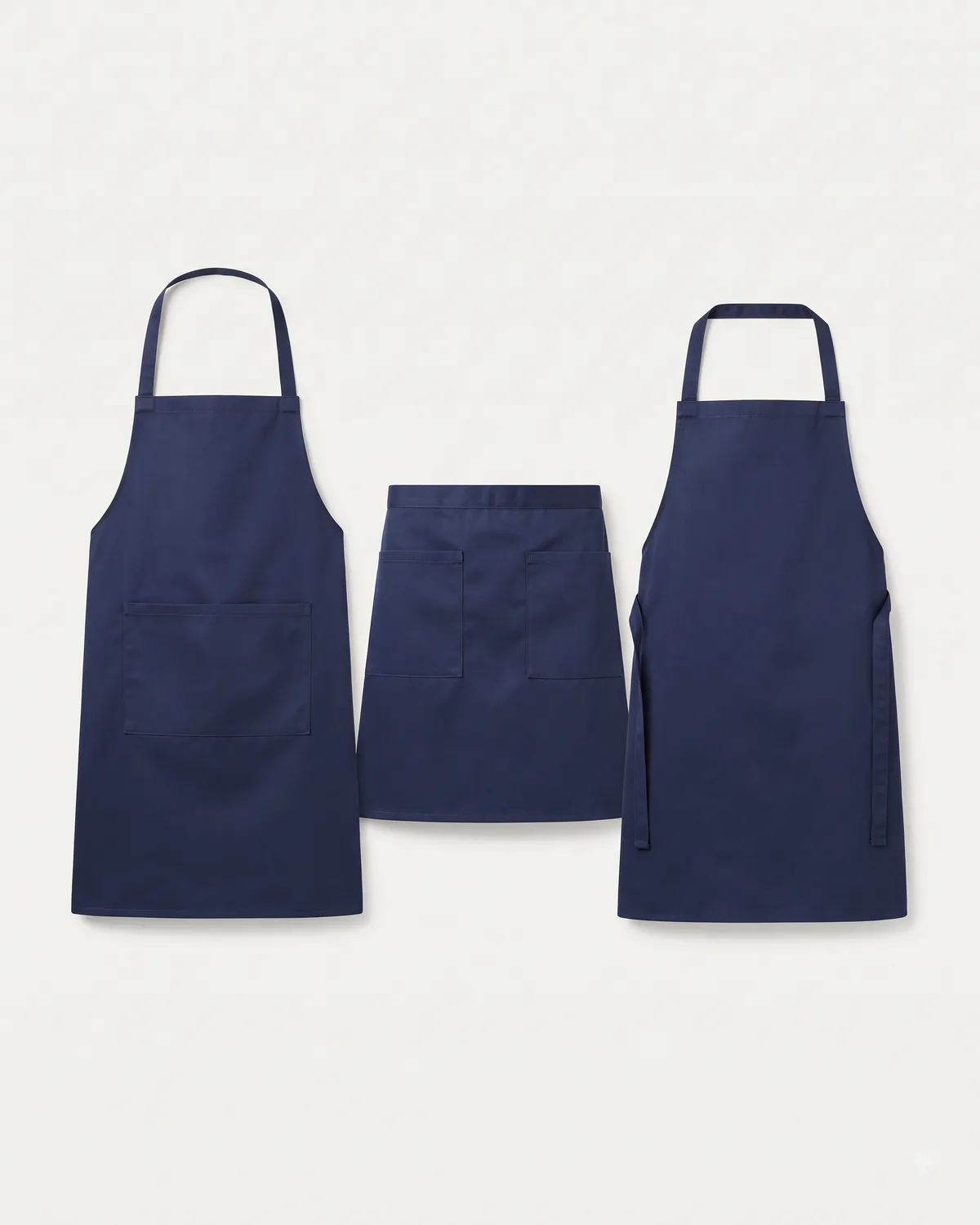
- Aprons: bib, waist and cobbler
- The sacrificial layer. Bib for bathrooms, waist for public areas, cobbler for stores and pot wash.
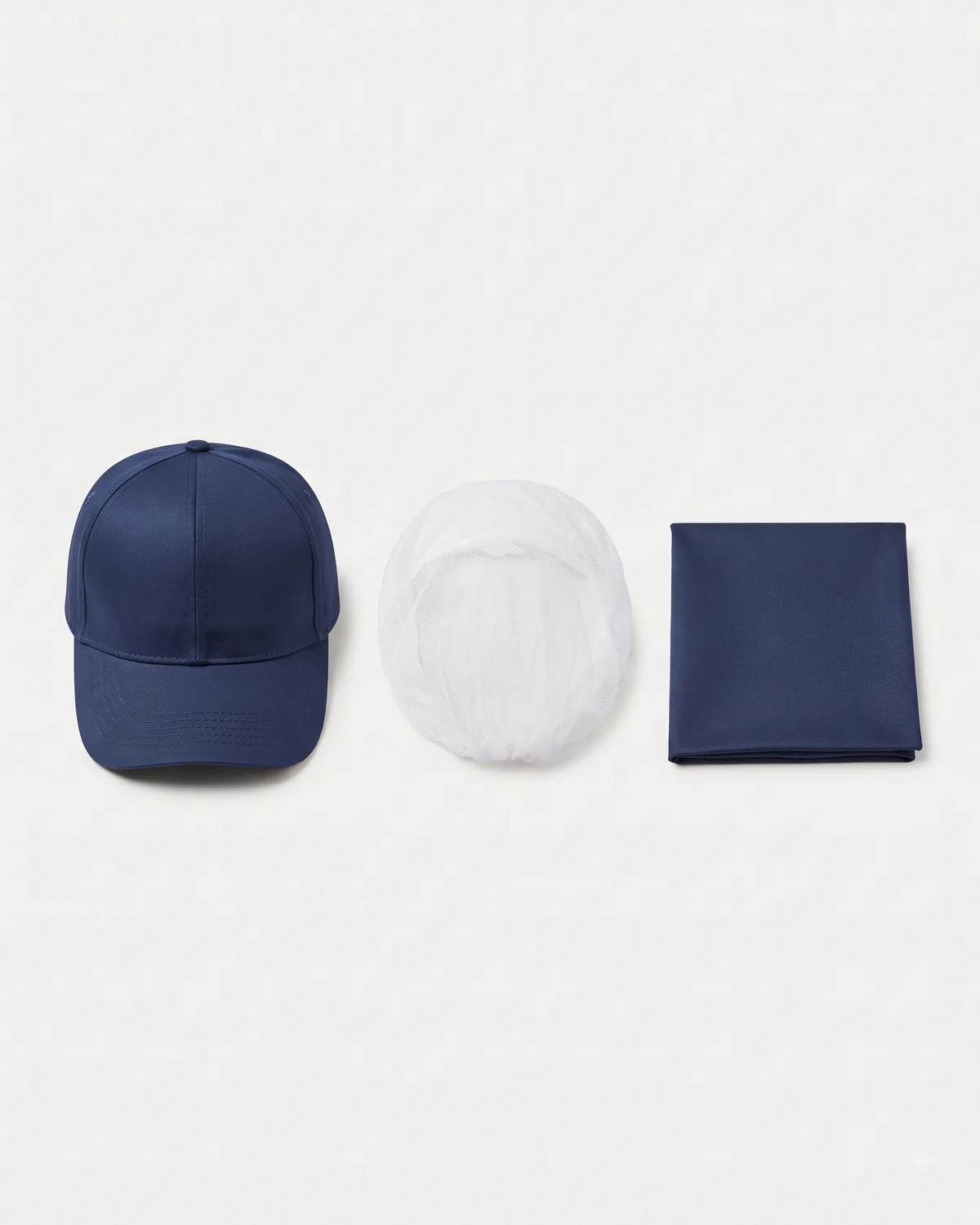
- Cap, hairnet and head scarf
- Washable cap or scarf in the uniform shade, required where housekeeping enters kitchens and food areas.
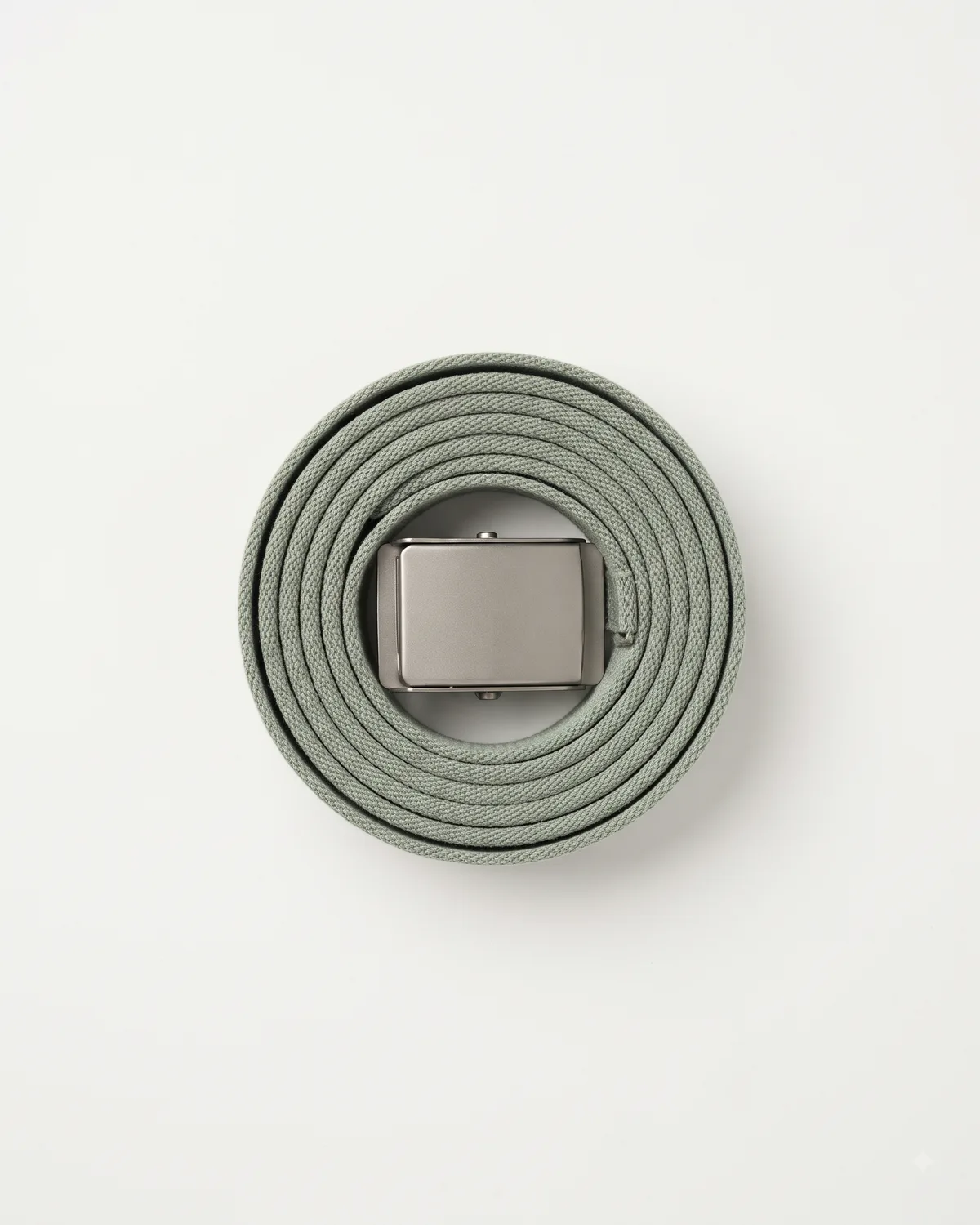
- Housekeeping Waist Belt
- A fabric waist belt in the uniform colour, worn over the tunic on the round.
Materials & craftsmanship
Fabric, from named mills
Fabric comes from branded mills: Raymond, Siyaram’s, Santosh and Qmax, and a client may nominate a mill of their own. Knitted polos and t-shirts are quoted on their own terms, and we say so before a buyer chooses them on price. The bands below are working specifications; a tender that fixes its own blend and weight is quoted to the tender.
| Fabric | Working spec | Why it suits |
|---|---|---|
| Poly-cotton shirting / poplin | 65/35 polyester-cotton, 140 to 160 GSM | The working default for tunics, kurtas and shirts. Dries overnight, which matters when a worker owns two sets. |
| Poly-cotton twill / drill | 65/35 polyester-cotton, 190 to 240 GSM | The standard bottom weight. Takes the abrasion of squatting and trolley work, hides soil, holds a press. |
| Cotton drill | 100 percent cotton, 200 to 280 GSM | For hot areas and kitchen back of house, where breathability and non-melt behaviour near heat matter most. |
| Poly-viscose suiting | Polyester-viscose, 180 to 240 GSM | Drape and press for guest-facing crews. Not for room-cleaning work; it pills at the seat. |
| Poly-cotton 2x2 matty | 65/35 polyester-cotton, 180 to 230 GSM | The basket weave disguises light soiling between washes, keeping facility crews presentable on two-day wear. |
| Cotton canvas | 100 percent cotton, 250 to 340 GSM | Heavy bib aprons for waste handling and deep cleans. Takes boil washing and rough handling. |
Questions buyers ask
Asked before ordering
What fabric and GSM should we specify for hotel room attendants?
For guest-facing room attendants, specify a 65/35 poly-cotton shirting at 140 to 160 GSM for the tunic and a 200 to 240 GSM poly-cotton or poly-viscose twill for the trouser. The top carries the cotton, for sweat through a summer shift. The bottom carries the polyester, for crease recovery and seat-seam life. Confirm the laundering route before fixing the blend; hotel laundry and home bucket washing punish fabric differently.
Our bathroom crew’s uniforms get holes and colour patches within three months. Why?
Almost always chemical damage, not fabric failure. Bathroom and descaling cleaners on Indian sites are acid based, and toilets are cleaned with hypochlorite bleach. Splashes strip dye and open pinholes in cotton-rich fabric within weeks; this is what site crews report across the trade. Move those crews to polyester-rich fabric, ask the mill for a tested chlorine-fastness report rather than a dye-class name, and put a bib apron over the uniform.
How many sets per person should we order?
Two sets per person is the minimum, and three is what actually works where uniforms are washed daily and dried outdoors through the monsoon. A hotel with an on-premises laundry can run on two, because turnaround is same day. Hold a size-mix buffer above headcount, sized to the attrition you actually see on site, so a replacement joiner is dressed on day one instead of waiting on a re-order.
Can you match our brand colour, and will a re-order in six months match the first lot?
Yes to both, within the limits of the mill lot. Fabric is bought ready from the mill: we work from a shade card or a Pantone reference to find the nearest quality the mills carry, put the physical swatch in front of you, and buy only once it is approved. Cloth from one lot matches itself, while a lot produced months later can sit visibly off, especially in pastels, greys and light blues. Order the full site requirement in one lot where possible, and tell us the expected top-up volume at the start so the quantity can allow for it.
How does sizing work for a 300-person facility contract?
We work to a graded size set: tops by chest, trousers by waist, ladies’ kurtas by bust and length. A size trial runs on site with a sample set before the break-up is confirmed. Staff change through a contract, so adjustable waistbands and reissue allowance in the seams matter more than a perfect first fit. Hotels with stable teams take individual measurement, done at the site.
What GST applies to uniform supply?
Under the rates in force since 22 September 2025, readymade garments attract 5 percent GST where the sale value per piece is Rs 2,500 or less, and 18 percent above that. Most housekeeping pieces fall in the 5 percent band. The threshold is judged per piece, not per set, so a two-piece set is assessed piece by piece. Verify the prevailing rate at the time of order.
Kurta-salwar or tunic and trouser for our women housekeeping staff?
Kurta-salwar, for most sites. In hospitals, campuses and facility contracts it is the more accepted choice in India, and it handles bending and squatting better than a fitted trouser. Hotels usually prefer a tunic and trouser set for a uniform silhouette, and we cut both. If a dupatta is part of the look, have it stitched down at the shoulder; a loose dupatta catches on trolleys and lift doors.
Related identities
Next step
Tell us about the people who will wear it.
Roles, rough staff strength, and anything already decided about fabric or colour. That is enough for a written quotation for housekeeping uniforms.